A hiker's diary from The Trek offers a nice reminder that some of the Appalachian Trail's most rewarding walking sits within a short drive of Connecticut's suburbs. The latest entry follows a backpacker retracing a 23-mile stretch through the state's northwest corner — the same section where his trail story began in 2020, when weekend escapes from a bland Danbury apartment turned into a multi-year obsession.
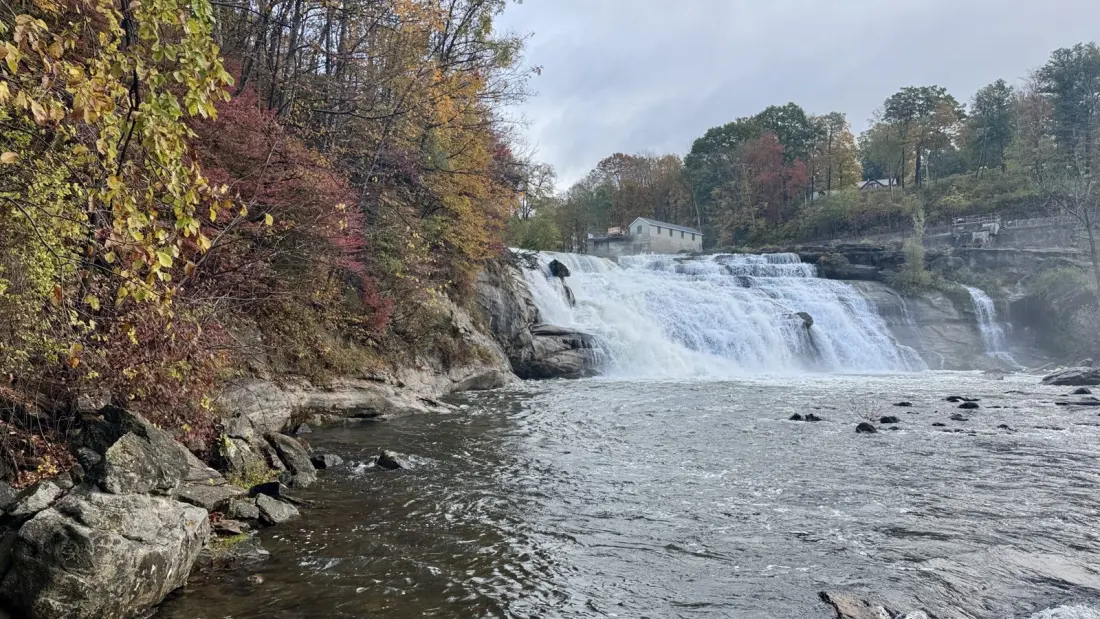
The route hugs the Housatonic River for much of the way, and that river is the connective thread. At Falls Village, exactly 1,500 miles north of the trail's Georgia starting point at Springer Mountain, the water surges over Great Falls — especially dramatic after rain, as it was on this October trip. From there the trail climbs Prospect Mountain, where the open vista known as Rand's View is arguably at its best in autumn, with fall color spread across the valley.
The standout stop is Lion's Head, a viewpoint the writer still ranks as his favorite on the entire trail and a magnet for day hikers. Beyond it lies Bear Mountain, the highest point of the AT in Connecticut, topped by a stone pile you can scramble for a wider look. The descent north is steep and slick when wet — a proper knee-tester — before the trail slips back into Massachusetts at Sage's Ravine, a deep, shady gorge the path follows for the better part of a mile.
Over the border, the climbing continues up Mount Race on exposed rock slabs, then the notorious ascent of Mount Everett, a calf-burning slog up angled stone with trees growing straight out of the trail. For overnighters, two shelters — The Hemlocks and Glen Brook — sit on short spur trails below Mount Everett, with The Hemlocks a newer two-bunk build facing east in a quiet grove.
Why should a regular traveller care? Because this is a genuinely doable long-weekend section hike for East Coasters. The trail crosses accessible road points like US Route 7, the terrain delivers big views without alpine commitment, and October brings peak foliage. Day hikers can cherry-pick Lion's Head or Great Falls, while backpackers can link the whole ridge over three or four days. Just pack for mud and wet rock — the writer's chief complaint was slippery footing, not the miles.