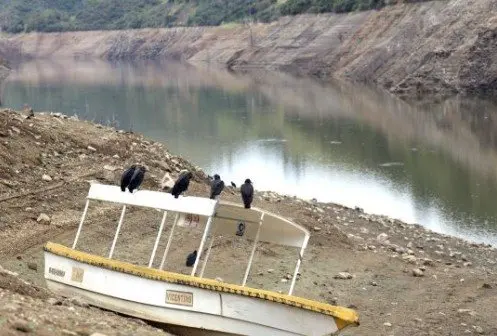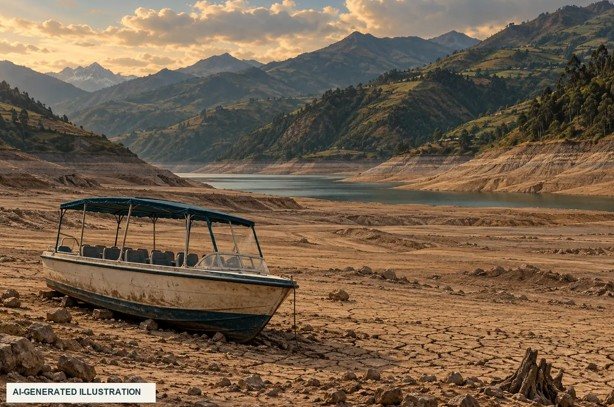
At the Mazar reservoir in Ecuador's Azuay province, tourist boats are sitting on bare ground. The water level has dropped so far that excursion operators can no longer run trips across what was once a 31-kilometre route through dramatic Andean scenery — and the visitors have stopped coming.
An Ecuavisa report from mid-October found that 20 families in Palmas, a community in Sevilla de Oro, have seen their livelihoods hit. Twelve of them run boat excursions; the other eight depend on restaurants and shops that served those tourists. Local operator Diego Chimbo described a steep drop in water levels in just 15 days. When the lake retreats, there's no shoreline left to launch from — and moving large boats across exposed ground is neither cheap nor obviously safe.
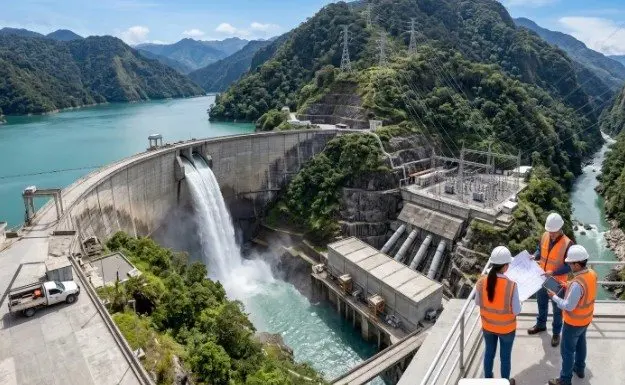
The crisis stretches well beyond tourism. In nearby Guachapala, roughly 80 farm producers are contending with water shortages that threaten about 458 hectares of crops — tree tomatoes, regular tomatoes, corn and beans — plus livestock. And upstream on the same Paute river system, the Amaluza reservoir fell to its minimum operating elevation of 1,975 metres above sea level. On 13 October the Molino plant's nine turbines kept generating past that limit, prompting an emergency declaration. Operators shut down the Molino and Sopladora plants for about five hours in the early hours of 14 October to let Amaluza recover roughly 2.4 metres of water, then restarted them — at which point the level began falling again.
The numbers show how tight things are. By 16 October, Mazar stood at 2,123.09 metres, just 8.09 metres above its minimum safe operating level, having lost nearly a metre of water in 24 hours. Inflows in the Paute basin were running about 38.5% below the historical October average. Colombia resumed electricity exports to Ecuador that Friday, sending 132 megawatts, and the government completed dozens of maintenance operations across 15 provinces — but imports can't refill a reservoir. A botched order telling some industrial customers to disconnect for seven days, later reversed as issued in error, added to the sense of a system under strain.
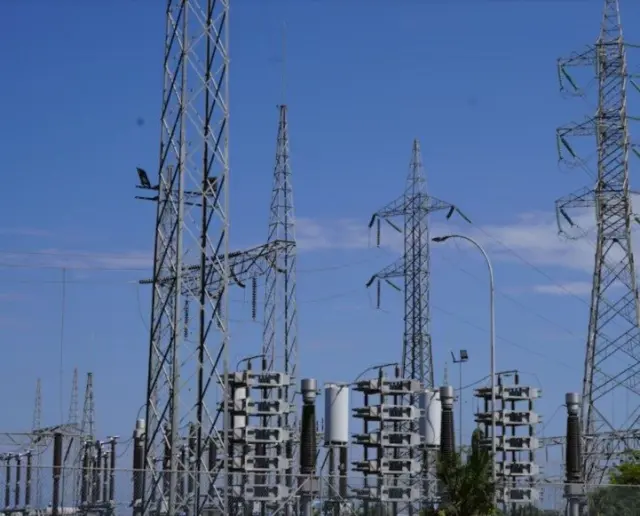
Why should travellers care? Ecuador's grid is heavily reliant on hydroelectric power, and the Paute complex is a cornerstone of it. That means drought here can translate into nationwide power cuts and schedule disruption for anyone visiting. More immediately, this is a reminder that the places tourists love are working landscapes: the reservoir trips near Cuenca support real families whose incomes vanish with the waterline. If you're planning a trip to the Ecuadorian Andes in the coming months, check local conditions before booking reservoir excursions, and consider how your spending can support communities when the headline attraction is literally dried up.
The deeper story is one of cascading effects — tourism, farming and electricity all drawing on the same scarce resource, each waiting for rain that hasn't yet arrived.
Cuenca High Life