El Salvador packs a surprising variety of waterfalls into a small area, and that's exactly what makes it worth planning a trip around. You can swim in natural pools below a 30-metre drop in the east, watch water slide over a wall of hexagonal volcanic columns near Suchitoto, and soak in geothermally heated streams in the west — often within a single week.
The country's most unusual cascade is Los Tercios, near the colonial town of Suchitoto in Cuscatlán. Instead of a typical plunging fall, water runs over a cliff of hexagonal basalt columns formed by ancient volcanic activity. In the rainy season it's a proper waterfall; when the rains stop, the geometric stone wall is revealed in full. Pair it with a wander around Suchitoto's cobbled streets and views over Lake Suchitlán.
Closer to the coast, the Tamanique Waterfalls in La Libertad involve a steep, sometimes slippery descent through hillsides to a series of cascades and swimming pools. It's a popular half-day adventure for travellers based at Pacific surf spots like El Tunco, and a local guide is a smart call if you don't know the trails.
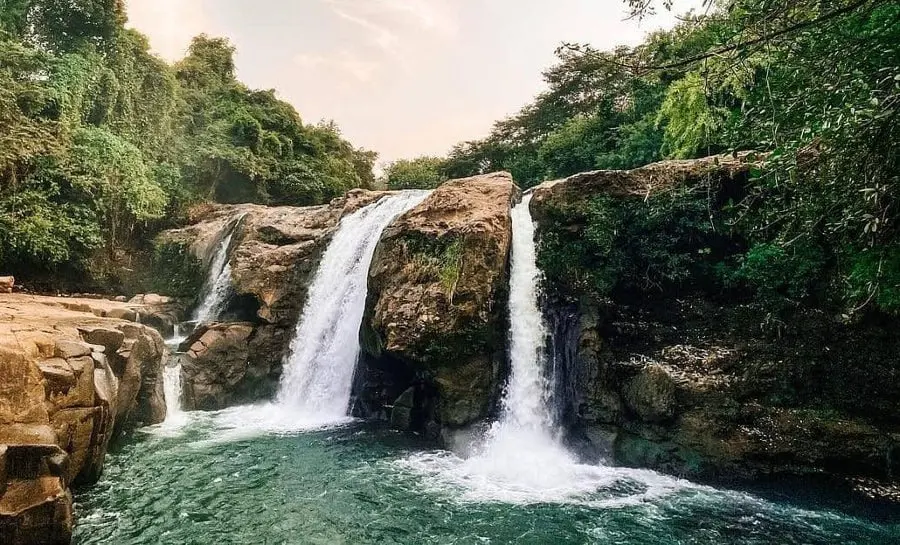
The western highlands along the Ruta de las Flores are the densest cluster. Chorros de la Calera near Juayúa sends water over rocky formations into natural pools, though access has varied over time, so check it's open before you go. El Escuco, near Santo Domingo de Guzmán, is a quiet cascade dropping into a rock-walled pool. Malacatiupán near Atiquizaya is the odd one out: geothermal activity means the water arrives warm. Treat it with respect — temperatures and currents shift. Don Juan, in the Ahuachapán highlands, rounds out the region and slots neatly into coffee-country itineraries.
The east is where the big drops live. In Morazán's Julia's Natural Park, Las Pilas falls 30 metres into clear pools, and nearby La Olomina stacks two falls of roughly 26 and 10 metres. Trails link them, and the park has viewpoints, swimming spots and camping. El Chorrerón, also in Morazán, offers a peaceful cliff-ringed setting for those willing to walk uneven terrain.
Timing matters. The dry season (November to April) brings reliable weather and easier trails, but some falls thin out — Los Tercios can nearly dry up. The rainy season (May to October) turns everything lush and the cascades full, but trails get muddy, rocks slick, and flash floods a real risk even under clear local skies. Always ask about upstream weather.
A rental car gives you the most flexibility on rural roads, though buses reach many nearby towns — just research the final stretch before assuming you can walk from the stop. For anything involving river crossings or unmarked paths, hire a local guide. Budget extra time too: distances look short on the map, but winding mountain roads stretch the journey.