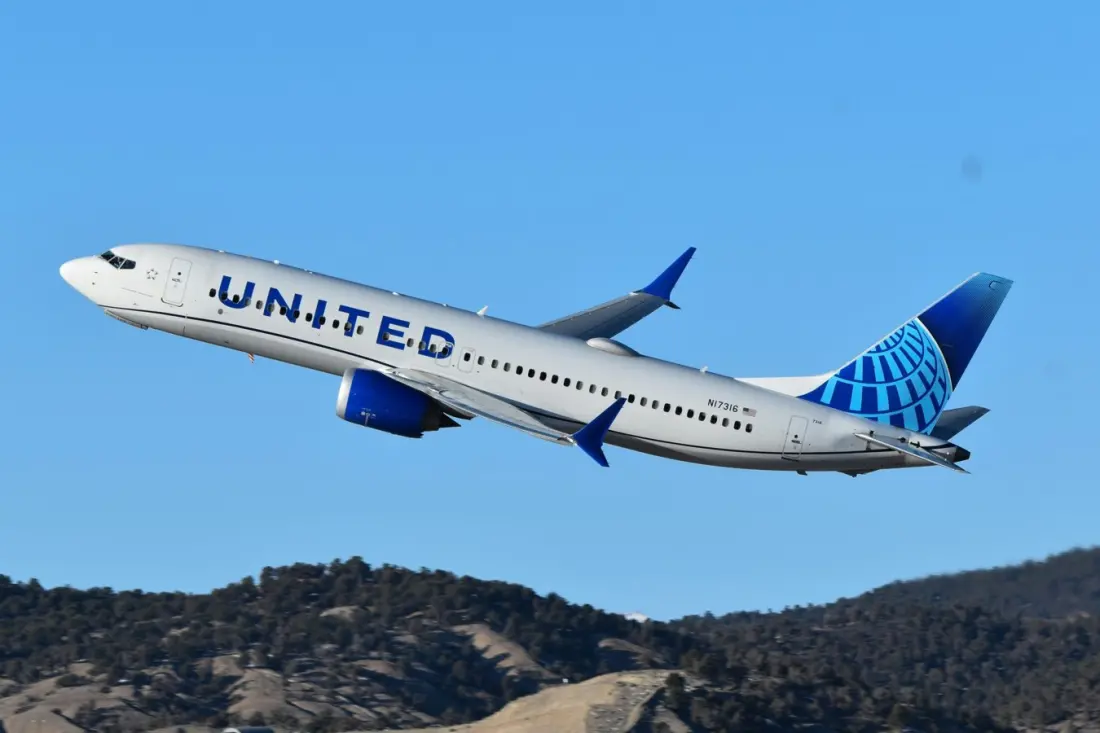
A flight attendant's quick glance at a phone screen appears to have stopped a potential hijacking before anything happened. United Airlines flight 1681, bound from Las Vegas to Newark, turned back to Harry Reid International Airport on Saturday 24 October after a crew member reportedly saw a passenger texting that he planned to hijack the aircraft.
The Boeing 737 MAX 8 had departed Las Vegas at 10:51 pm. According to the pilot's radio traffic, the crew member spotted the message — in which the passenger allegedly wrote that he intended to "crash" the plane — and alerted the captain, who locked the cockpit and initiated a return. How the attendant saw the message, who it was sent to and on what platform remains unclear.
Getting the plane safely down wasn't a simple U-turn. Loaded with fuel for the coast-to-coast leg, the aircraft was above its maximum landing weight and, like most 737s, has no fuel-dumping system. The pilots flew extra circuits to burn off fuel before requesting runway 26L — and specifically asked for the full 3,208-metre strip in case they needed it. The plane touched down around 11:05 pm local time, roughly fourteen minutes of drama after the turn began over the Arizona ghost town of Oak Grove.
Police were waiting at the gate. The 25-year-old passenger was arrested on charges of making a threat or providing false information regarding an act of terrorism, and if convicted faces one to twenty years in prison. The FAA is investigating alongside the criminal case. United confirmed the flight returned to address a potential security concern; because the crew hit their duty-time limit, the remaining passengers were put up overnight and flown to Newark the following morning.
For travellers, this is one of those rare stories that ends the way you'd hope. Crew members are trained to notice exactly this kind of thing, and the system — cockpit lockdown, air traffic control coordination, police at the gate — worked without injury or panic. It's also a blunt reminder that anything you type on a plane can be seen: a joke, a vent or a genuine threat can ground a flight, cost a couple hundred people their evening and land you in federal trouble. The one real cost to innocent passengers here was an overnight delay, which is why travel insurance that covers delayed departures is worth having on long domestic hops. Otherwise, there's nothing here to change your Las Vegas or New York plans — just a reason to be glad someone on the crew was paying attention.