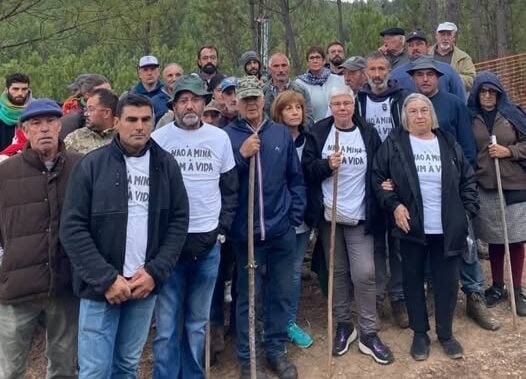
Around 30 residents of Covas do Barroso, in the northern Portuguese municipality of Boticas, blocked geotechnical work on common land early today, the latest in a series of direct actions against the open-pit lithium mine planned by UK-based Savannah Resources. Protesters parked themselves in front of a work machine and later moved onto a forest track, with numbers growing through the morning. Savannah said no work was scheduled on that particular site today, though operations continue elsewhere.
The standoff has been rumbling for years. The Portuguese Environment Agency issued a conditional favourable environmental impact statement in 2023, and in May the Ministry of the Environment authorised a second administrative easement letting the company access communal and private land for survey work. A court injunction filed by the local communal lands board paused prospecting for roughly 20 days, and on October 9 protesters halted operations, with the GNR identifying 27 people. Today, no police were present.
The human cost is what gives the protest its force. Armando Gonçalves, 72, grazes sheep and grows pines on land under the easement, on ground burnt by wildfire 16 years ago. He sees the mine as a second destruction, this one threatening the village itself. Maria Loureiro, 58, whose marshland and olive groves were swept into the easement for a second time, says she wants to pass the land, the springs and the quiet on to her grandchildren. José Fernandes, 71, from Muro, has more than 500 eucalyptus trees on affected land; his children abandoned plans to build a house in the village because of the mine.
Nélson Gomes, president of the Association United in Defence of Covas do Barroso, says blockades will continue 'for as long as necessary' and frames the issue bluntly: with a mine at the village's doorstep, residents risk being forced out of their own homes. Protesters also warn of wider damage, claiming dust and contaminated water would reach neighbouring municipalities including Ribeira de Pena, Cabeceiras de Basto and Mondim de Basto.
Savannah intends to start construction in 2027 and begin initial production in 2028. But the project's path is not smooth: last week a European Commission source suggested the 'strategic status' granted to the project may need reassessment because of how the process was handled.
For travellers, the Barroso area is one of mainland Portugal's quietest corners — schist villages, cork and chestnut woods, and the Barroso Agricultural System recognised by FAO as globally important agricultural heritage. This story matters if you're planning a trip there: the landscape and village life that draw visitors are exactly what's under threat, and local tourism depends on the same water, springs and farmland the protesters are defending.