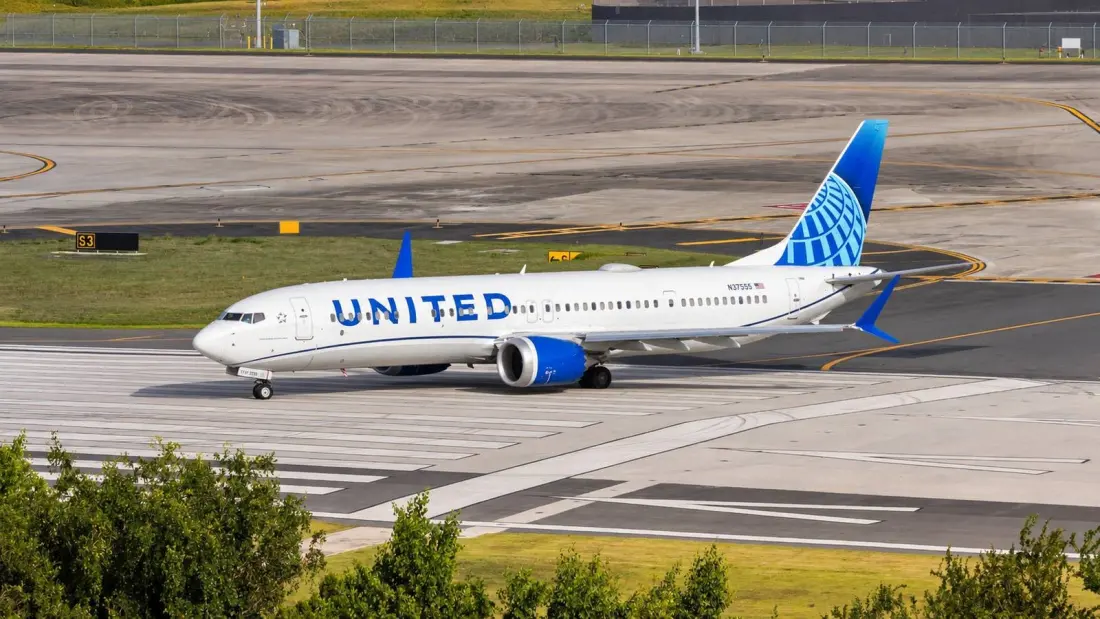
United Airlines is quietly running some seriously long-haul routes on a narrowbody jet. In 2026 its longest scheduled Boeing 737 MAX service stretches 3,369 miles between Newark and Anchorage, edging out Washington Dulles–Anchorage (3,356 miles) and Newark–Santiago de Compostela (3,310 miles). All 11 of its longest MAX routes use the MAX 8, whose extra range over the larger MAX 9 makes it the workhorse for these thin, far-flung services.
The list is a mix of Alaska flying — four routes connect the lower 48 with Anchorage, including Houston–Anchorage and Chicago O'Hare–Anchorage — and transatlantic services to Glasgow, Madeira and Reykjavík. There are also warm-weather options: San Francisco to both San José and Liberia in Costa Rica, plus Houston–Georgetown in Guyana. If you're booking one, don't expect a lie-flat bed: the MAX 8 is configured with 16 United First recliners, 54 Economy Plus and 96 standard economy seats. You do get 13-inch entertainment screens up front, 10-inch screens in economy, Bluetooth audio, USB charging and roomier overhead bins.
Two of these routes are brand-new for summer 2026 and got off to a wobbly start. Newark–Glasgow, which resurrects a 757 route last flown in 2019, began daily flights on May 8 with a 64% load factor, creeping up to 74% by July. Newark–Santiago de Compostela — the first-ever nonstop from the US to the Spanish pilgrimage city — launched May 27 three times weekly and debuted at just 58%, though it hit 81% in July. The soft Glasgow numbers look more glaring next to Newark–Edinburgh, which filled 91% of seats in July, raising fair questions about whether the New York area can support two Scotland routes.
United isn't panicking, though. It extended the Glasgow season through the end of October and has confirmed a return for summer 2027. That's the whole point of the MAX strategy: with only 166 seats to fill, the airline can experiment with unusual destinations like Santiago de Compostela, Bari or Split without the risk of a widebody. For travellers, that means more nonstop options to secondary European cities — and cheaper angles into Spain's Galicia region or Scotland's west coast.
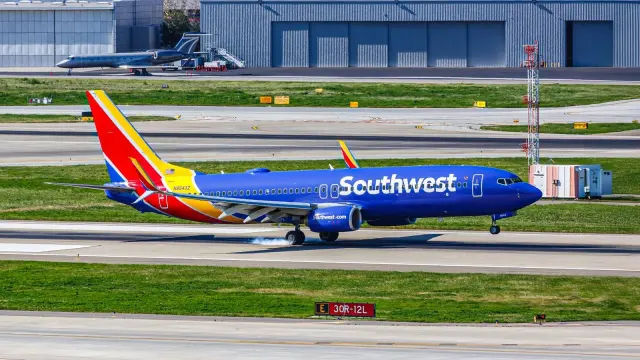
The bigger picture is a fleet in overdrive. United ended 2025 with 243 MAX aircraft and plans to have 323 by the end of 2026 — roughly six new jets a month. Some 230 more are on firm order, including 167 of the stretched MAX 10, the first 20 of which are expected in 2027 once FAA certification lands (reportedly within weeks). Long term, United will become the world's second-largest MAX operator with more than 500 of the type, behind only Southwest. Translation for passengers: expect the MAX — and these kinds of long, quirky routes — to become an ever-bigger part of United's network in the years ahead.