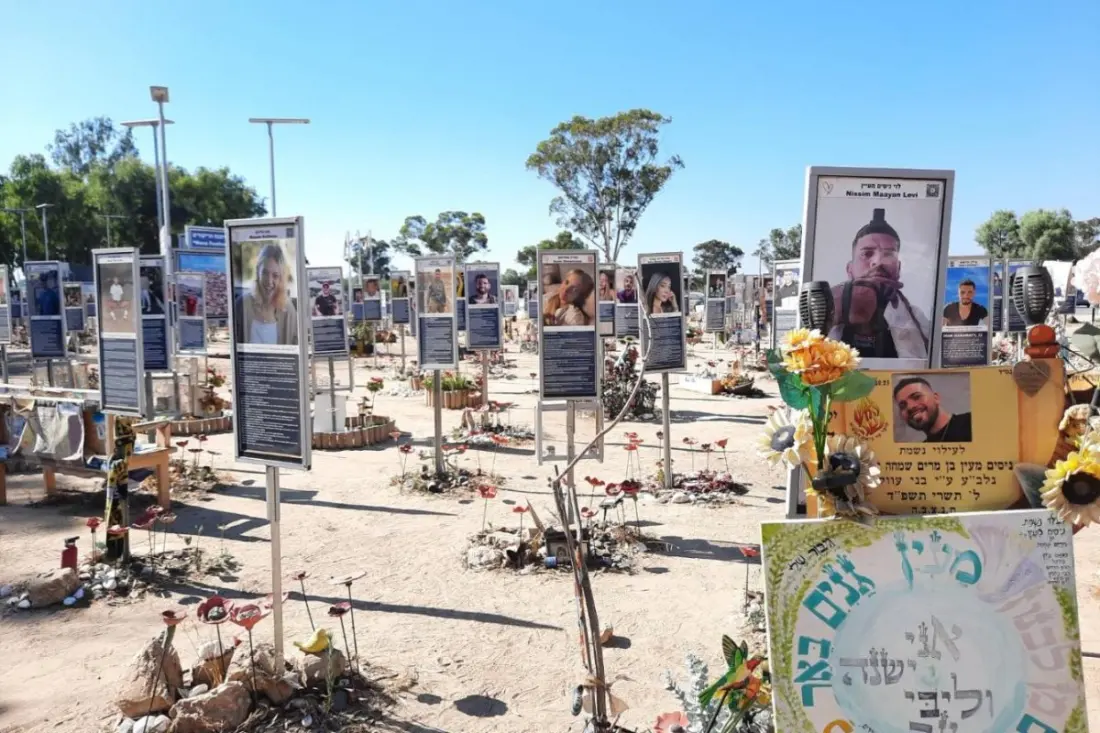
Three years on, the field in Re'im where the Supernova Sukkot Gathering took place has become something between a graveyard and a shrine. What began as a sunrise rave about 5km from the Gaza Strip — timed to the final day of Sukkot and Simchat Torah on October 7, 2023 — ended as the deadliest single site of the Hamas attack, with roughly 1,100-1,200 people killed and 152 taken hostage. Among the dead were 378 of the festivalgoers; 44 of those abducted were festival-goers too. As of January this year, none remain in Gaza.
The story click.holiday readers rarely hear is what that morning actually looked like. When rockets interrupted the music, organisers first treated it as routine — a familiar drill for Israelis — and instructed crowds to lie on the ground. Many attendees, drinking and dressed for a party, assumed it was another wave of 'regular missiles'. It wasn't. 29-year-old maths teacher Hadas arrived at 1am with fifteen friends because the venue was only 40 minutes from her home; her father had offered to pick her up. By mid-morning she was hiding in a bush, whispering a goodbye to him on the phone as terrorists approached, then running through five hours of gunfire, screaming and mortars before she and about two dozen others reached a van and, eventually, a police station in Ofakim.
The article also traces the Thai angle, easily overlooked abroad. Sixty-four Thai agricultural workers were killed and 13 taken hostage in the attack, including Eunuj Rackart, whose husband Chaiarah Sunanas died at the festival grounds. The couple had video-called most mornings; he was preparing for the rave when the line went quiet. Now she raises their son alone, runs a small shop, and receives annual calls from the Israeli embassy and twice-yearly visits from a rabbi. Every October 7 she goes to temple for him — though this year she postponed the ceremony until Lent, when she had originally planned a larger one.
Back at Re'im, survivors and victims' families have turned the festival site into an open memorial, meant for learning and, in their words, for healing. A wall in the market area carries stickers honouring the deceased. Hadas herself went back to teaching a month later and now tours the world sharing her story, describing the day as 'the darkest sunrise' of her life. Survivors, she says, still deal with PTSD, and constant mental-health support has been essential.
Why does this belong on a travel site? Because dark-tourism and remembrance travel are real choices travellers make, and Israel's memorial sites — this one chief among them — are now part of the country's visitor landscape. If you go, understand what you're walking into: it's not an attraction but an active grief site, recently part of a country still at war. Go quietly, follow any guidance from staff or families present, and let the stories — Hadas's, Chaiarah's, the 44 hostages' — be the reason you came.
Via Bangkok Post Life.