Freeze-dried backpacking dinners can pack more than 1,500 mg of sodium into a single pouch — about two-thirds of the 2,300 mg daily limit most adults are advised to stick to. That number alone makes a lot of hikers uneasy. But a dietitian writing for Backpacker argues the label isn't telling you the whole story, because long days on the trail change the maths entirely.
The core problem is that trail menus vary wildly. Two sample days of food, each around 3,150 calories and 23 ounces dry, differed by roughly 3,500 mg of sodium — one totalling about 5,465 mg, the other just 1,975 mg. Swap a Mountain House Beef Lasagna (1,180 mg) for a Good To-Go Pad Thai (340 mg), change pretzel flavours, or pick a different protein bar, and the totals shift dramatically. Neither menu is automatically right or wrong; the point is to check what you're already carrying before reaching for extra electrolyte packets.
Context matters, though. Sweating for hours strips sodium out of your body along with water, and individual losses vary enormously — research puts sweat sodium anywhere from roughly 230 to 1,600 mg per litre, depending on temperature, effort, clothing, heat acclimation and plain old physiology. Even two hikers on the same trail lose different amounts. And losing 800 mg in sweat doesn't mean you need to eat 800 mg; your body regulates the balance, so an electrolyte packet every hour on the hour isn't a strategy, it's a habit.
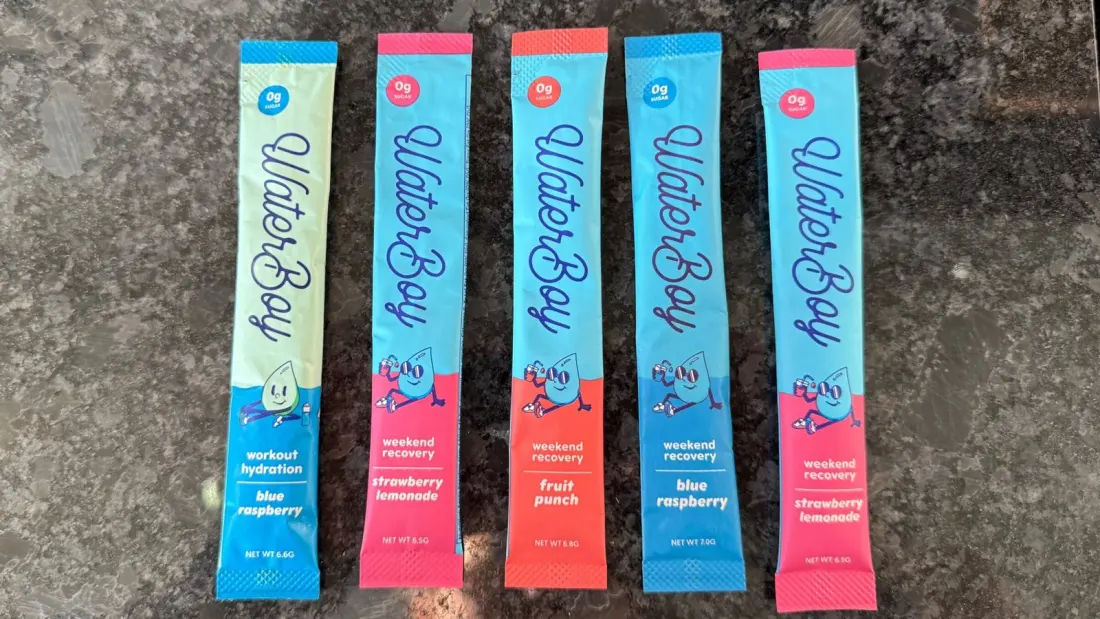
Timing has some value. On a long, hot day where you're drinking plenty but eating little, salty snacks spread through the hike do a job a 1,500 mg dinner at camp can't — that evening sodium helps recovery, but it arrives too late to help mid-hike. If your menu is already full of pretzels, jerky and cheese, you're covered; if it's low-sodium or you struggle to eat while moving, an electrolyte drink is a reasonable fix. The question to ask is simply whether the supplement adds something your food doesn't already provide.
One safety note worth highlighting: electrolytes won't protect you from exercise-associated hyponatremia, the dangerous drop in blood sodium that the Wilderness Medical Society says mostly comes from drinking too much fluid relative to losses. Drink to thirst, keep salty food on hand for long hot efforts, and know that headaches, cramps and fatigue aren't reliable sodium-deficiency signals. If a hiking partner shows worsening confusion, repeated vomiting, seizures or collapse, that's an emergency — get medical help rather than topping up their water bottle.
For holidaymakers who hike — whether that's a week in the Alps or a section of a long-distance trail — the practical takeaway is simple. Read the labels on your resupply, spread salty food across the day rather than saving it for dinner, and don't chase a precise milligram target the science doesn't support. Extra sodium hasn't been shown to boost endurance performance anyway. Track what you eat, drink and how you feel on a trip or two, and you'll calibrate better than any chart can.
Backpacker