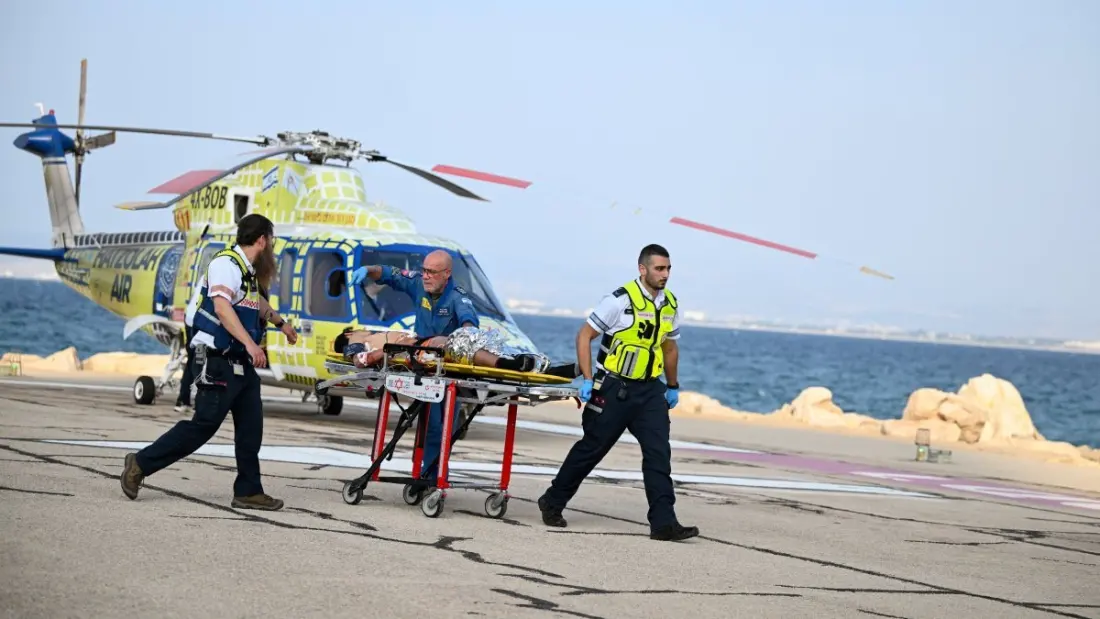
A school hiking trip along Israel's northern border ended in tragedy on Monday when an explosion, believed to be from unexploded ordnance, killed at least one hiker and injured 19 others, according to Israeli media.
The group — middle school students on an annual outing — was walking in the Ramim Ridge area, a scenic ridge route that runs close to the Lebanon border, when the blast happened. The daily Yedioth Ahronoth, citing the Magen David Adom emergency service, reported that one of those injured later died, after earlier reports described one critical and two serious casualties. The Times of Israel said the blast was thought to have been caused by leftover explosive material, though authorities were still investigating. "Unfortunately there is unexploded ordnance, apparently someone accidentally touched an explosive device," the father of one of those hurt told the newspaper.
The border region has seen heavy fighting in recent years, and old munitions — shells, rockets and other explosives that failed to detonate — can lie dormant in the ground long after the guns fall silent. Even a well-trodden trail is no guarantee of safety: touching, kicking or stepping on a buried device can be enough to set one off.
For travellers, the lesson is blunt. Any hike near a former or active conflict zone — northern Israel, southern Lebanon, parts of the Golan, rural areas of Ukraine or the Balkans — carries a residual risk from unexploded weapons. Stick to marked paths maintained by official bodies, never pick up metal objects or strange debris, keep children close, and check local authority or park-service advisories before heading out. If an area is fenced off or signposted as a firing range or mined zone, take the warning at face value. Border zones in particular can have access restrictions that change at short notice, so it's worth confirming routes locally on the day.
Israel's hiking network is otherwise superb — the Israel National Trail, the Galilee and the Golan draw walkers year-round — and incidents like this are rare. But this one shows how quickly a routine school trip can turn catastrophic when ordnance from previous fighting is still in the soil.
This report first appeared via Daily Sabah Travel.