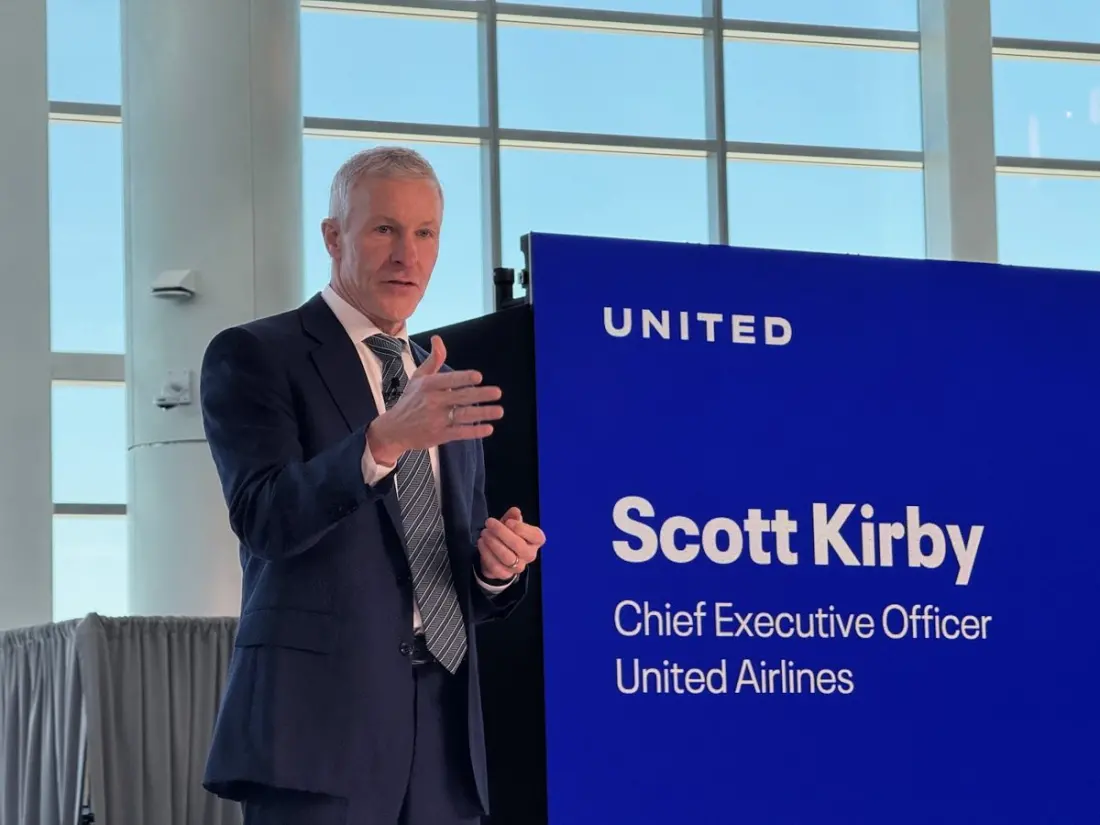
Scott Kirby has a habit of declaring United Airlines the best carrier on the planet, and he made the case again in a recent interview with John Collison and Ben Thompson. His argument is candid: he concedes that Asian and Middle Eastern airlines beat US carriers on the onboard product and probably on service culture too. What tips the balance, he insists, is technology.
His favourite example is how United handles delays. During a Chicago thunderstorm line — sunny at the airport, but routes closed because crews had to fly through weather over the horizon — the airline split delayed passengers into two groups. Half got the standard vague delay message; half got a radar map showing exactly why they couldn't depart. The standard-message group reportedly scored around minus 60 on passenger satisfaction, while the map group scored plus 60. A 120-point swing, Kirby says, from simply telling people the truth with a picture.
That's a genuinely interesting argument, and there's real substance in it. United's app is widely considered the best in the industry, and the other big US carriers — Delta, American, Alaska — all run digital tools that put most foreign competitors to shame. An app that rebooks you without a queue, or Wi-Fi that lets you work on a daytime flight, is service in a very practical sense.
But is it enough to crown a winner? Probably not, and here's why the debate matters to anyone booking a flight. First, the network: an airline is only useful if it gets you where you're going, at a convenient time, ideally nonstop. The best route map for a Chicago flyer is meaningless in Taipei. Second, reputation isn't a guarantee — Emirates' luxury halo doesn't help if your business class seat is on an older, unreconfigured 777, and even Singapore Airlines' beloved service can't fix a business class bed some travellers find awkward to sleep in. Third, most passengers fly economy, where a gleaming first class suite tells you nothing about legroom, baggage fees or total cost for a family of four.
There's also consistency and recovery to weigh. American Airlines has served this reviewer some of the best meals among US network carriers, yet repeated operational stumbles keep it ranked below Delta and United overall. Loyalty programmes complicate things further: a great redemption doesn't make a bad seat comfortable, and a cancelled flight departs on time for nobody, whatever their status tier.
The honest answer is that "world's best airline" may be the wrong question. Qatar Airways and Taiwan's STARLUX impress with a rare combination of Wi-Fi, service and polish. Air France keeps improving, with a strong new business class seat and Starlink connectivity rolling out. And United still earns plenty of flights on the strength of its network and app. The more useful question is which airline does the things you personally care about — schedule, seat, sleep, connectivity, price, or how it behaves when things go wrong — well and consistently. Then reward that one with your booking, and skip the ones that keep letting you down.
Story via Live and Let's Fly.