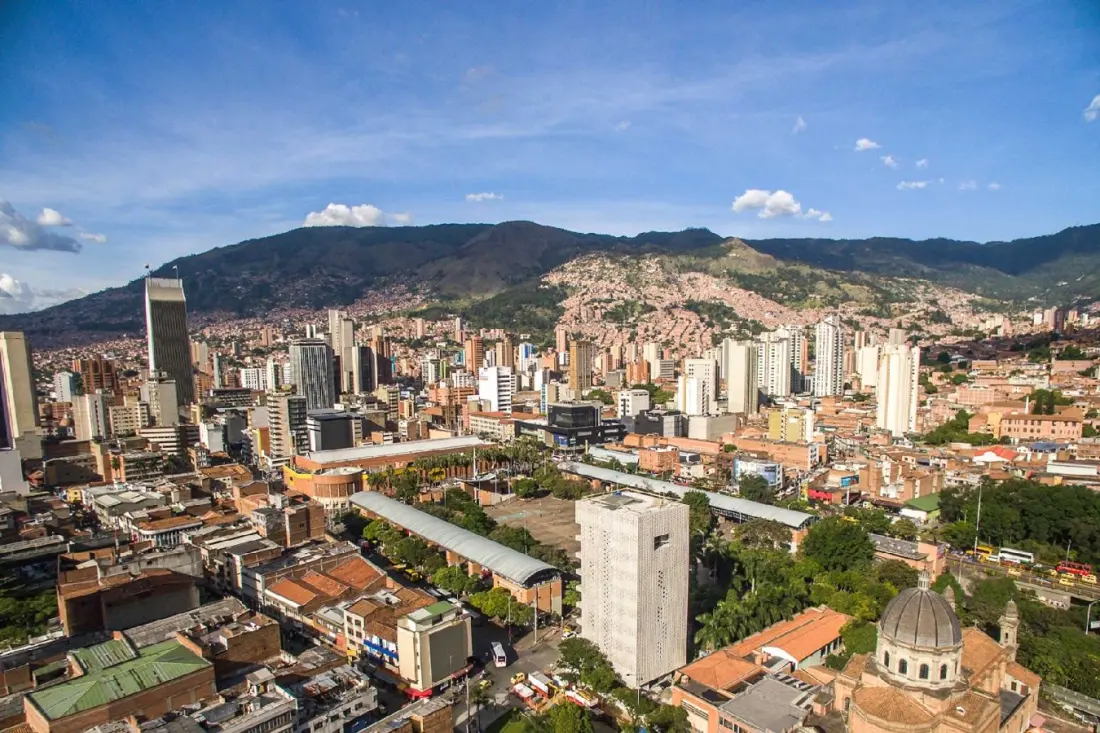
Medellin, Colombia is famous for its eternal spring weather, flower festivals and cable cars over the Aburra Valley. But its name isn't exclusive. The city's own Mayor's Office, in a piece by John Fredi Arboleda, traced every other Medellin on the map - and the trail leads through Roman Spain, colonial Mexico, Argentina and the Philippines.
The original is Metellinum, in Spain's Extremadura region, about 35km from Merida (the Roman Emerita Augusta, home to one of the best-preserved Roman monumental complexes in the Iberian Peninsula). Founded in 79 BC by consul Quintus Caecilius Metellus Pius, the town is over 2,500 years old and was once the largest settlement in Extremadura. The name crossed the Atlantic with Spanish colonisation: in November 1674, Queen Regent Mariana of Austria issued a Royal Decree founding the Villa of Our Lady of Candelaria of Medellin in Colombia's Aburra Valley - then home to just 3,000 people - as a favour to Pedro Portocarrero y Luna, Count of Medellin of Extremadura. Governor Miguel Aguinaga y Mendiogoitia proclaimed it on 2 November 1675, and the Colombian city even adopted the Extremaduran coat of arms.
Mexico has Medellin de Bravo, on the Gulf coast in Veracruz state, founded on the orders of Hernan Cortes - who was actually born in Spanish Medellin - and entrusted to Gonzalo de Sandoval. The 'de Bravo' honours Nicolas Bravo, who pardoned 300 Spanish prisoners there in 1812.
Argentina's claim is older still in New World terms: Medellin del Soconcho, founded in May 1544 near Salavina and Soconcho in Santiago del Estero province by Francisco de Mendoza, a native of the Spanish town. It's considered the first permanent Spanish settlement in northwestern Argentina, reachable today via Provincial Route 1 between Villa Atamisqui and Los Telares.
Finally, the Philippines has a Medellin on the northern tip of Cebu island, roughly 120km from Cebu City, facing the Camotes Sea and the Tanon Strait. Its exact origins are unclear, but it became a municipality by Royal Decree of Queen Isabella II on 9 September 1881 - and its colonial-era curiosity includes Alvaro de Saavedra's 1527-1536 expedition, dispatched by Cortes to search for the lost crew of Magellan's Trinidad.
For travellers, this is a fun thread to pull. Medellin, Colombia remains the headline act - a city transformed over the past two decades, with the Comuna 13 graffiti tours, the Metrocable, and Botero sculptures drawing visitors year-round. But if you find yourself in western Spain, the small town of Medellin in Badajoz province makes an easy stop paired with Merida's Roman theatre and aqueduct. Veracruz's Medellin de Bravo sits close to the port city and Gulf beaches. And Cebu's Medellin is a quiet northern base well away from the island's southern tourist hubs.
A shared name across four continents is a neat reminder of how Spanish colonial history scattered one small Extremaduran town's identity around the globe - and gives curious travellers a themed itinerary hiding in plain sight.