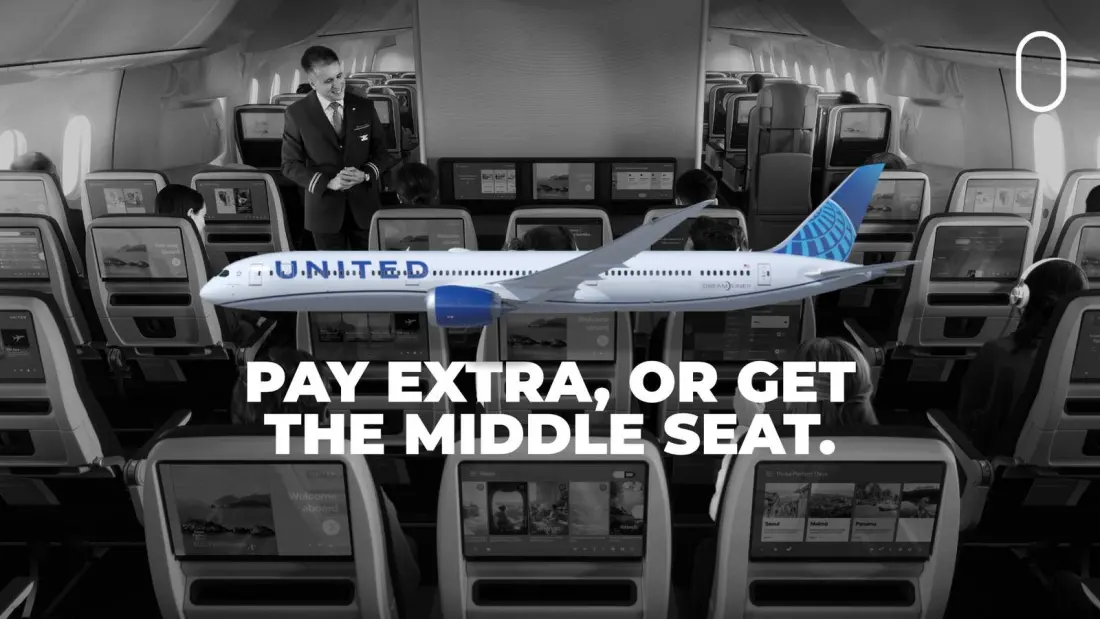
A New York Times reporter put a pointed question to United Airlines' chief executive: why should a passenger who isn't a loyal frequent flyer have to pay $70 just to avoid being stuck in the middle seat? Rather than dodge, the CEO defended the practice — and that answer says a lot about how seat selection pricing now works at major US carriers.
Here's the mechanics. On United, the ability to choose a standard aisle or window seat increasingly depends on who you are to the airline. Elite members and those holding certain co-branded cards get preferred seat assignments at no extra cost. Everyone else faces a menu: pay for a specific seat in advance, accept whatever's left at check-in, or gamble on the middle. The $70 figure quoted in the NYT interview wasn't an outlier pricing stunt — it was presented as a routine charge for a non-status customer wanting something other than the worst seat on the plane.
The CEO's argument, in essence, is that this is a loyalty economy. The airline rewards the customers it values most — repeat flyers, premium cardholders, those buying higher fares — and monetises everyone else. Unbundling has been the industry playbook for years: bags, boarding priority, even carry-ons have all been separated from the base fare. Seat assignments were always the next frontier, and they've become one of the most reliable ancillary revenue streams in the business, because nobody wants to spend five hours wedged between two strangers.
For travellers, the takeaway is practical rather than scandalous. The fare you see when searching isn't really the fare you'll pay if having a decent seat matters to you. Before booking with any US carrier, check which seats on your specific aircraft are free at booking, which carry a fee, and whether the fee is per flight or per direction — on a connecting itinerary those charges stack up quickly. Status matches, airline credit cards, or simply flying the same carrier repeatedly can quietly wipe these fees out. And if you're flexible, free seat inventory sometimes opens up in the final days before departure as elites upgrade and passengers shift flights.
Whether you find the policy reasonable or cheeky probably depends on how often you fly. But the CEO's public defence of it is a signal: this isn't a trial programme being quietly wound down. Seat-selection fees are now core strategy at United, and competitors tend to watch each other closely. Expect the model to spread further, not shrink.
Story first reported via Simple Flying, drawing on the New York Times interview.