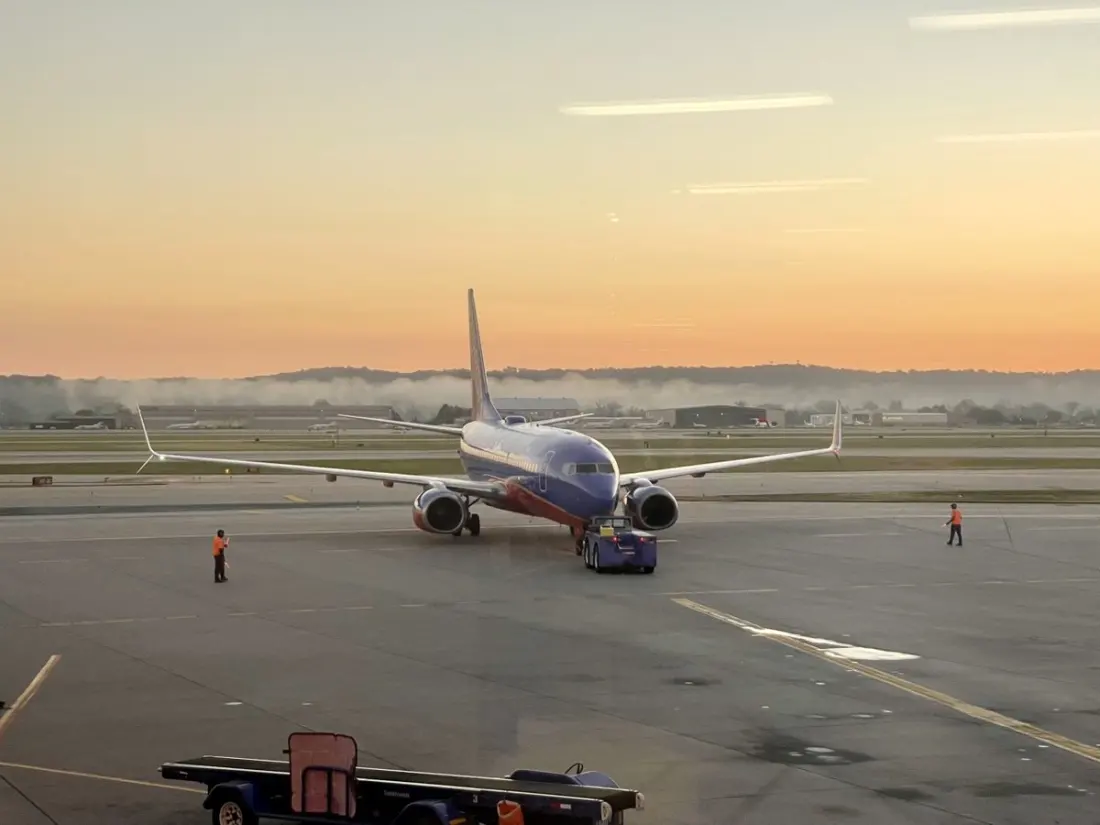
Southwest's CEO Bob Jordan dismissed reports of a Boeing 787 widebody order as having "no credibility" on the airline's October 22nd, 2026 earnings call. The rumor originated with a Reuters exclusive citing three unnamed sources, who said the Dallas carrier was weighing leased or second-hand 787s for long-haul flying, possibly launching within three years.
Jordan's stated objection: aircraft bigger than 175 seats would trigger a renegotiation with pilots, and another 737 variant would be far simpler. But skeptics have good reason to roll their eyes. This is the same airline that, in September 2024, said "no work was underway" to change its famous free-bags policy — then scrapped it on March 11, 2025, setting fees of $35 for the first checked bag and $45 for the second on bookings from May 28, 2025.
The transformation since then has been sweeping. Assigned seating arrived January 27, 2026, with eight boarding groups, four fare tiers and extra-legroom rows on every flight. Add eleven airport lounges, a premium credit card, and domestic first class, and Southwest looks increasingly like every other major US carrier — except it still has no long-haul international flying of its own.
That gap is where the 787 speculation gets traction. Southwest's latest numbers show why management keeps hunting for new revenue: Q3 revenue per available seat mile jumped a record 21.6%, but capacity actually shrank 0.4% and unit costs rose 3.8%. Growth is coming from price and fees, not expansion. Partnerships with Icelandair, China Airlines, EVA Air and Turkish Airlines help, with partner redemptions launching next spring, but partners alone don't give Southwest customers a way to book Rome on their own airline.
Airport logistics aren't the obstacle — Chicago Midway, Dallas Love, LAX and Baltimore can all physically handle a 787. The problem is competition: Miami dwarfs Fort Lauderdale, United dominates Houston Intercontinental, and Denver is already crowded with international carriers.
The writer behind the analysis predicts a widebody announcement within eighteen months of the pilot contract opening, framed as a natural evolution of the brand. Whatever happens, the lesson for travellers is already clear from the bag-fee about-face: treat an airline's public promises as a statement about this quarter, not a guarantee about the next one. If you're booking Southwest on the strength of a policy it currently has, factor in the possibility that it may not be there by your next trip.