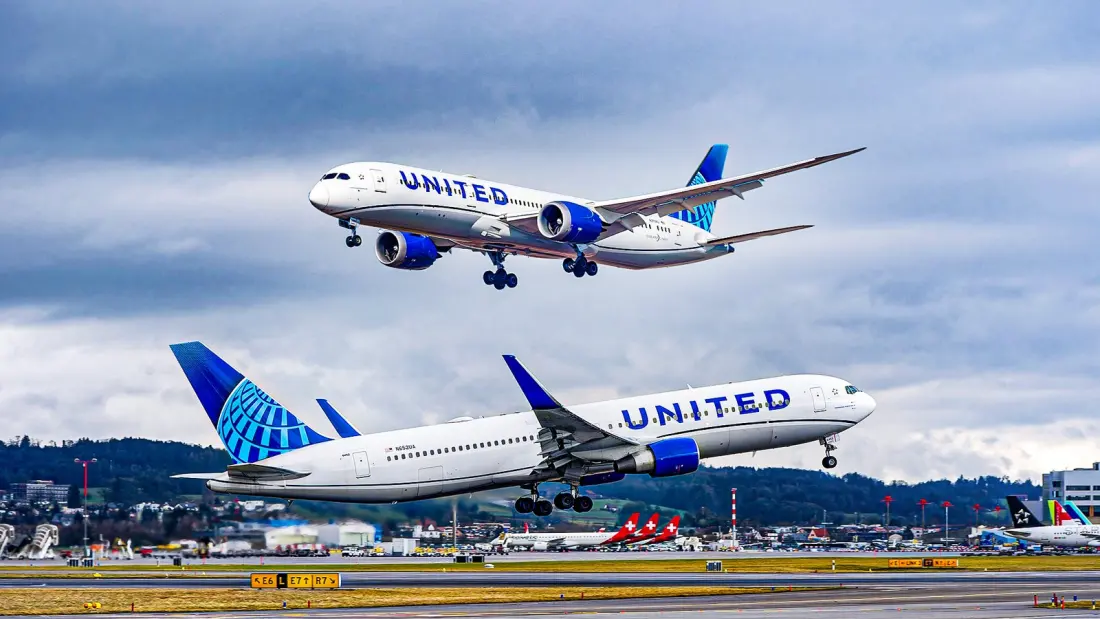
If you've flown United to Europe from Newark or Washington Dulles in the past decade, there's a decent chance you did it on a Boeing 767 - a jet type United first put into service back in September 1982. The airline still operates 53 of them: 37 of the older 767-300ERs (averaging 29 years old) and 16 stretched 767-400ERs (averaging 23). That era is ending. United plans to retire the entire fleet by 2030 and replace it with Boeing 787 Dreamliners, and the change will be very noticeable to anyone sitting in the cabin.
The headline upgrade is premium seating. United's new 'Elevated' 787-9s will carry 222 seats, of which 99 are premium: 64 enclosed Polaris suites with sliding doors, wireless charging and 4K screens, plus 35 Premium Plus recliners. Stretched 787-10s will be deployed at slot-constrained hubs like London Heathrow. The strategy reflects a post-pandemic shift in transatlantic demand toward year-round leisure and business travellers willing to pay for better seats, rather than cramming in low-fare economy volume.
Even if you fly economy, the 787 is a genuinely nicer place to spend seven hours. Its carbon-fibre fuselage holds cabin pressure at the equivalent of 6,000 feet instead of the 767's 8,000, and allows 16% humidity where aluminium airframes must stay below 10% to prevent corrosion. In plain terms: fewer headaches, better sleep and less jet lag on overnight crossings. Add larger windows with electronic dimming (65% bigger than the 767's), bigger overhead bins, wider aisles and LED lighting tuned to help with time-zone shifts, and the difference adds up.
The swap also changes what routes are possible. The 787-9 flies up to 7,565 nautical miles versus the 767's roughly 5,980, cruises faster (cutting up to 50 minutes off eastbound Atlantic crossings), and burns about 25% less fuel. Its bigger belly also allows around 52,400 pounds of freight per flight - useful extra revenue.
There's a catch, though: timing. Boeing's North Charleston plant has been hit by FAA-inspection-related production delays, and United has cut its near-term Boeing deliveries from 165 aircraft to just 63, with most new widebodies arriving after 2026. Until then, United must keep maintaining and overhauling its ageing 767s - one airframe, tail N641UA, has nearly 100,000 flight hours. CEO Scott Kirby has hedged accordingly: United has leased 35 Airbus A321neos for domestic cover and kept an order for 45 Airbus A350-900s alive as leverage if Boeing slips further.
For travellers, the practical takeaway is simple: over the next few years, the same United transatlantic route might offer either a tired 1980s-era 767 or a sparkling new Dreamliner. Checking the equipment type before booking could genuinely change how you feel when you land in Europe. By 2030 the question disappears - but until then, it's worth a look.