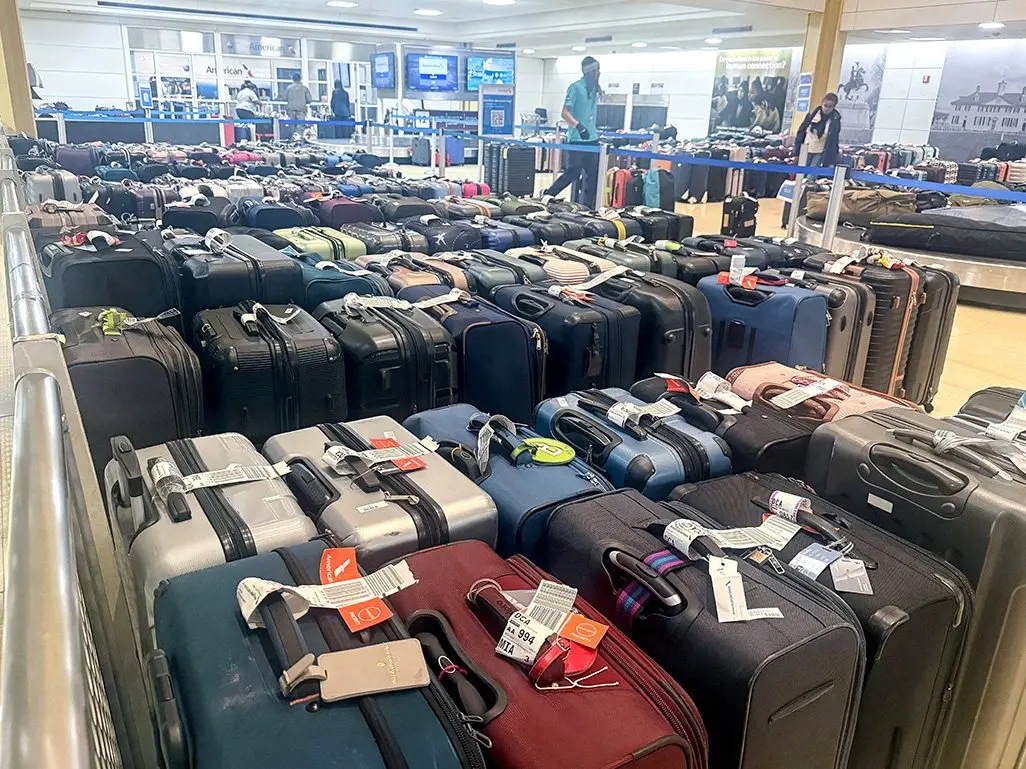
American air travel is back to something close to normal, but the fallout from Friday's mass grounding is still rippling through Washington. More than 18,000 flights were cancelled over three days and nearly 28,000 were delayed, after what is believed to have been a single faulty router installed during routine maintenance triggered the longest nationwide ground stop in 25 years — over four hours with almost the entire US airspace at a standstill.
By Monday morning the chaos had subsided dramatically. FlightAware counted around 300 cancellations and 1,500 delays by 9 a.m. ET, a steep drop from Sunday's figures of more than 2,300 cancelled and 11,000 delayed flights. Even so, Transportation Secretary Sean Duffy put the economic cost of the disruption in the "billions of dollars", while brokerage Bernstein estimates the four largest US airlines alone took an earnings hit of roughly $345 million.
The failure has become ammunition in a brewing fight over how — and how quickly — to fund America's air traffic control system. Duffy has raised his funding request from $30 billion to $50 billion for modernising air traffic control and airports, arguing the Friday meltdown proves the point. The FAA, he noted, is still running on ancient kit: Compaq computers, floppy disks and paper strips for tracking aircraft. Republicans want the extra money approved in the final weeks of the current Congress, before Democrats take over in January.
Democrats, however, are pushing back. They point out that only $1 billion of the $12.5 billion approved last year for air traffic control has actually been spent, and they are demanding hearings into exactly what caused the communications failure that froze US air travel. Expect the arguments to run well past the holiday season.
For anyone booking flights to or within the United States, the practical picture is reassuring for now: operations have largely normalised, and the weekend's chaos looks like a one-off technical failure rather than an ongoing strike or staffing crisis. But the underlying fragility is real. Until the funding dispute is settled and the FAA's ageing equipment is actually replaced, the risk of repeat disruptions — from technical faults, staffing shortages or budget standoffs — stays on the board. Travellers with tight connections, cruises to catch or events to attend in the US would be wise to build buffer time into itineraries and keep an eye on airline rebooking policies, which tend to be waived when disruptions are this large.
The wider story is one worth watching: the world's busiest aviation network runs on infrastructure decades past its sell-by date, and the bill to fix it has just gone up by $20 billion.