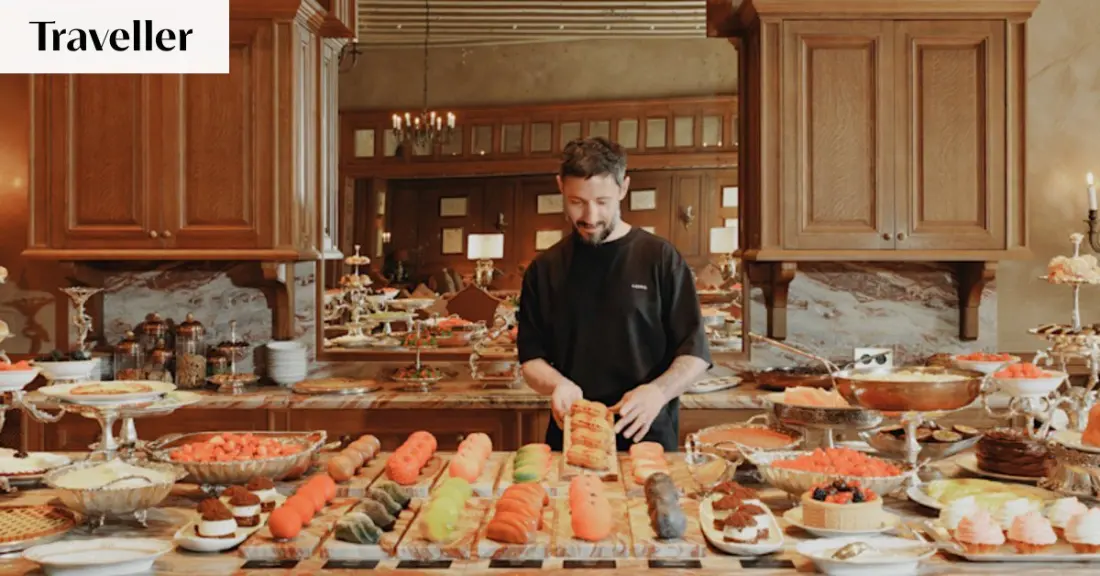
At one of Venice's grandest hotels, the lunch buffet includes 32 desserts created by French pastry star Cedric Grolet — mangoes, lemons and peanuts rendered in cake form, tiers of doughnuts and meringues, bowls of creme brulee and tiramisu. It's a spectacle of excess, and a fitting symbol for where travel finds itself right now: the rich are spending more than ever while everyone else tightens their belts.
Grolet is the hottest name in patisserie, with queues around the block outside his Paris shops and an Instagram feed of chocolate rivers and giant vanilla-bean custard vats. The dessert spread at Airelles Palladio Venice — where the writer was a guest — is precisely the kind of extravagance ultra-luxury brands now use to woo big spenders. And the big spenders are spending. Virtuoso, the luxury travel agent network, reports a 37 per cent jump in 2026 bookings at hotels charging over $US1500 a night, and luxury hotel sales up about 21 per cent.
The numbers get sillier from there. Top suites on Regent Seven Seas Prestige sell out at $159,050 a person. Booking all of Fiji's Kokomo Island for exclusive use runs about $210,000 a night, three-night minimum. Baseline amenities at the top end now include in-room gyms, 24-carat iPads, private recording studios and a Rolls-Royce on call.
All of this sits awkwardly beside the travel industry's favourite talking point: "redefining luxury away from excess." Virtuoso says 74 per cent of luxury travellers will pay more for certified sustainable operators, and that wealthy guests now prize privacy over bling. But privacy is its own form of excess — private jets, private yachts, villas with their own security. The International Council on Clean Transportation notes that private jets out of US airports accounted for more than 55 per cent of global private jet emissions in 2023, and that per-person carbon output can run 14 times that of commercial flights.
For ordinary travellers, the contrast is stark. Cost-of-living pressure means budgeting harder for a single trip while the ultra-rich treat whole-resort takeovers as a Tuesday. The writer's verdict is honest rather than preachy: admiration for the craftsmanship of that Grolet lemon cake with its oozing sorbet centre, unease about the waste, and a vow to enjoy the buffet when it's offered — then get back to a croissant in a paper bag on the next trip.
Why it matters: this isn't just a dessert review. It captures a two-speed travel economy. If you're in the budget-and-mid-range camp, expect hotels to keep upselling premium tiers while value options get tighter. And if you do splurge, sustainability claims at the top end deserve scrutiny — the data suggests restraint is more marketing than reality.