Most Appalachian Trail thru-hikers dread the Hundred-Mile Wilderness — the remote stretch of Maine between Monson and Mount Katahdin that traditionally demands a seven-day food carry and total self-sufficiency. But one 67-year-old hiker, writing on The Trek, found there's another way to tackle it, and it involved a stranger named Guru, a hostel, and a van shuttle.
The plan was simple: instead of hauling a week of food, the pair booked daily shuttles out of Shaw's Hostel in Monson to "slack-pack" — walk with a nearly empty daypack — the first three days of the Wilderness. Beer at day's end, a real bed, and eggs and pancakes each morning. It's pricey, but splitting the shuttle costs makes it workable, and it cuts the food carry from seven days to roughly four.
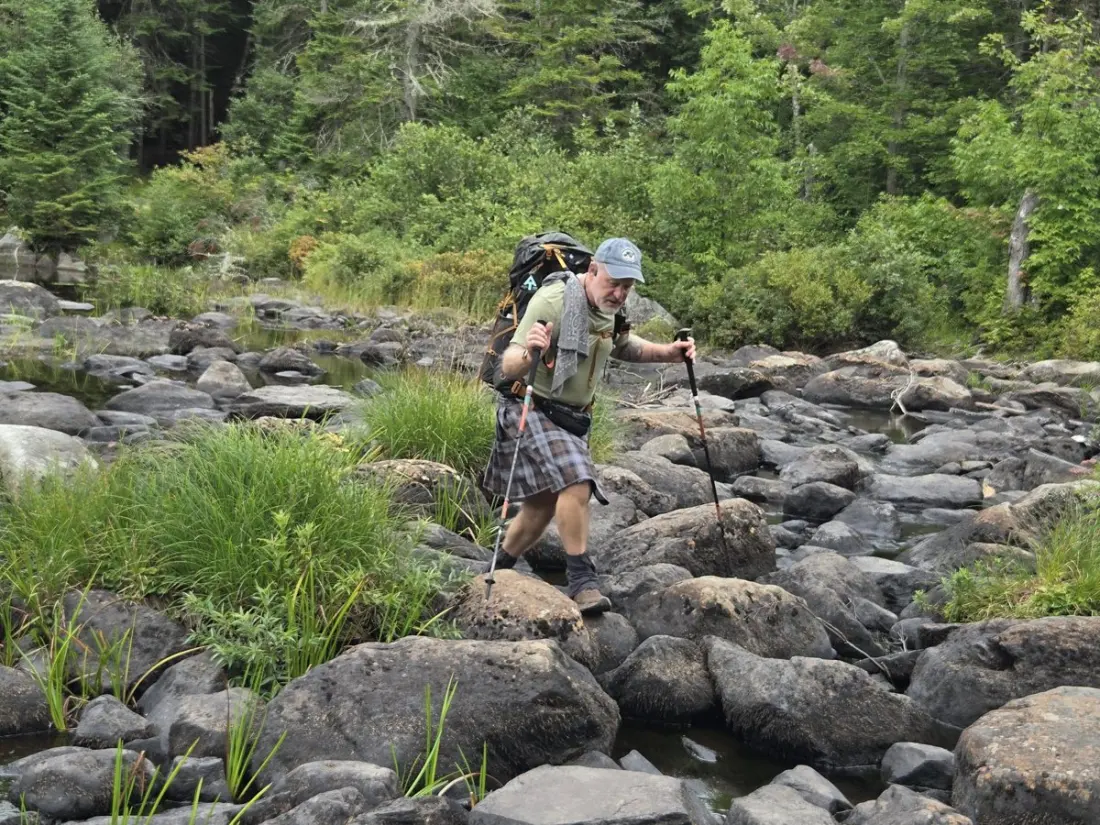
The account follows the two from the east end of Moxie Pond north to Monson, about 24 miles over two days. Along the way come the realities of Maine hiking: fog-drenched brush on Bald Mountain (where the pair happily took the bypass trail, no purists either of them), and multiple crossings of branches of the Piscataquis River — rock hops, log balances and, memorably, a shuffle across a beaver dam that other hikers deemed too sketchy. For the writer, a former researcher who once waded streams in the Rockies, Alps and Andes for work, the wet-footed competence was a small but genuine confidence boost on a hike where younger walkers kept cruising past.
The pieces fall into place at Shaw's in Monson — a legendary stop and the last town before Katahdin — where shuttle driver Poet loads a van of hikers before the final push into the Wilderness. The payoff for the writer: stepping into Maine's famed wilderness with an almost empty pack instead of the dreaded "Big Carry."
Why does this matter to travellers? Because it shows the Hundred-Mile Wilderness isn't only for hardened thru-hikers with six months on trail. Older walkers, slower hikers, or anyone nervous about a week of heavy resupply-free walking can stitch together shuttles and hostel beds to experience the same terrain with far less risk and weight. You trade some solitude and purity for comfort — a fair deal for plenty of people.
It's also a quiet portrait of trail partnership. The writer had planned to face the Wilderness solo, but accepted the offer, agreeing the pair would stay together for the week. On a long hike, knowing your limits — and knowing when company and logistics beat stubborn independence — can be the difference between finishing and quitting. — Source: The Trek