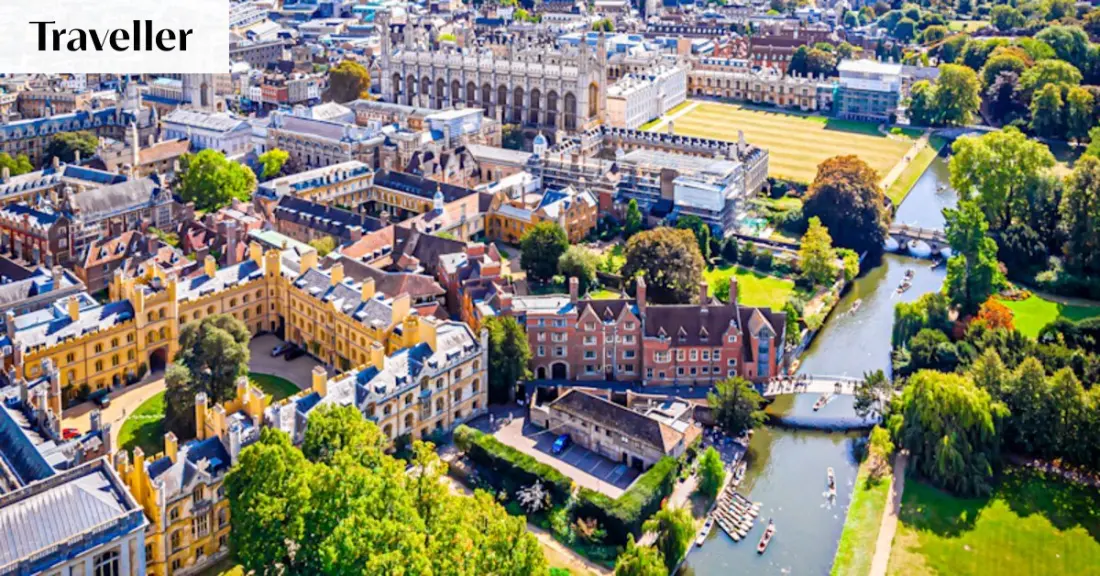
Punting along the River Cam with nobody else in sight sounds impossible in peak summer. In January, it's a different story. Our writer found the famous stretch known as The Backs — where the river glides past manicured college lawns — almost deserted on a freezing but sunny morning, and it turned out to be one of the best ways to see Cambridge.
Punting is the city's signature activity, and Scudamore's, operating since 1910, is the oldest and biggest operator on the water. You can take the pole yourself or hand over to a chauffeur. The sceptical-sounding 9am winter trip proved a win: blankets, hot-water bottles and an umbrella if needed, while the guide points out colleges tied to Isaac Newton, Charles Darwin, King Charles III and David Attenborough. Hiring a punt for six costs £28.50 an hour, with shared 45-minute tours from £40.
On land, the university's 31 colleges are the main draw. Peterhouse, the oldest, dates to 1284 and admits visitors free, as do several others; King's charges, but its gothic chapel and fan-vaulted ceiling justify the ticket. The city claims 126 Nobel prizes — more than anywhere else, it says — and the science heritage seeps into the streets: guide Jonny Thornalley leads a 90-minute Highlights walking tour (£20 adults, £12 children) past spots like the lane where Stephen Hawking lived in the 1970s and Pembroke College, where Australian writer Clive James studied.
Cambridge also punches above its weight on free museums. The Fitzwilliam is the standout, holding around 500,000 objects — Egyptian coffins to contemporary African painting — inside a neoclassical building with seriously lavish interiors. There are also free collections covering zoology, archaeology and anthropology, plus parks and meadows to wander, if you dodge the bicycles of students and professors who treat the streets like a velodrome.
Pubs double as history lessons. The Pickerel is a riverside inn from 1608, and at The Eagle, Francis Crick and James Watson announced the discovery of DNA's double helix in 1953. Food runs from old-school tearooms and chophouses to international restaurants serving the city's students, who come from 140 countries.
The writer stayed at The Hobson Cambridge by Adina, a new Australian-owned apartment hotel in a restored Victorian police station, with rates from about £125 a night — think mosaic floors, a stone staircase and an Antipodean-leaning restaurant called Oz & Isle.
Getting there is easy: Cambridge is about an hour by train from London King's Cross, making it a classic day trip — though the city rewards staying longer, especially out of season when the crowds thin and the pubs warm up.