
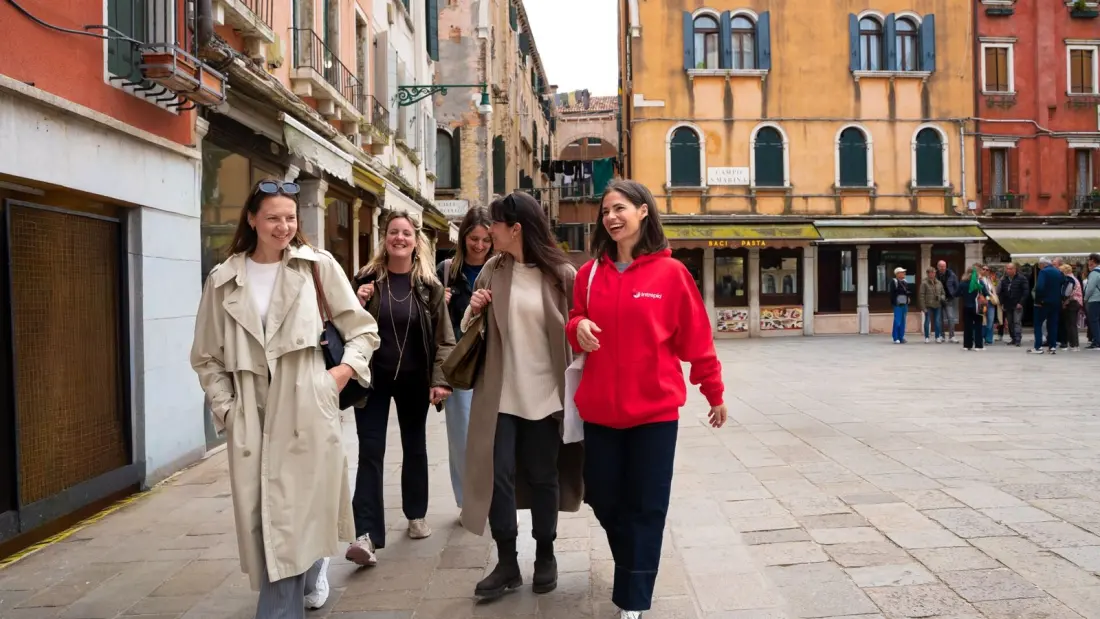
Barcelona, Venice and Paris are bracing for another summer of crowds — and the tension between visitors and residents is real. Venice's historic centre now has fewer than 50,000 residents, its lowest population in 300 years, while welcoming around 30 million tourists a year. Barcelona has doubled its tourist tax to as much as EUR 15 a night to fund affordable housing, and Venice has banned large cruise ships, loudspeakers and tour groups over 25 people, plus a EUR 5 day-tripper fee that continues into 2026. In Paris, residents of Montmartre hang banners reading 'Let Montmartre residents live' as tour groups of up to 60 clog medieval streets.
But the guides behind Intrepid Travel's new Uncommon Day Trips argue that boycotting these cities isn't the answer. Tourism contributed USD 11.6 trillion to global GDP in 2025 and supports millions of livelihoods — Paris businesses struggled through the pandemic and the 2024 Olympics, and Venice locals saw the damage when Covid emptied the city. The problem, they say, is concentration: 80% of travellers visit just 10% of the world's destinations, mostly for a few hours, spending little and crowding the same few streets.
Their solution is small-group tours (12 people max) that start at a famous landmark then push into ordinary neighbourhoods where locals actually live. In Venice, that means the Rialto Fish Market, the still-functioning 15th-century hospital where guide Camilla Feiffer was born, and a rare perk: prosecco on the rooftop of a private Gothic palazzo. Barcelona's version skips the landmarks entirely, visiting the El Clot district's bustling Mercat del Clot and Mescladis, a social enterprise that trains migrants for hospitality jobs. In Paris, you wander the quiet Passy quarter just a kilometre from the Trocadero, pausing at Passy Cemetery — where Manet is buried — for an uncrowded Eiffel Tower view.
The wider takeaway applies whether or not you book a tour. Stay overnight rather than day-tripping, choose locally owned hotels over short-term rentals (which guides blame for pushing residents out), use public transport, and spread your spending across neighbourhoods beyond the postcard core. Venice's Camilla puts it plainly: visitors who stay a night or two support the city; those who stroll through for a few hours often don't. The guides' message isn't 'stay away' — it's that how and where you spend your time and money decides whether tourism helps or hollows out a place.
For travellers who still want the Eiffel Tower, St Mark's or Sagrada Familia but dread the crush, this is a workable middle path: see the icon, then spend the day somewhere real.