Before self-service pumps, filling up meant an attendant in a pressed cap checking your oil and giving you road tips. A handful of buildings from that era survive along Route 66, and they've become some of the most characterful stops on the old Chicago-to-Los Angeles highway.
Gas stations became destinations in the 1920s and '30s, when competition was so fierce that owners built to be noticed. Pure Oil went with quaint English cottages topped by pump canopies; others chose towers, glazed tile and Art Deco trim. Many doubled as social hubs — selling sodas, fixing tires, and sometimes housing the owner's family upstairs. When the interstates bypassed the old highway, most were demolished. These five survived, largely thanks to local volunteers and National Park Service preservation grants.
In Shamrock, Texas, the Tower Station and U-Drop Inn opened in 1936 as an Art Deco service station and café under two spires — one still spelling CONOCO. The café's odd name came from a schoolboy's winning contest entry. Restored in 2003, it now works as a visitor center, and Pixar fans may spot it as the inspiration for Ramone's body shop in Cars.
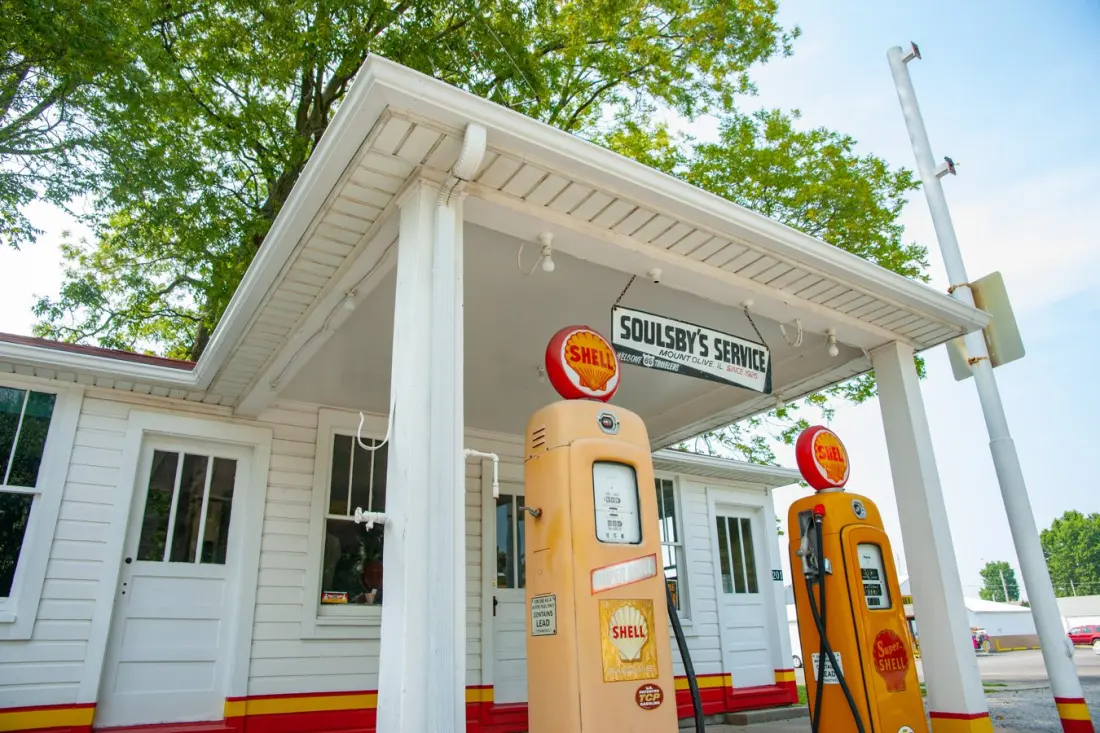
Illinois claims three. In Mount Olive, Henry Soulsby built his 1926 station himself on savings from mining years; his son Russell kept it alive with a radio and TV repair side business after Interstate 55 stole the traffic, and even grew an oak tree through the repair ramp once the work dried up. The pumps closed in 1991, and visits today are by limited tour only. In Normal, Sprague's Super Service (1931) looks like an English manor — it's the only two-story Tudor Revival station on Route 66, with apartments for the owner and his attendant above. The town bought it in 2016 and a gift shop operates inside. And in Odell, the cottage-style Standard Oil station of 1932 was restored by a community partnership, winning a national Route 66 preservation award in 2002, and now serves as the town's welcome center.
Oklahoma's contribution is the Seaba Station in Warwick, built in 1921. It adapted through World War II by rebuilding engines when gasoline was rationed, and today houses a motorcycle museum with more than 65 vintage bikes — plus a restored rock outhouse that was once cutting-edge roadside plumbing.
Why bother? Because these places capture something the modern fuel stop lost: service with a human face, and architecture built to charm rather than process. They're quick stops that reward the slower road — but many are run by small local groups, so check opening hours before you go, and consider pairing a stop with a stretch of the Mother Road itself.