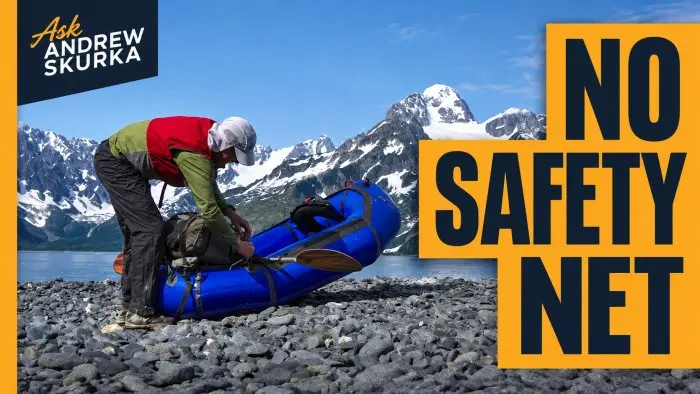
The hardest part of hiking alone usually isn't the terrain — it's the first few days with your own thoughts. That's the core message from Andrew Skurka, the first person to complete the Sea-to-Sea Route, the Great Western Loop and the Alaska-Yukon Expedition, who now runs guided backpacking trips for roughly 400 clients a year in southern Utah, the High Sierra, Alaska and Yellowstone.
Writing in his weekly video series for The Trek, Skurka argues that solo backpacking changes two things: it demands far more mental and emotional resilience than group trips, and there is no safety net — you are entirely self-reliant. The opening days are the roughest. On an eight-day solo run of the Pfiffner Traverse, the high route from Berthoud Pass to Milner Pass through Colorado's Indian Peaks Wilderness and Rocky Mountain National Park, even this veteran felt doubt, loneliness and guilt about time away from home. The shift from a connected, fast-paced daily life to walking alone at three miles an hour, he says, is simply jarring.
His advice: push through it. Miles, vertical and days eventually make the solitude feel natural, even earned — a bit like the backcountry skiing idea of earning your turns. A distant goal that seemed abstract at the start starts translating into visible progress on the map.
When things go wrong solo — a blown-out shoe, a lost glove, a lightning storm on an exposed ridge, six inches of unexpected morning snow, even a grizzly encounter — there's no partner to talk you down. And don't lean too hard on a satellite messenger, Skurka warns: friends and family aren't there, won't grasp your problems, and aren't therapists. A dropped water bottle may feel huge on trail, but loved ones living normal lives won't offer much sympathy.
He offers four reset techniques for panic or frustration: the STOP method (sit, think, observe, plan); the 'smoke break' — if everyone's breathing and has a pulse, take time to calm down and assess rationally; guide Jeff Wall's motto that 'there's always time for a snack', ideally a sugary one like Sour Patch Kids that goes down even when stressed; and the 5-4-3-2-1 grounding exercise — five things you can see, four you can touch, three you can hear, two you can smell — to pull yourself back into the present.
For anyone eyeing their first solo overnight or a longer thru-hike, the takeaway is practical: plan for a psychological adjustment period, don't quit in the first week, and have simple calming routines ready before you need them. Skurka also mentions a live Backpacker Radio event at the Skylark Lounge in Denver on December 5, 2026, for those near the city. The piece is adapted from The Trek.