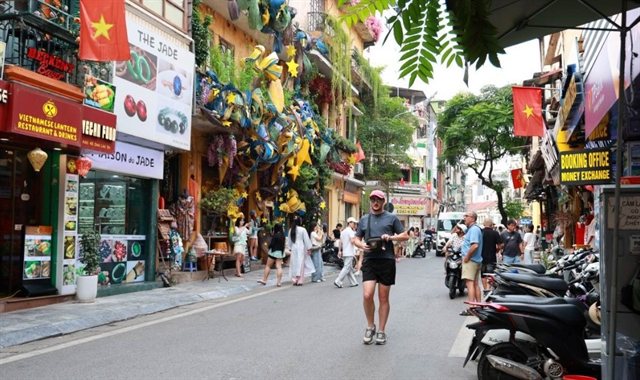
Vietnam just posted one of the biggest jumps in global tourism rankings. According to the World Economic Forum's latest Travel & Tourism Development Index, the country's score rose 6.3% between 2024 and 2026 – the second-fastest improvement of any of the 110 economies surveyed, behind only Albania (7.3%) and just ahead of Laos, Qatar and Malaysia. That lifted Vietnam from 59th to 52nd place overall, with a score of 4.15.
The index measures the conditions that make tourism work well: transport infrastructure, tourist services, safety, cultural and natural resources, and sustainability. Vietnam's gain – well above the 2.1% average across all surveyed economies, and the fastest rate of improvement since 2019 – was driven by richer cultural resources, better infrastructure and tourism services, stronger airline connectivity, and more resources for business travel.
Vietnam also features on another WEF list: the ten largest non-high-income travel and tourism economies by direct GDP, alongside China, India, Indonesia, Thailand, Türkiye, Mexico and Brazil. That group now accounts for over 28% of global direct tourism GDP, a share projected to reach 35% by 2035, and has been improving faster than the rest of the world on 15 of the index's 17 pillars. The wider region is surging too – Asia-Pacific was the most improved region overall, with seven of the ten fastest risers coming from developing South-East and South Asian countries.
There are caveats worth knowing. The report flags declining price competitiveness in three-quarters of economies, tourism investment lagging demand, labour shortages, and persistent overtourism pressures after COVID. For Vietnam specifically, gaps remain in tourist services and accommodation infrastructure compared with the world's top 20, and environmental sustainability is flagged as a growing risk.
Why should travellers care? Practical signs of improvement are already visible: more international flight connections, expanding hotel and service options, and growing investment outside the usual hubs. It also suggests Vietnam is on track to handle rising visitor numbers better – though if you want to dodge crowds and rising prices, shoulder seasons and lesser-known spots like Ninh Binh, Phong Nha or the Mekong Delta still offer excellent value compared with Hoi An or Ha Long Bay at peak times. For anyone weighing Southeast Asia for a 2026 trip, Vietnam is a country very much on the up.