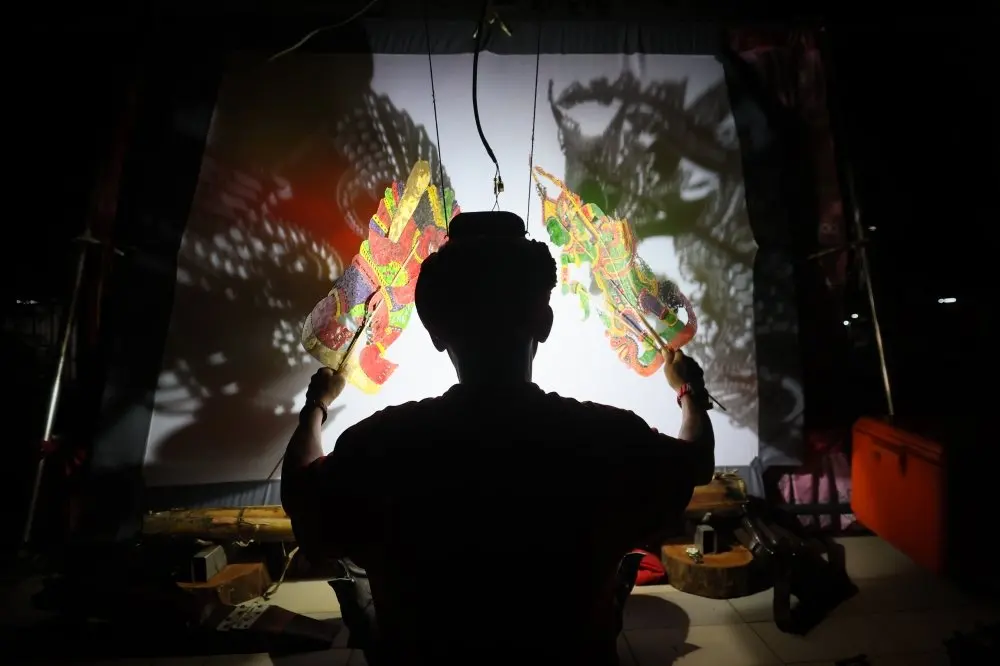
In Kelantan, on Malaysia's east coast, one of the country's most beloved traditional arts is being kept alive by an unexpected family. The Sri Cindayu Wayang Kulit Association in Kota Bharu is run by Kang Boon Ann, better known as Che Ann, a 58-year-old Peranakan Chinese puppeteer who has spent decades mastering wayang kulit, the shadow puppet theatre more often associated with the Malay community.
Che Ann's fascination began at age seven in the village of Kok Lanas, in the days before most homes had televisions. Post-harvest shadow puppet shows were the local entertainment, and he filled his school exercise books with sketches of the ornate puppets, much to his teacher's frustration. He later spent ten years as a mechanic before legendary puppeteer Dollah Baju Merah taught him to craft puppets from cowhide over a year-long apprenticeship. Two other masters, Dollah Ramboo and Yusoff Mamat, trained him in performance and coloured puppet-making.
When early attempts to train outside musicians fizzled out in 2005, his wife Eh Tian Eh Awang suggested the family learn together. Today the whole household runs the shows. His daughter Lily, 32, plays the canang, gong, kesi and gedombak, and is working towards becoming a tok dalang, the master puppeteer and storyteller. Her brother Aaren, 29, already performs as a tok dalang, switching between puppetry and musicianship. He describes the demands of the role vividly: one hand moves the puppet while the other finds the next one, the voice shifts between characters, and the ears track the rhythm of live music.
The family has also dragged the centuries-old art into the digital age without abandoning tradition. TikTok clips have drawn young people who later turned up wanting to learn, and Aaren adds digital sound effects to battle and archery scenes while keeping the traditional music intact. Beyond performances, they run school workshops covering puppet-making, instruments and staging.
Why should a traveller care? Wayang kulit is one of the most atmospheric cultural experiences in Malaysia, and seeing it performed by a family who live and breathe the art is far more memorable than a staged hotel show. Che Ann's message is refreshingly undemanding: you don't need to become a puppeteer, just know the art exists. Once you know it, he believes, you'll appreciate it, and once you love it, you'll help preserve it. For visitors to Kota Bharu, catching a performance or seeking out a workshop is a direct way to support that effort, and to experience a tradition that a determined Peranakan family refused to let fade. — Malay Mail Life