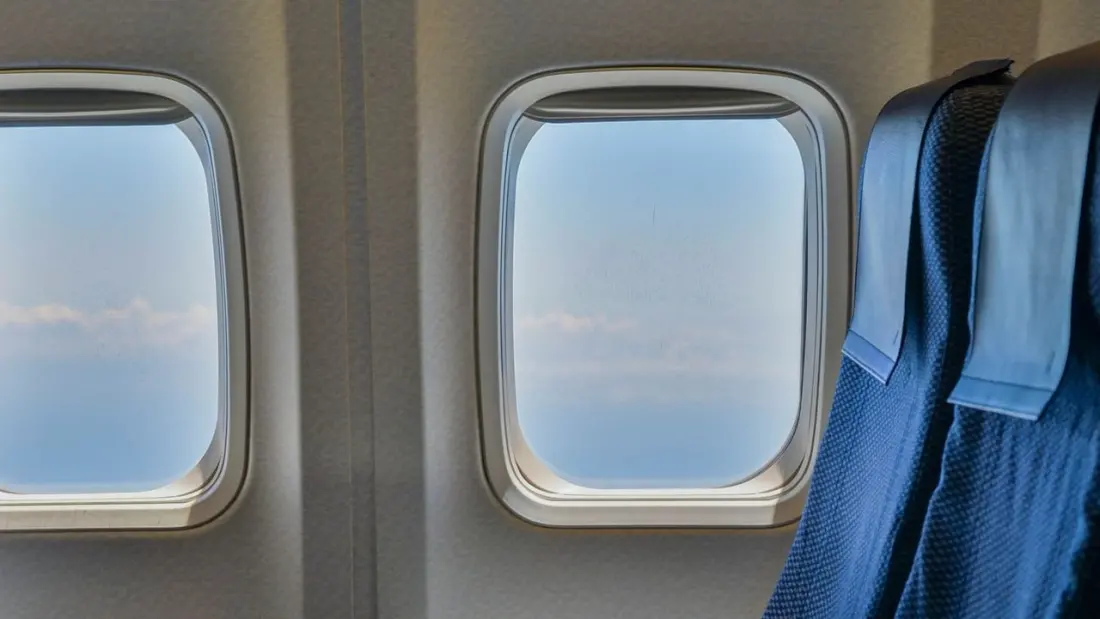
Not all economy seats are created equal, and a little seat-map strategy can make a long flight dramatically better. The first rule: skip basic economy. Those stripped-down fares don't come with seat selection at all — you'll be assigned whatever's left at the gate. A standard economy ticket lets you choose a seat at booking or check-in, though expect to pay a fee (typically $25 to $100+) for the most coveted spots, like extra-legroom rows near the front.
If a flight fills up and your preferred seat shows as taken, don't give up. American and United now offer app features that automatically move you to your preferred seat if it frees up before boarding, so set your preference once and let the software work.
So which seat suits you? Nervous fliers do best over the wings — the plane's centre of balance, where turbulence and turns feel mildest, according to fear-of-flying coach Paul Tizzard of LoveFly. A seat facing the galley helps too: watching cabin crew calmly go about their business mid-turbulence is reassuring, and letting the crew know you're anxious means they'll often check in on you.
Parents with babies should aim for the bulkhead row, where many airlines attach infant bassinets to the wall for free — mostly on long-haul routes, sometimes short-haul. There are only a few per aircraft and bulkhead seats sell out fast, so book early; some airlines let everyone on an infant booking pick seats free right after purchase. No bulkhead? Buy a seat for your baby and bring an approved car seat (window rows only), or take a window yourself if flying lap-infant, so you're not bumped in the aisle while feeding.
For sleep on long-haul flights, hunt for the two-seat rows along the windows on planes like the Airbus A330 — far better than four-abreast in the middle. Exit-row seats offer extra legroom but cost more and come with emergency-assistance requirements. Whatever you do, avoid the very last row: those seats often don't recline and sit right against the galley and lavatories.
Tight connection? Take the front of the cabin, or any aisle seat so you can move the moment the seatbelt sign dings. Flight attendant turned blogger Carrie Bradley suggests telling the crew — if you're not one of many in that boat, they may even reseat you forward before landing.
Finally, anyone at risk of deep vein thrombosis — older travellers, pregnant passengers, or those with a clot history — should follow CDC advice: pick an aisle seat and walk around every two to three hours. An aisle also gives you easier lavatory access and crew assistance for other health concerns. One fare class up from basic economy and a few minutes studying the map can be the cheapest upgrade you'll ever buy.