Everyone flying into Provence heads for Avignon, especially in July when the famous theatre festival takes over the city. But across the Rhône sits Villeneuve-lès-Avignon, a beautifully preserved Gard town built from the same golden stone, and it makes a smarter base for plenty of travellers: fewer crowds, gentler prices, and the sights all clustered around one walkable street.
Getting there is easy. A bus from central Avignon takes about ten minutes, and once you arrive, most of the town's hotels, restaurants and shops sit on or just off the Rue de la République — a pleasant strip of boutiques, cafés and gourmet food shops that rewards a slow wander.
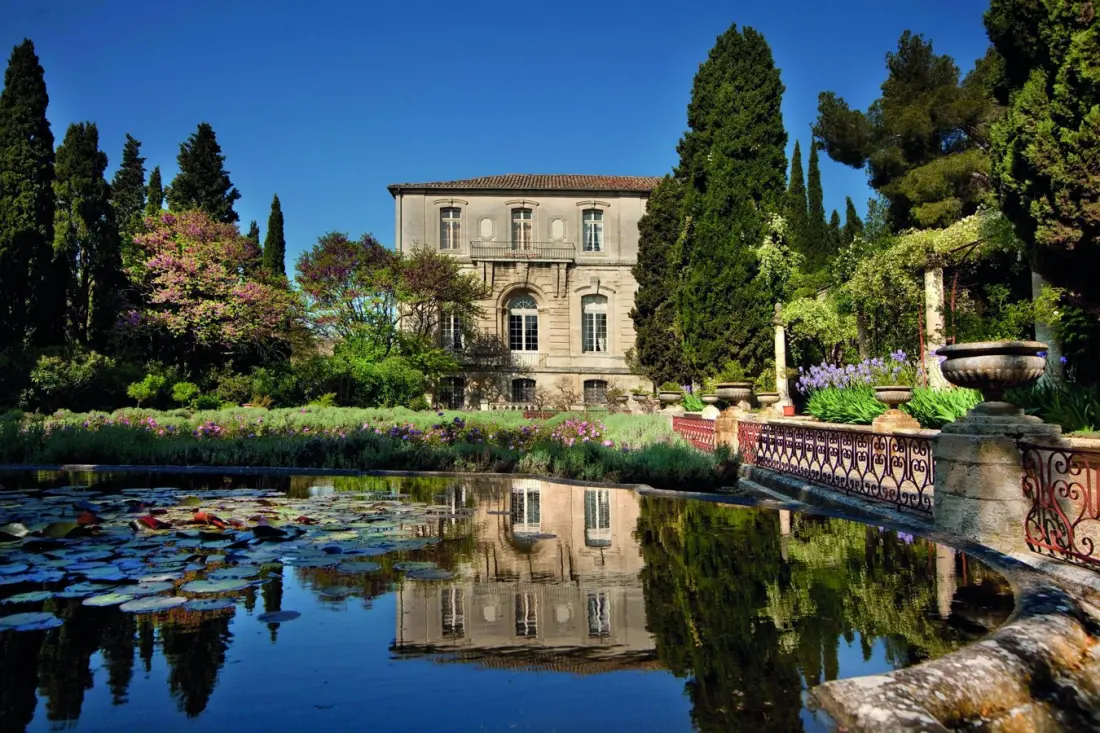
The headline sight is the Abbaye Saint-André, a 15-minute uphill walk from town on Mont Andaon. Founded in the 10th century, it grew into one of France's richest Benedictine monasteries by the 13th century — so rich that the Crown stepped in, granting the abbey independence in exchange for control of its clifftop position overlooking the Rhône. Little of the medieval monastery survives, but you can tour the elegant 17th-century Palais Abbattal, whose gallery hosts exhibitions and honours Gustave Fayet, the artist-collector who funded the abbey's early-20th-century restoration. In the terraced Italianate gardens lies the 11th-century Romanesque chapel sheltering the tomb of Saint Casarie, a hermit who died here in 586 and drew pilgrims for centuries. From April to September the gardens are open, with the Hortus Café serving lunch on a terrace with views stretching to Avignon, the river and Mont Ventoux.
Next door, the vast Fort Saint-André offers a military angle on this strategic overlook plus panoramic views of the Provençal countryside. Nearby stands the tower built by King Philip the Fair to intimidate Avignon, then held by his rival the Count of Provence — the tower once completed what is now the famously unfinished Pont d'Avignon of the French children's song.
The town's story is tightly woven with Avignon's. In 1309 Pope Clement V, a Frenchman, moved the papal court from Rome to Avignon to escape its intrigues, beginning 70 years of French popes. In 1348 Clement VI bought Avignon and the surrounding Comtat Venaissin — taking in Carpentras, Venasque and a string of villages — to expand his holdings. Villeneuve, you could say, watched it all from the other bank.
Why bother? If you're visiting during festival season, when Avignon's accommodation prices spike and its streets pack out, Villeneuve offers the same medieval atmosphere at a calmer pace, with the papal city a short bus ride away. It also works year-round as a Provence base: good dining, characterful hotels, real history, and zero queueing. Come for a morning from Avignon, or stay a few nights and let the famous city be the day trip instead.