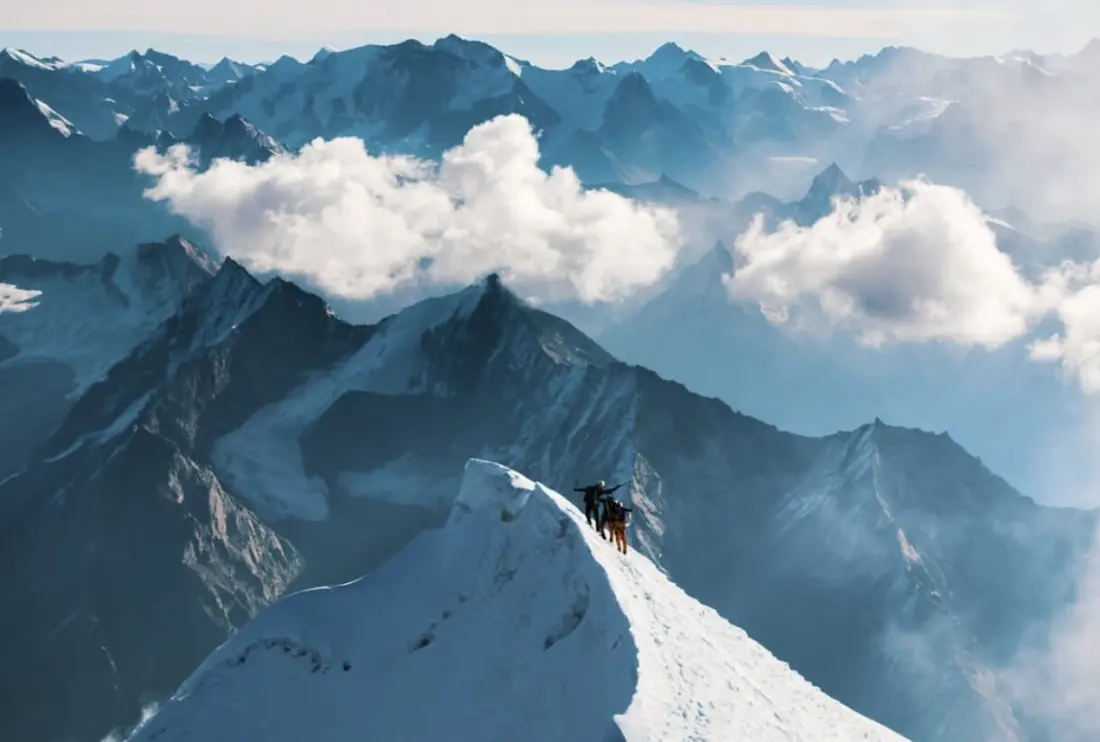
Three Swiss climbers have pulled off one of the more audacious ascents of the autumn Himalaya season: a first ascent of the northwest ridge of Mount Shiva (6,142m) — also known as Bahai Jar — in the Kishtwar massif of the Indian Himalaya.
Stefan Siegrist, who had already climbed the mountain in 2018 and returned specifically to try its unclimbed northwest ridge, teamed up with Benjamin Bosshard and Philippo Sala. Both Bosshard and Sala had never been above 6,000m before, and the team reached base camp in late September expecting days of bad weather for acclimatisation. Instead, a three-day window of clear skies opened immediately — too good to pass up.
After plenty of internal debate, they left base camp on October 3, telling themselves the attempt was really about climbing higher and acclimatising, with no pressure to summit. That mindset changed as they went. They bivouacked at 5,250m below the ridge, then at 5,700m — a sleepless night, since the newcomers' bodies had never been that high and a storm was forecast. When morning came still clear, they committed. The team topped out at 7:44am, just six days after arriving at base camp, and descended by the 1985 Japanese route as the storm rolled in.
There's one detail from the climb that made headlines in climbing circles: when the trio realised they'd forgotten their stove, expedition photographer Christoph Detschmann flew it up to them by drone. Siegrist says the delivery was essential to the climb's success. That's a controversial move — at the recent Piolets d'Or, using drones to ferry gear up a route was widely seen as crossing a red line in alpine-style ethics, even if scouting with drones is broadly accepted.
Why should a traveller care? Kishtwar and the Chenab River Valley remain one of the quieter corners of the Indian Himalaya — far less trekked than Ladakh or Himachal's tourist hubs. For trekkers and mountaineers looking for remoteness, it's a name worth knowing. It's also a useful reality check: India bans satellite phones and InReach devices on expeditions, so Himalayan teams there climb out of contact until they return — something any visitor to the region should factor into their plans.