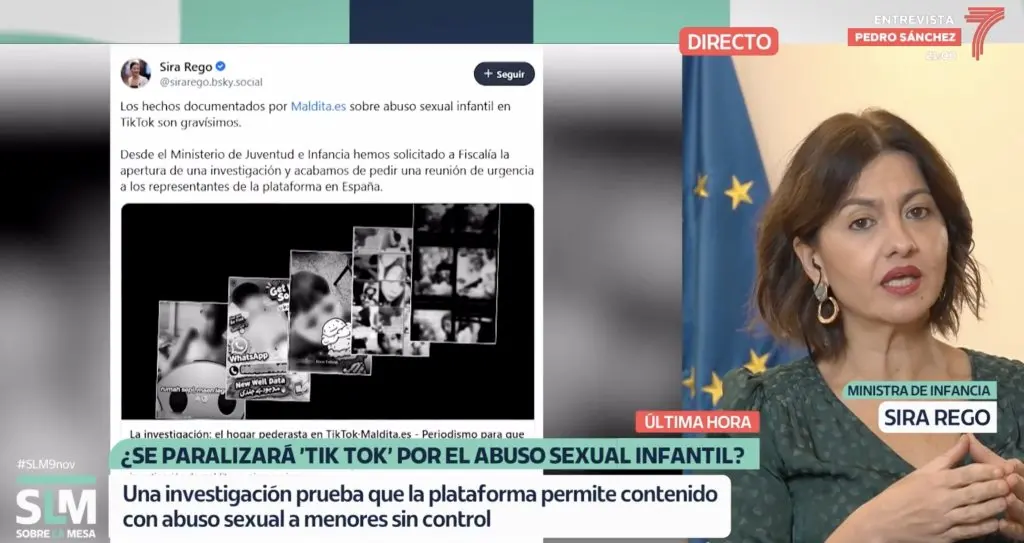
Travellers heading to Spain could soon find one of the world's biggest social apps missing from their feeds. The Spanish government is actively considering suspending TikTok's services in the country, after an investigation by the anti-disinformation foundation Maldita.es uncovered 1,183 videos containing explicit child sexual abuse material, which together had racked up around 48 million views.
Youth and Children's Minister Sira Rego announced that her ministry has referred the findings to public prosecutors and requested an urgent meeting with TikTok's representatives in Spain. In its letter, the ministry asked prosecutors to protect any children who may be affected, and stated that the government was weighing a suspension of the platform's services if deemed appropriate. Ministry sources described the findings as extremely serious, criticising both TikTok's content moderation and the role its recommendation algorithms played in spreading the material.
The scale of Maldita.es's investigation is striking. Over 35 days, researchers documented videos, livestreams and direct messages, linking more than 26,000 profiles to suspected child sexual abuse activity. Around 7,700 of the users identified were Spanish-speaking, and some livestreams drew hundreds of viewers, with participants requesting sexual content. The foundation put it bluntly: material you would expect to find only on the dark web was sitting on TikTok.
Perhaps most damning was the test of TikTok's own reporting system. Researchers flagged 50 videos; TikTok removed just five and blocked 13 more for Spanish users. Three days after the reports, 40% of the accounts involved were still active. The foundation says TikTok has asked for more information but has not yet answered questions about its safeguards for minors.
This is not happening in a vacuum. TikTok, owned by China's ByteDance, faces multiple lawsuits and investigations over child safety, and internal documents released through a 2022 US court case showed the company itself had acknowledged problems with child sexual exploitation on the platform. Separately, the European Union has told TikTok to change the design of its personalised For You feed, which the bloc called harmful, or face substantial fines under its digital services rules.
For travellers, the practical takeaway is simple: if you rely on TikTok for travel inspiration, restaurant finds or staying connected while abroad, don't assume it will be available in Spain. A suspension would follow in the footsteps of bans elsewhere, and app access can change quickly. Back up any saved travel content, and have alternatives like Instagram Maps, Google Maps lists or local review sites ready. Anyone travelling with teenagers may also want to talk about what the report revealed — the material was reaching users through ordinary platform features, not hidden corners of the internet. For now, no ban is in force; the decision rests with prosecutors and the government's assessment of TikTok's response.