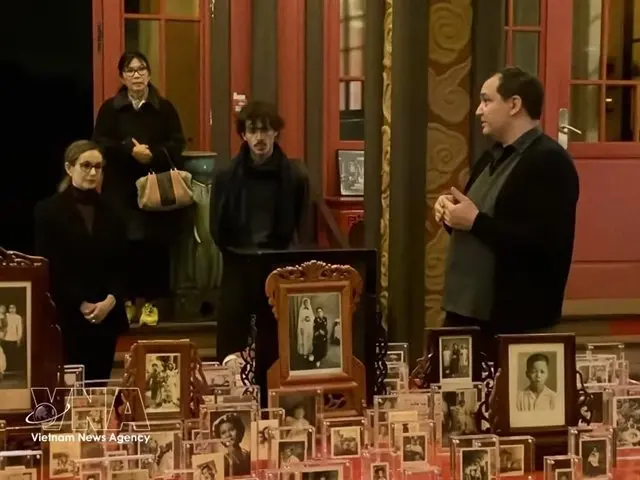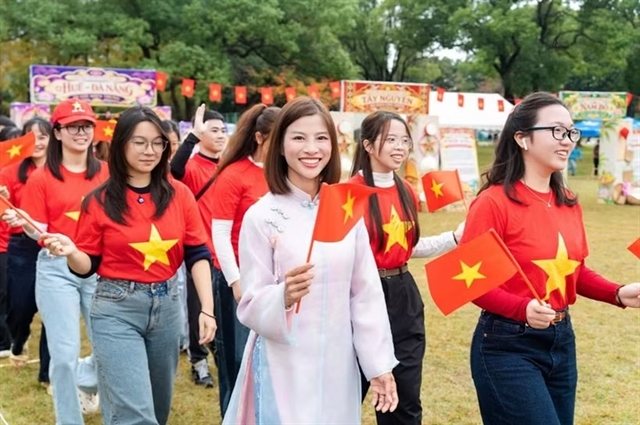
Ahead of Việt Nam Culture Day (November 24), which this year marks 80 years since the country's first National Cultural Conference, one overseas Vietnamese leader has set out a detailed case for changing how Việt Nam presents itself to the world — and Japan is the testing ground.
Đỗ Thị Minh Phương, secretary-general of the Union of Vietnamese Associations in Japan and founder of Tokyo-based channel HONTO TV, spent years at Việt Nam Television before moving to Japan. Her argument, laid out in an interview with Vietnamese state media, is that cultural promotion has leaned too heavily on pretty images and not enough on the stories behind them. A bowl of phở, she suggests, should come with the story of the family meal and the craft knowledge that produced it.
Her favourite example is water puppetry. Japanese audiences turn up to watch it and love it — but they keep asking how the puppets actually work and want to try it themselves. That gap between watching and participating, she argues, is where cultural promotion fails: performance without explanation of origins, technique and meaning leaves curiosity unsatisfied.
The most concrete idea on the table is animation. Việt Nam has the raw material — history, legends, folk tales, festivals and modern city life. Japan has the machinery: decades of expertise in character design, storytelling, production and global distribution via manga and anime. Phương's warning is that Vietnamese partners need to be in the room from the first script draft, with intellectual property and commercial rights agreed upfront, or the collaboration will export the profits but not the culture.
She also flags shorter-form digital content — short videos, animated films, jointly produced cultural experience programmes — and the practical groundwork of building trustworthy Japanese-language resources on Vietnamese culture, properly sourced and copyright-cleared, so Japanese journalists, teachers and creators can write about the country accurately without starting from scratch. Overseas Vietnamese, she says, can act as the connective tissue between partners, editors and audiences, provided roles and funding are clearly defined.
There's a community angle too: keeping Vietnamese-language classes alive for children growing up in Japan, training teachers and pooling learning materials so the second generation can talk to their grandparents and read their own family stories.
For travellers, the takeaway is subtle but real. Interest in Vietnamese culture in Japan — food, performance art, animation — tends to push museums, festivals and restaurants in both countries to offer more hands-on, well-explained experiences. If water puppetry workshops or Việt Nam-themed cultural programming in Japan expand, they'll come from exactly this kind of advocacy. And for anyone travelling to Việt Nam, the renewed focus on storytelling behind traditions is a nudge to seek out the makers, cooks and performers rather than just the spectacle. Source reporting: Vietnam News Life.