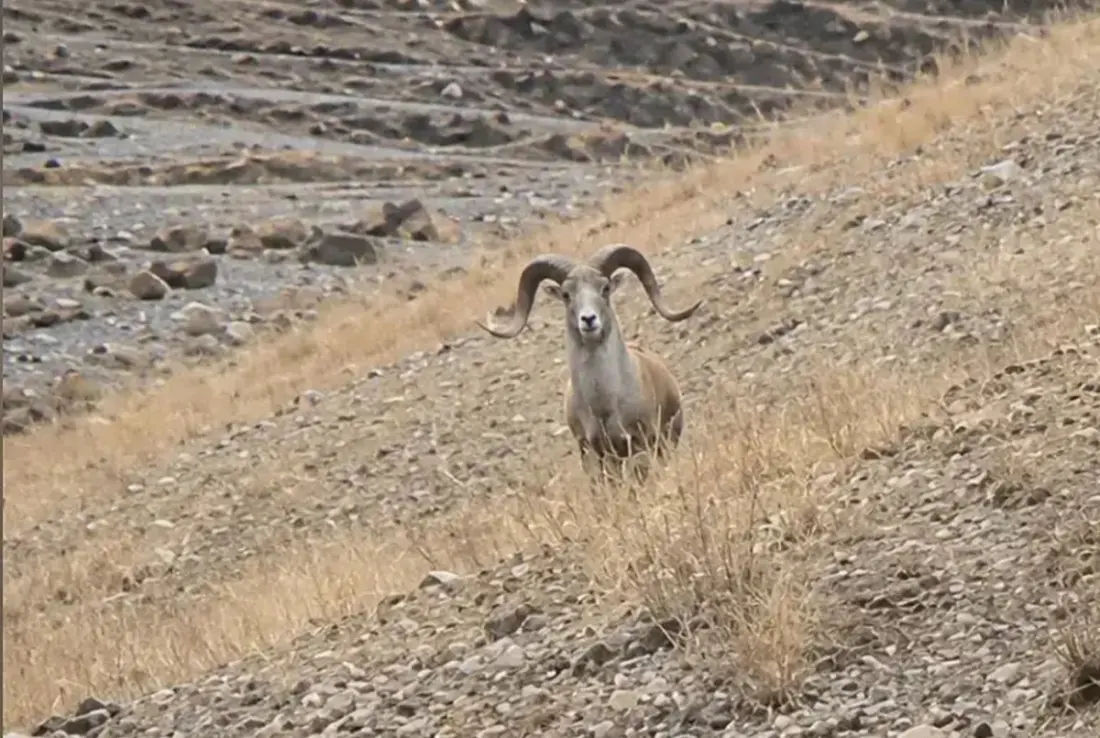
A herder in southern Kyrgyzstan has accidentally produced some of the best wildlife evidence the country's ecologists could ask for. While tending livestock in the mountains of Batken region, the man spotted wild sheep coming down from the high ground and filmed them. The footage — later handed to the regional office of the Ministry of Natural Resources, Ecology and Technical Supervision — shows two Severtzov argali grazing calmly right beside domestic animals, an unusual close-quarters encounter between wild and herded stock.
The sighting ties into a wider piece of news: a census carried out in late 2025 counted 144 Severtzov argali in Batken region. That number gives conservationists a baseline for a species that lives only in scattered pockets of Central Asia's mountains, and it confirms the rugged terrain along Kyrgyzstan's southwestern edge still supports a breeding population.
So what exactly is a Severtzov argali? It's a wild mountain sheep — an ungulate with the spiralled horns argali are famous for — named after the Russian naturalist Nikolai Severtzov. Unlike its better-known cousin, the Marco Polo argali of the high Pamirs, the Severtzov variety sticks to smaller, more isolated ranges, which makes it harder to spot and more vulnerable to habitat loss. The ministry stresses that protecting both the animals and their habitat matters for the region's biodiversity.
For travellers, the story is a nudge to look beyond Kyrgyzstan's famous highlights. Most visitors come for alpine lakes like Issyk-Kul or the trekking hubs around Karakol and Song-Kul, but Batken in the far southwest is a different experience altogether: quiet valleys, walnut and apricot country, and mountains where wildlife outnumbers tourists by a wide margin. The fact that a wandering herder with a phone camera can capture rare wild sheep tells you how wild this corner of the country really is.
There's a practical angle too. Wildlife watching in Kyrgyzstan is generally free of the crowds and price tags you'd find elsewhere — no permits for simply hiking in most mountain areas, and local herders are often the best informal guides to where animals graze. If you do head to Batken, go with a local fixer, keep a respectful distance from both wild animals and livestock, and remember that these sheep survive precisely because their habitat is left alone. Ethical, low-impact travel here genuinely helps the conservation case the ministry is making.
A census figure of 144 may sound small, and it is — but for a shy mountain species in a remote border region, a verified count and fresh video evidence are real wins. It's also a reminder that some of the world's most memorable wildlife encounters happen not in fenced reserves but on ordinary hillsides, occasionally photobombed by a farmer's sheep.