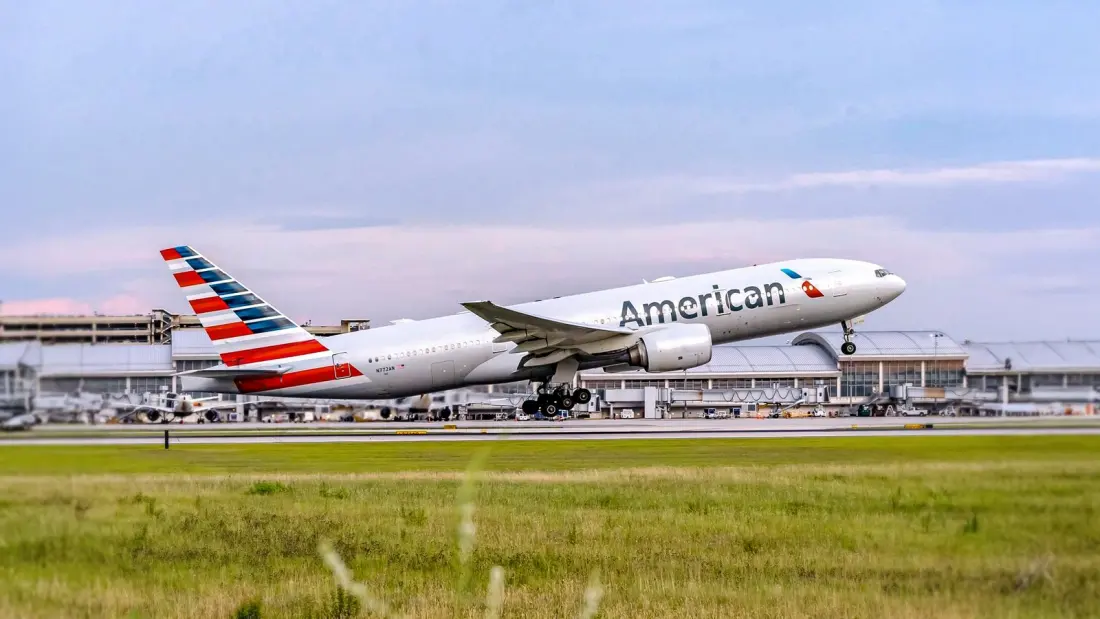
It sounds odd: American Airlines' second-biggest hub sits just 130 miles away in Charlotte, yet the carrier keeps a dedicated 273-seat Boeing 777-200ER at Raleigh-Durham International, flying daily to London Heathrow all year round. The numbers explain why.
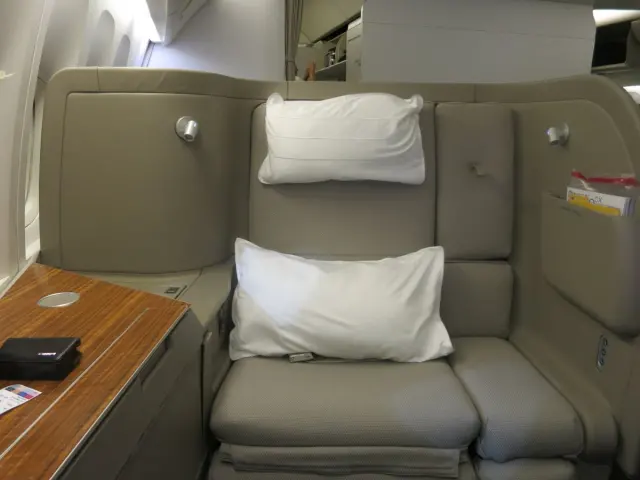
The route, flight AA174, carries roughly 900,000 passengers a year at a healthy 75-85% load factor. But the real story is the passenger mix. At Charlotte, only about a third of traffic actually starts or ends its trip there — most people are just connecting. Raleigh-Durham is the opposite: the London route is North Carolina's biggest point-to-point market to Europe, and it's fed by the Research Triangle Park corridor of pharmaceutical, biotech and tech companies whose executives pay full fares for the 37 lie-flat Flagship Business seats.
There's a second revenue stream hiding under the floor. The 777's belly hold swallows 32 LD3 containers, and nearby labs run by the likes of Pfizer, Biogen and GSK ship temperature-sensitive biological samples and drug ingredients to Europe via Heathrow. Life-science shippers pay four-figure premiums per climate-controlled pallet rather than risk spoilage trucking freight down to Charlotte or Atlanta. That cargo essentially covers the fuel bill through the slow winter months.
Strategically, the flight also keeps rivals out. Delta flies from RDU, Air France serves Paris there, and Lufthansa connects Frankfurt — so if American pulled its Heathrow nonstop, corporate contracts would drift to competitors. Through its Atlantic Joint Business with British Airways, AA uses RDU-London as a one-stop gateway for Carolinas travellers heading to Europe, India or the Middle East. The route has grown steadily too: from a 757 to a 767 to today's 777-200ER, with the bigger 304-seat 777-300ER appearing in peak season.
So why an older 777 instead of a shiny 787? American owns these 47 aircraft outright, so there's no lease to pay — the jet earns more per flight even though it burns more fuel. Mechanical hiccups at an outstation without on-site spares are a real risk, but the low ownership cost gives a financial cushion. American has even refreshed the interiors to keep the type flying into the 2030s, since narrowbodies like the A321XLR could handle the distance but lack the cargo volume this route depends on.
For travellers, this is one of the more comfortable ways across the Atlantic from the Southeast US: a nonstop to Heathrow with lie-flat business, a 24-seat premium economy cabin and plenty of economy space — no backtracking through a hub.