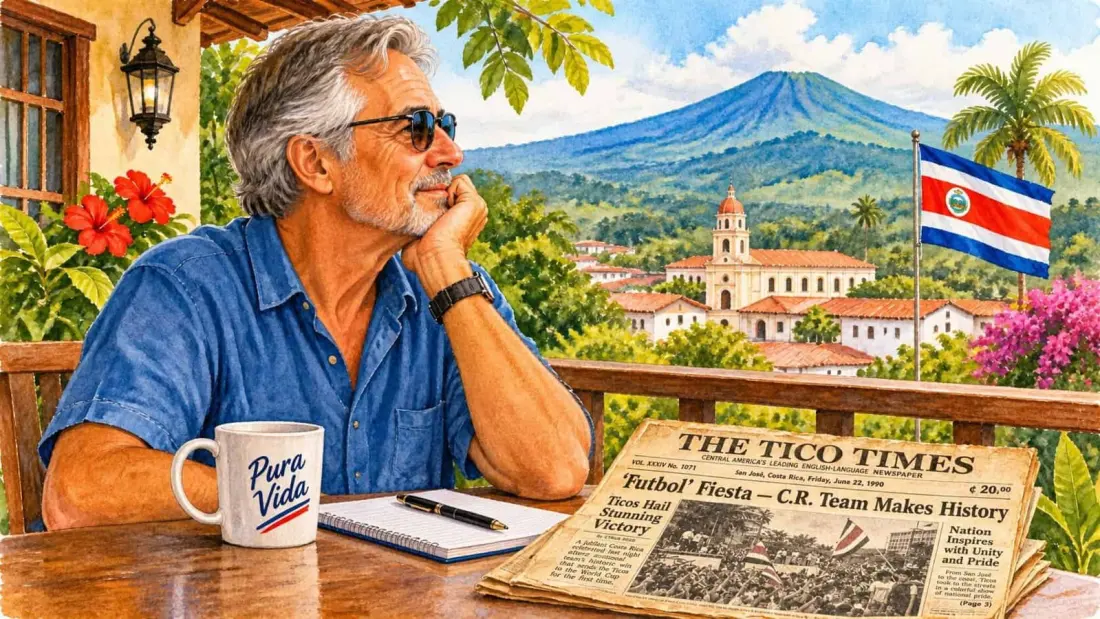
An American columnist who spent the 1990s poking fun at Costa Rica in English-language expat monthlies has reflected on how those years changed him — and his account is a useful read for anyone dreaming of a move abroad.
Back then, he wrote under the pen of a frustrated gringo. The telephone monopoly meant long waits for a landline; cell phones were a rarity. Roads that now carry regular traffic were often dirt — dust in the dry summer, mud and potholes once the rains came. He mocked shopkeepers reaching for calculators to do simple sums and grumbled about police he saw as apathetic or worse. His readers, mostly fellow impatient expats, loved it.
The turning point came when a Costa Rican friend suggested he flip the script. He wrote a satirical column from the perspective of a fictional Tico brother-in-law, fed up with gringo arrogance — an over-the-top 600-word jab at ageing foreign men chasing much younger women, and at tourists treating locals as disposable. He expected readers to laugh. Instead, the backlash was fierce: one retired US military veteran demanded to know where the fictional brother-in-law lived so he could throw a punch; another warned that tourists would read it and never return. The author spent weeks avoiding people on the street until the next issue appeared.
That experience rewired how he saw the country he'd chosen. Just because most Ticos couldn't read his English columns didn't make them harmless, he realised — it was, in his words, like pulling faces at someone who can't see you. From then on he wrote with more empathy: interviewing his Costa Rican wife and her family about their real lives rather than mining them for jokes, and happily making himself the punchline when he fumbled local ways. Decades later, married into the culture and fluent in its rhythms, he describes himself as as much Tico as gringo.
Why does this matter to travellers? Because the line between visitor and resident is thinner than it looks. Costa Rica attracts a steady stream of retirees, digital nomads and long-stay snowbirds, and the expat bubble — with its English-language media, gated comfort and imported expectations — can keep you seeing a country as a list of things it lacks. The columnist's arc, from snark to genuine belonging, is a gentle warning: the richer experience comes when you stop grading a place against home and start learning its history, humour and family life from the people who live there. It's also a nice snapshot of how much the country itself has evolved since the 1990s, when watching a World Series finale on a phone in a Costa Rican bed would have been unthinkable.