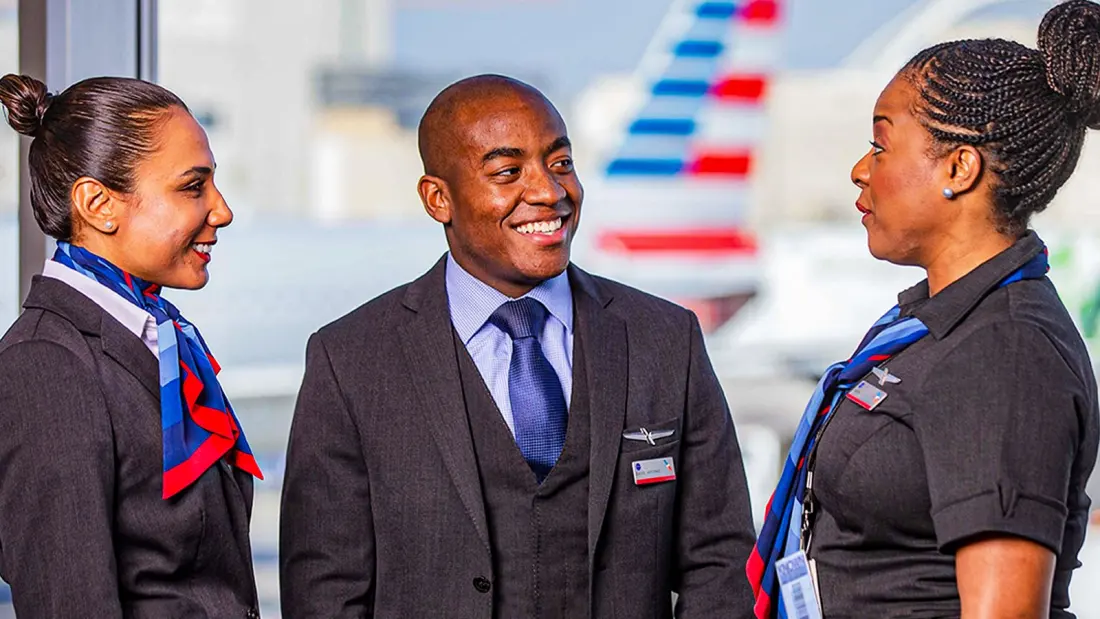
That friendly crew member scanning boarding passes at the aircraft door has already spent the better part of an hour on safety work you'll never see. A recent look at cabin crew duties reveals just how much happens before, during and after every flight — and none of it is about serving drinks.
Before boarding begins, crew run a full security sweep and then test emergency equipment at their stations: evacuation alarms, public address systems, emergency lights, the defibrillator, megaphone and flashlight. They check that oxygen bottles are more than three-quarters full and in date, fire extinguishers sit in the green zone with pins in place, lavatory smoke detectors work, life rafts and the emergency locator transmitter are present, slide pressure gauges read correctly, and spare safety cards, life vests (including infant versions) and extension seatbelts are stocked. Even their own jumpseat harness, smoke hood and fire gloves get a once-over.
While you file down the aisle, crew are quietly profiling passengers — in a good way. They're spotting able-bodied passengers who could assist in an evacuation: police, military, firefighters, off-duty pilots, or doctors who might handle a medical emergency. These passengers may be asked to help at the bottom of a slide, hold a deflated slide taut, or lead people away from the aircraft. Exit rows have rules too: US flyers there must be 15 or older and physically able to assist, while UK crew use the memorable acronym CODPIES to rule out Children, Obese, Deportees, Pregnant, Infant, Elderly and Sick passengers from those seats.
Then comes the line every flyer knows: 'arm the doors and cross-check.' Each crew member sets their door so the slide deploys automatically if opened in an emergency, and the colleague at the opposite door verifies it aloud. The mechanics differ by aircraft — Airbus doors use a safety-pin lever system, while older Boeing 737s require crew to physically attach a girt bar to the floor bracket. After landing, doors are disarmed and cross-checked again, and cabin crew won't open up until ground staff knock and give a thumbs-up. An accidental slide deployment on the jetbridge can injure ground staff, so this step matters.
During takeoff and landing, crew sit in a partial brace position running a 'silent review': mentally rehearsing evacuation commands, checking which exits are usable if theirs is blocked, and noting who in their zone might need extra help. Many use memory aids like ALERT or OLDABC to stay sharp. They're also quieter than usual on purpose — that's concentration, not rudeness.
Even mid-flight, chimes from the cabin interphone system carry coded information. A single chime with a blue light means a passenger call bell; yellow means it's from the lavatory; a high-low chime is a crew call. It's how a locked cockpit and the cabin stay coordinated for turbulence warnings and 'cabin secure' checks.
Why should travellers care? Understanding this invisible work explains why crew insist on seatbelt checks, exit-row rules and silence during takeoff — they're not being fussy, they're running an emergency plan in their heads. A little patience at boarding goes a long way.