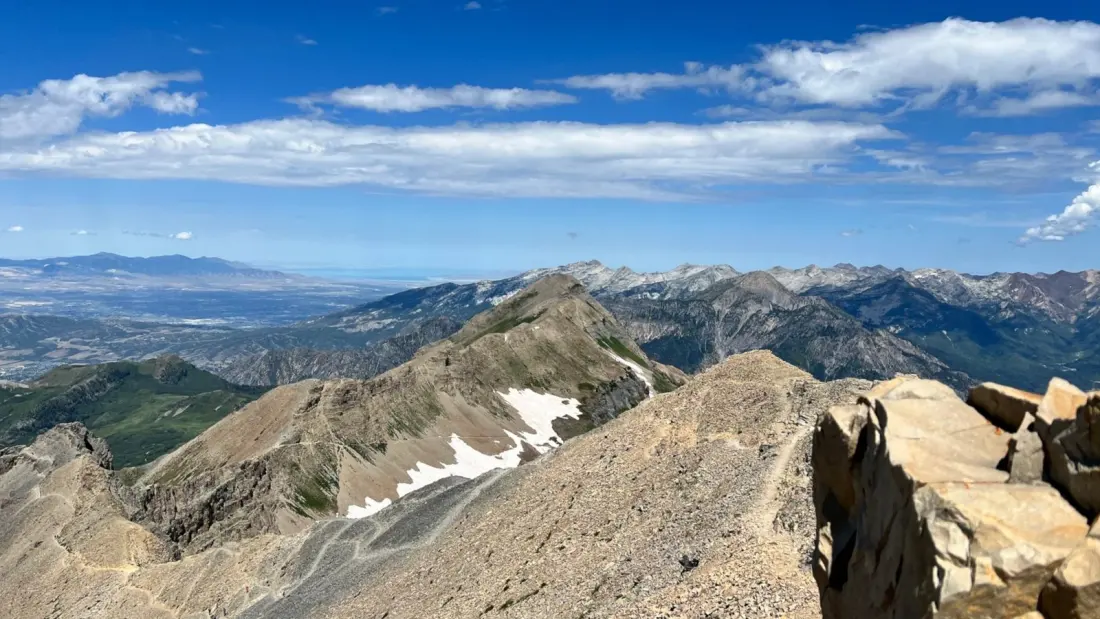
A 19-year-old hiker died on Utah's Mount Timpanogos on September 18 after lightning struck the small steel shelter he and nine other hikers had crowded into during a storm. Four others were injured badly enough to need hospital evaluation, and the Utah County Sheriff's Office said rough weather and the site's remote location at over 11,700 feet complicated the rescue.
The group had summited the 11,752-foot peak when a thunderstorm rolled in, and they ducked into the Tin Shack — a 1927-era lookout hut near the summit. That instinct is exactly what safety experts say gets people hurt. Small mountain huts, lean-tos and lookouts feel like refuge, but they offer essentially no lightning protection. A properly protected building stays safe because its electrical wiring or plumbing conducts a strike harmlessly to ground; a backcountry hut has neither. Metal doesn't attract lightning, but once struck, it conducts it efficiently, and a direct hit on a shack can injure everyone inside. Per the National Weather Service, only two outdoor-safe options exist: a wired or plumbed building, or a hard-topped vehicle.
Timpanogos is a lightning-prone summit by design. Its two main routes are each about 14 miles round trip with long ridgeline sections, giving hikers little chance to drop below treeline quickly when weather turns. The incident follows a July 26 strike on Mount Blue Sky in Colorado that killed a teenager and injured four others — a reminder that summer afternoons on high peaks regularly bring dangerous convection.
Some long-standing habits are worth unlearning, according to lightning researchers. The crouching 'lightning position' on a sleeping pad has no evidence behind it — if you're caught in the open, your energy is better spent reaching more sheltered terrain. Sheltering under a lone tall tree increases your risk, since tall objects attract strikes and up to half of lightning injuries come from secondary effects like ground current; a stand of trees of roughly equal height is better. And remember that metal doesn't draw lightning in, but it spreads it well when hit.
The sheriff's office advice is blunt: if you can hear thunder, you're within striking range. Get off ridgelines and summits immediately and descend early. For anyone planning high-country hikes in Utah or the Colorado Rockies, the practical takeaway is to start at dawn, check the forecast, and turn around the moment clouds start building — not when the first thunder cracks. No spot outside is truly safe in a storm, but timing your summit beats trusting any hut with a roof.