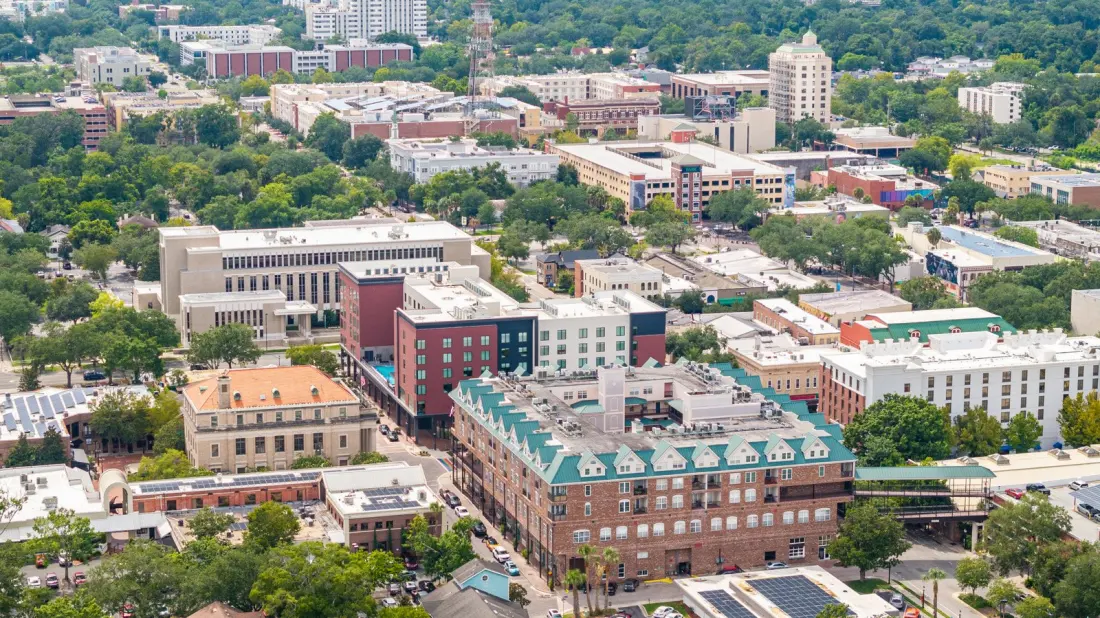
A new wave of Floridians is heading north — and the data backs it up. U-Haul's 2026 migration report, based on one-way truck rentals between July 2025 and June 2026, found that the Gainesville-Ocala metro was the number one destination for Gen X customers leaving the Miami area. It also topped the list for Baby Boomers and came in fourth for Millennials, so this isn't just a one-generation trend.
So what's drawing people 300-plus miles up the interstate? Money, mostly. Census Bureau figures for 2020-2024 put the median owner-occupied home value in Alachua County (home to Gainesville) at $288,800, with average rents of $1,339. Marion County, where Ocala sits, is even cheaper: a median home value of $243,100 and average rent of $1,277. Compare that with Miami-Dade's $463,000 median home value and $1,829 rents, and the maths gets pretty compelling for anyone priced out of South Florida.
But it's not purely about housing costs. Gainesville is a proper college town thanks to the University of Florida — home of the famously fanatical Gators — and that brings a steady stream of concerts, exhibitions, restaurants, breweries and music venues to the city. The Florida Museum of Natural History, a local fixture with its Butterfly Rainforest and kids' Discovery Zone, reopens on November 23, 2026 after a major renovation. Just south of town, Paynes Prairie Preserve State Park offers hiking and cycling trails and a genuine chance to spot wild horses, bison and hundreds of bird species.
Ocala, about 40 miles south, plays a different hand. It's classic Florida horse country — Marion County has more horses than any other county in America — with historic downtown squares, a First Friday Art Walk from October to May, and the Reilly Arts Center hosting the local symphony. Silver Springs State Park is the star attraction: glass-bottom boat tours over famously clear water, plus kayaks and paddleboards for those who'd rather paddle themselves. Ocala National Forest, on the town's doorstep, adds more springs and over 600 lakes and rivers.
For travellers rather than relocators, this stretch of Central Florida makes a solid alternative to the usual coastal itinerary. Think natural springs instead of beaches, college football weekends, horse farm country drives and some surprisingly good food and culture — all at prices that won't sting like Miami's. The trade-offs are real: you'll want a car, the job market is tighter than South Florida's, and there's no ocean frontage. But if you're after a slower-paced Florida with genuine outdoor and cultural appeal, Gainesville and Ocala are worth a closer look.