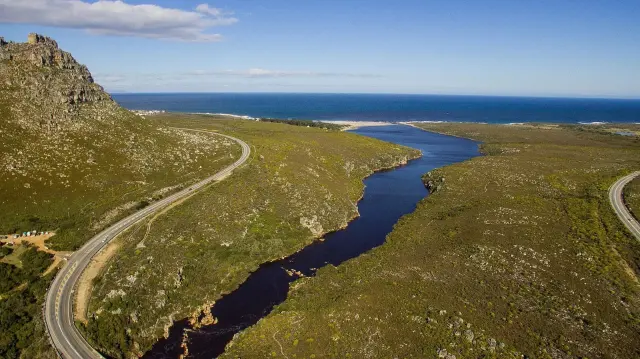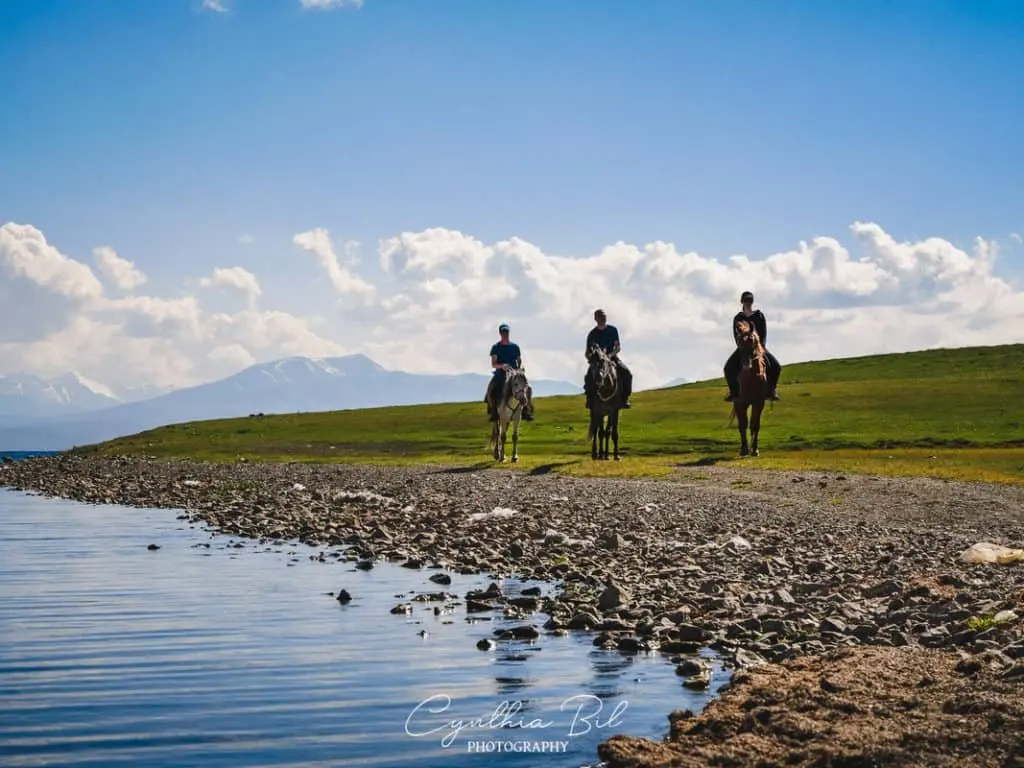
Three thousand metres up in the Tien Shan, Song Kul is an alpine lake that stays frozen most of the year — but for a short summer window it becomes the setting for one of Central Asia's best horse treks. Herders move their animals to the surrounding pastures, yurt camps appear on the grassland, and travellers ride in the way Kyrgyz nomads have for centuries.
The classic three-day route runs from Kyzart, a village south of Kochkor, and follows a well-worn pattern. Day one takes roughly four hours in the saddle through open hills to Kilemche Valley, where you overnight at a yurt camp. Day two climbs to a high pass — usually Tuz-Ashuu — and the payoff is the moment Song Kul appears below as you descend into the basin. Day three rides back to Kyzart over a different pass and can stretch to six hours, so it's the longest day of the trip.
Timing matters. The season runs from mid-June to mid-September: outside that window the passes hold snow, the yurts come down and the region empties out. Summer days are mild at 15–25°C, but nights near the lake can dip close to freezing — pack warm layers even in August. June and early July bring wildflower meadows and the clearest lake water, August is the warmest and busiest month, and September rewards riders with golden colours and thinner crowds. Winter riding is possible only with specialist operators and serious cold-weather preparation; temperatures can hit -30°C and there's effectively nowhere to shelter.
Beginners can do this trek, but it isn't a novelty pony ride. Expect four to six hours riding daily at altitude on uneven ground, and expect some soreness. The most useful advice is to be honest with operators about your experience before booking: ask how they match horses to riders, whether helmets are provided, how many guests each horseman looks after, and whether you'll lead the horse on steep sections.
One genuine warning comes through clearly: the trek's popularity has surged since 2026, and quality varies widely. Bargain prices can mean large groups, underqualified guides, or horses that are lame, exhausted or badly tacked up. Check the horses' condition before setting off, ask about the guide's first-aid training and emergency plan, and don't be shy about requesting a different animal. Good travel insurance matters too — you want a policy that covers horse trekking at altitude.
Who is this for? Anyone with moderate fitness who wants a real taste of Kyrgyzstan's nomadic heritage — sharing simple meals with families, sleeping in yurts, and moving through wide-open mountain country at a walking pace. If you'd rather avoid the busy standard route, quieter alternatives exist, including a Jol Kara Valley route that reaches the lake's western shore, though you'll need to hunt around for operators offering them.