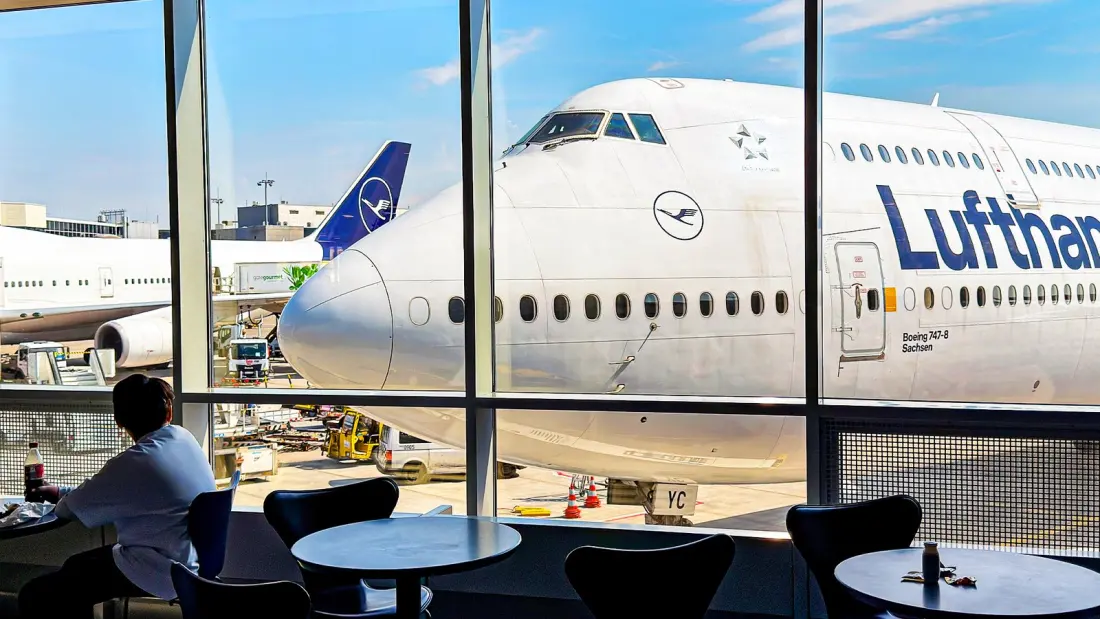
The Boeing 747 changed travel forever when it entered service in the late 1960s, making intercontinental flying affordable for ordinary passengers. But the numbers behind running one in the mid-2020s explain why the humpbacked icon is steadily vanishing from passenger fleets.
Take fuel, the biggest single expense for any airline. According to data cited by Simple Flying, the newest passenger variant, the 747-8, burns roughly 3,914 gallons per hour at cruise. At the jet fuel price tracked by IATA in late September 2026 — $4.415 per US gallon, which has spiked 106% year-on-year — that works out to around $17,280 every hour in the air. A Boeing 777-300ER, by comparison, burns about 2,833 gallons hourly for roughly $12,500, while the Airbus A350-1000 sips just 2,268 gallons, or about $10,000 an hour. That makes the A350 42% cheaper to fuel than the 747.
Fuel is only part of the story. Four engines mean four separate overhaul programmes and more scope for expensive surprises, while older airframes demand heavier maintenance schedules. Add crew pay, airport and navigation charges, insurance, hangar leases and depreciation, and total operating costs for a 747 climb well above $20,000 per block hour, sometimes approaching $30,000. A 777 sits below $20,000, and an A350 noticeably less again.
The 747-8 does hold some cards. It can physically seat more than 500 passengers and its 7,730 nautical mile range beats the 777-300ER's 7,500, though the A350-1000 outflies both at 9,100 nautical miles. But when the A350-1000 carries 369 passengers two-class while costing 20% less per hour to fuel than a 777, the economics become impossible for most airlines to argue with. Boeing built 1,574 747s across 56 years of production before the line closed in 2023, and the type has logged over 118 million flight hours — a legacy that four-engine fuel bills and maintenance costs have now overtaken.
For travellers, this explains why your long-haul flight is more likely to be on a quiet, composite-bodied twin than a jumbo. Carriers like Lufthansa, the largest remaining 747-8 passenger operator with 364 seats across four classes, are the rare exception. Newer jets generally mean lower fares over time, and on newer aircraft you also get fresher cabins: the A350 generation brought quieter interiors and more modern seating than anything designed in the jumbo era. It also matters for spotters and aviation fans — if flying a 747 is on your bucket list, the window is closing, and some airlines still schedule the type on flagship routes where you can book it deliberately.
Bottom line: the four-engine era is ending not because the 747 lost its charm, but because twinjets do the same job for tens of thousands of dollars less per flight hour.