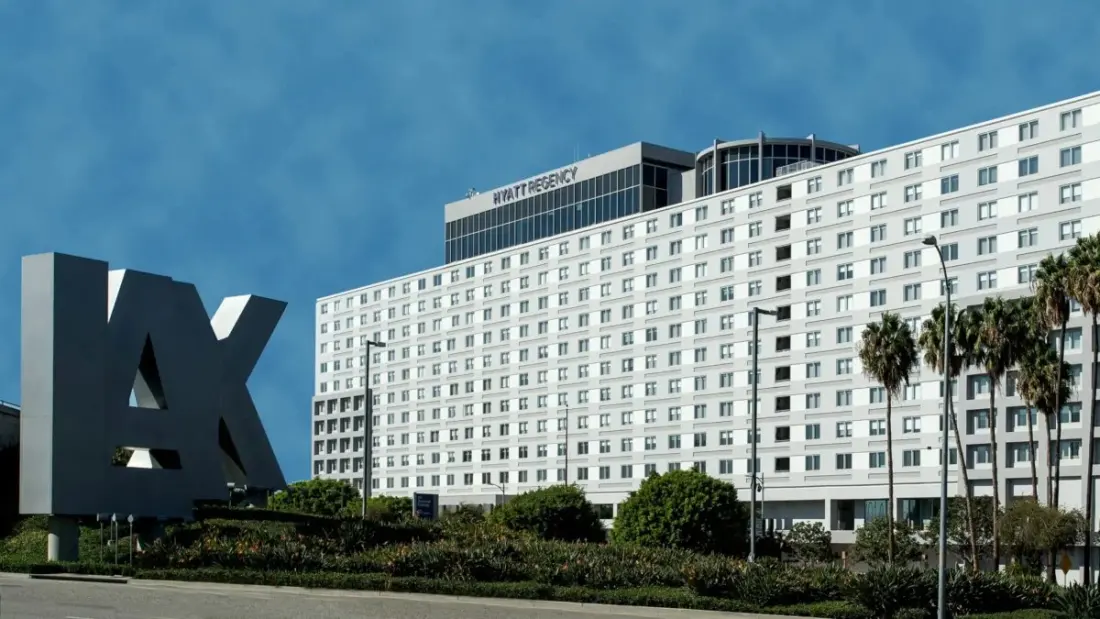
Book a room at the Hyatt Regency Los Angeles airport hotel and you'll hit an unusual wall: a hard cap of 21 consecutive nights. Splitting your stay into separate reservations doesn't help — the property explicitly counts back-to-back bookings toward the limit. Oddly, the same hotel advertises "Extended Stay Regency Suites" and invites guests to ask about long-term arrangements. Apparently there's extended, and then there's too extended.
The reason is legal, not commercial whimsy. In Los Angeles, hotel rooms occupied as someone's primary residence for more than 30 days can fall under the city's rent stabilization ordinance. Once a guest crosses that line, they may be a tenant, which means an ordinary checkout becomes a formal eviction — notices, court filings, and potentially months of lost revenue. A 21-day cap looks like a deliberate buffer, leaving room for a delayed departure without drifting toward the 30-day trigger. This applies to guests who are fully willing to pay, which is the strange part: hotels can end up refusing money to protect themselves.
It's not just this one property. Published limits elsewhere include 28 days at Hyatt Regency Valencia and Hyatt Regency Westlake, 29 days at The LINE Los Angeles (with a call required over 21), and just 14 days at Wynn Las Vegas, Encore, and the Oasis at Gold Spike. Nevada's landlord-tenant law has its own 30-day threshold, Texas weighs the whole guest-versus-tenant relationship, Florida leans on written agreements, and New York is especially tricky: in rent-stabilized NYC hotels, a guest can gain permanent tenant status simply by requesting a lease — potentially after a single night.
And the cap isn't foolproof. California bars residential hotels from forcing checkouts and re-registrations designed to keep occupants legally transient, and LA counts those manoeuvres too. New York City goes further, requiring a lease within 15 days of a request and banning refusals made just to dodge tenant status.
The cautionary tale here is the Wyndham New Yorker. Mickey Barreto booked one $149 night in 2018, requested a lease, and refused to leave. The hotel lost eviction proceedings in court — partly because it couldn't document what the room cost on a statutory date in 1968. While the dispute dragged on, Barreto filed fraudulent documents claiming ownership of the entire building, demanded rent from tenants, and even tried borrowing against the property. He was finally evicted in 2024 and pleaded guilty to fraud in February 2026, nearly eight years after checking in.
Why should travellers care? If you're relocating, doing a work project, waiting on home repairs, or staying near a hospital, a hotel often beats an apartment lease — but you may be refused a long booking entirely because of rules written for a different fight between slumlords and tenants. Always check a property's maximum-stay terms before planning a multi-week hotel stay, especially in California, Nevada, New York, Texas and Florida.