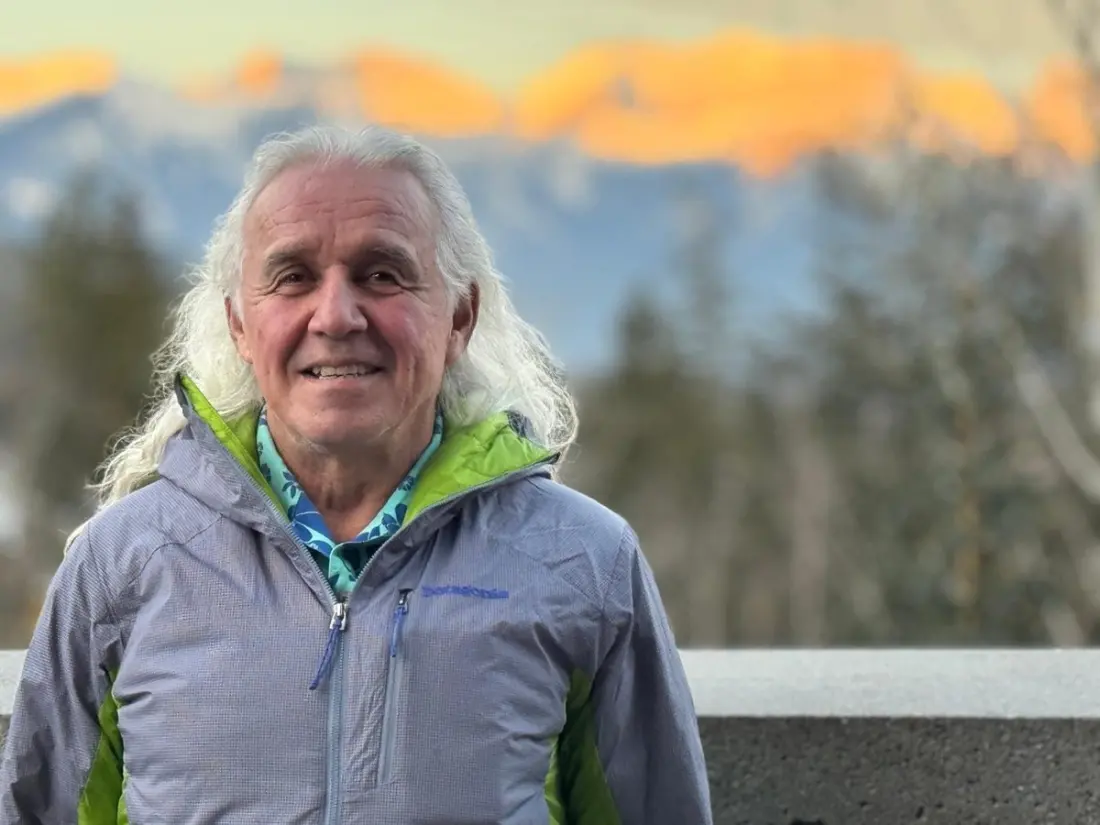
Canadian alpinist Barry Blanchard has spent five decades climbing some of the world's hardest mountains, and his closest call had nothing to do with altitude. The 67-year-old nearly died falling down a concrete staircase, suffering 11 skull fractures and a traumatic brain injury that erased 13 days of his memory and left doctors unsure whether he'd ever walk, let alone guide again. He told his story at the Banff Centre Mountain Film and Book Festival, where he presented his new memoir, The Echo: Stories from the Edge of Survival.
Recovery was slow and humbling. He lost some executive function — the ability to juggle multiple ideas at once — and balance took the longest to return. His comeback started on top rope in a climbing gym, then ice climbing with world-class climbers belaying from above. A hospital tip became his secret weapon: the brain uses 20% of the body's oxygen despite being 2% of its mass, so when vertigo or wobbliness hit, he stops and breathes deeply for five or ten minutes. It works.
The irony isn't lost on him. On Howse Peak in Banff National Park in 1999, an avalanche ripped out his ice screw — a piton his partner had placed under a limestone bulge held. Six inches of exposure made the difference between his story and no story at all. He's matter-of-fact about it: skill matters, but so does luck. The same peak claimed David Lama, Jess Roskelley and Hansjorg Auer in 2019.
Blanchard divides his life like a Canadian football game. The first two quarters belonged to alpinism — 'it was my church' — at the cost of his first marriage. Fatherhood shifted everything: on a route on Bravo Peak in the Coast Range, every judgment call about avalanche-prone snow came with his newborn daughter's face in mind. His risk tolerance changed for good.
His Métis heritage shapes how he moves through the mountains. He has spent over 500 days on the peak colonists call Yamnuska — Îyâ Mnathka, 'flat-faced mountain,' in the Stony Nakoda language — offering tobacco at its base and treating the rock, trees and mountain as living ancestors. It's why he bristles at 'conquering' Everest: summits are permitted, not taken.
He also worked as mountain safety officer on Jennifer Peedom's upcoming Tenzing film, teaching Willem Dafoe and Tom Hiddleston to handle 1953 climbing gear — before a skiing fall in New Zealand used up another of his nine lives.
Why should travellers care? Blanchard's story is really about the Canadian Rockies he helped define as a climbing destination — Howse Peak, Yamnuska, the ice climbing corridors around Banff and Canmore — and about the mountain culture that draws people there. His company, named for Yamnuska, has guided on that peak for decades. Anyone heading to Banff for winter ice climbing, guided alpine courses, or the Banff Mountain Film Festival in November is stepping into the landscape Blanchard describes: one where fear is an ally, mountains are alive, and luck always plays a hand.