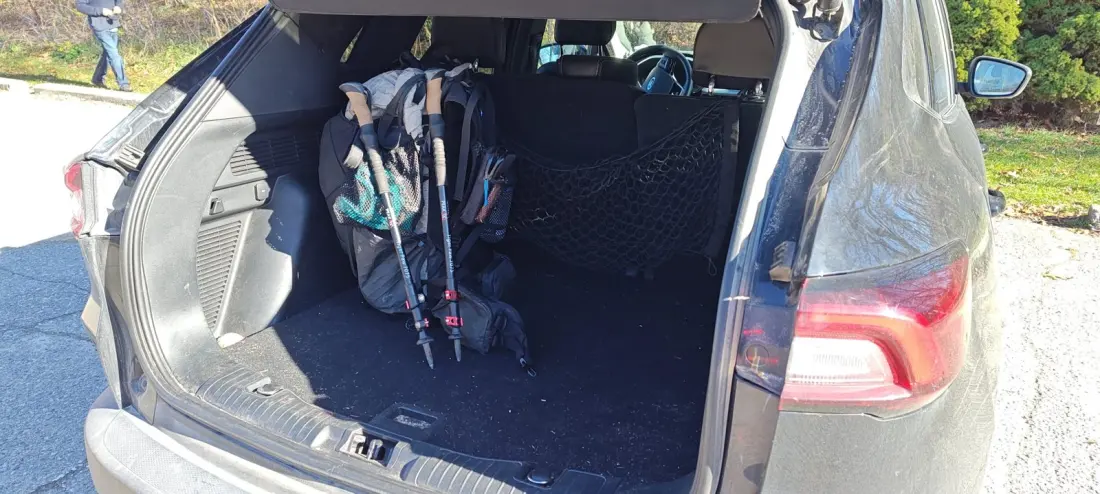
A hiker in southeastern Michigan has come up with a novel (if slightly eccentric) way to train for an Appalachian Trail thru-hike next March: packing his college textbooks. Calculus, astronomy and chemistry — three tomes weighing in at around five pounds each — go into his pack on local day hikes to push the load to a target of 30 pounds. They won't make the actual hike, but after 35 years, the calculus book has finally found a purpose: dead weight.
The idea matters more than the comedy. Most people attempting a long-distance hike like the Appalachian Trail — roughly 2,190 miles from Georgia to Maine, taking five to seven months — underestimate how much conditioning the body needs before day one. This hiker's approach breaks preparation into three strands anyone can borrow.
First, loaded day hikes. Flat, hill-light Michigan isn't exactly mountain country, but walking five to six miles with a fully weighted pack each week builds the same muscles and tendons the trail will punish. He recently completed five consecutive morning hikes in sub-freezing temperatures partly to test his tolerance for cold starts — and partly to trial gear and apps on the move. His Garmin InReach Mini satellite communicator passed its checks (the subscription is paused until departure), while he's still testing Day One for journaling, Grammarly for prose cleanup, and WordPress for filing posts from the trail when tired and hungry.
Second, gym work: about two hours covering three miles on a treadmill set to a 3.4 mph pace at a six-to-seven-degree incline, plus core, strength and stretching. Third, and oddly the most enjoyable, a 30-minute home routine of ankle strengthening, core work and stretching done in front of the TV — cheap insurance against the ankle sprains that end so many thru-hike attempts early.
Gear goals are also taking shape. He's aiming for a base weight under 20 pounds and a fully loaded pack under 30, with a full gear list to be published after the holidays. One wrinkle: a required bear canister could threaten that target, a reminder that on the AT, food storage rules in certain sections add unavoidable weight.
Why should a traveller care? Because this is a realistic blueprint for ordinary people with jobs, families and no mountains nearby. You don't need alpine terrain to train — you need weighted walks, consistent strength work and honest testing of your kit and apps before you're 50 miles from a road. The four-month runway he's given himself is a sensible timeline for anyone eyeing a March start, which is when northbound AT hikers traditionally set off from Springer Mountain in Georgia. His story also doubles as a gentle reality check: sore ankles, heavy packs and pre-dawn gym sessions are the price of admission, and even the motivation can use a joke or two — hence the textbooks.
Whether the chemistry book stays dry is, apparently, his makeshift waterproofing test. We'd suggest a new pack liner.