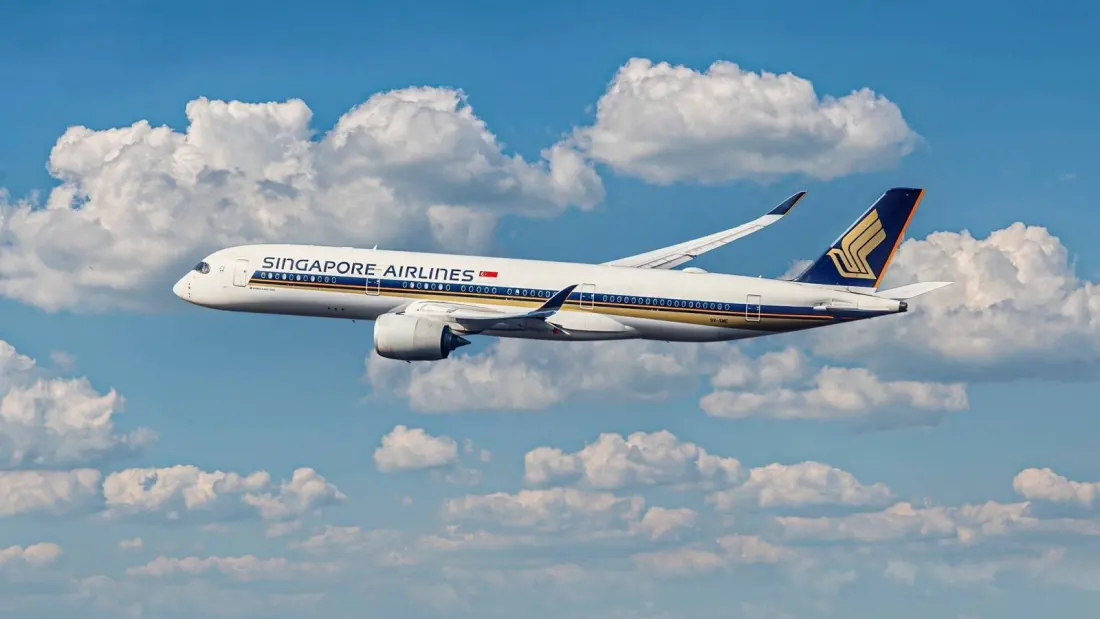
Qatar Airways' Doha to Auckland service and Singapore Airlines' Singapore to New York route are often described as the toughest flights in aviation. They stretch range, fuel burn and crew endurance to the edge of what's possible. Yet here's the counterintuitive part: marathons like these are actually easier on the aircraft itself than a busy day of short hops.
The reason comes down to how an aircraft's life is measured. Manufacturers track two numbers — flight hours and cycles. A cycle is one pressurisation and depressurisation of the cabin, which roughly matches one takeoff-and-landing pair. Long-haul widebodies pile up hours fast but cycles slowly. A short-haul jet does the opposite: it might complete eight to eleven flights in a single day, and every one of those landings works the landing gear, brakes, fuel and hydraulic systems again.
Hawaiian Airlines' inter-island Boeing 717s are the textbook example. Their hops between the Hawaiian islands often run under 40 minutes, so the planes log relatively few hours — but the operation is considered among the most demanding in the world. Engines go to full takeoff power, reverse thrust bites on the runway, and then it all happens again minutes later, with barely any time for the machinery to cool down. Add salty sea air raising corrosion risk, and it's easy to see why these airframes age quickly. When the time came to replace the 717s, Alaska Air Group chose older 737-800s over fuel-sipping new types like the A321neo or 737 MAX — engines built for efficiency simply wouldn't tolerate that daily hammering.
Pressurisation itself is the biggest single stress on a fuselage. Each cycle makes the cabin swell slightly against the thinner air outside, and repeated thousands of times that can cause fatigue and microscopic cracks — the mechanism behind the de Havilland Comet breakups of the 1950s. Modern composite fuselages, like those on the A350 and 787, handle the forces better, which is also why they can offer lower, more comfortable cabin altitudes.
There's reassurance in all this for nervous flyers. Aircraft are built with limits set in hours and cycles — the A320 started life rated for 60,000 hours or 48,000 cycles, later doubled to 120,000 hours or 60,000 — and scheduled inspections catch fatigue long before it becomes a danger. In practice, most planes are retired decades before those limits on economic grounds: rising maintenance bills, costly 'D check' overhauls where the aircraft is practically disassembled, and poor fuel burn finally tip the balance. That's why some 40-year-old 737s and A320s still fly on with cargo operators.
For travellers, the takeaway is simple: that 17-hour nonstop isn't punishing the plane, and a quick island hop isn't trivial for the machine doing it. New-generation widebodies have made ultra-long-haul routes genuinely routine — smoother cabins, lower cabin altitudes and fewer stressful cycles per hour flown. Credit: Simple Flying.