The Wirral peninsula's old railway line has found a second life. Hadlow Road station, a well-kept redbrick stop near Willaston, served the Birkenhead Railway branch to West Kirby until 1962 — its vintage billboards for Lever's Cattle Cakes still advertise the fact. The trackbed is now the Wirral Way, a tree-lined path for walkers and cyclists that runs along the Dee estuary, one of Britain's best winter birdwatching spots.
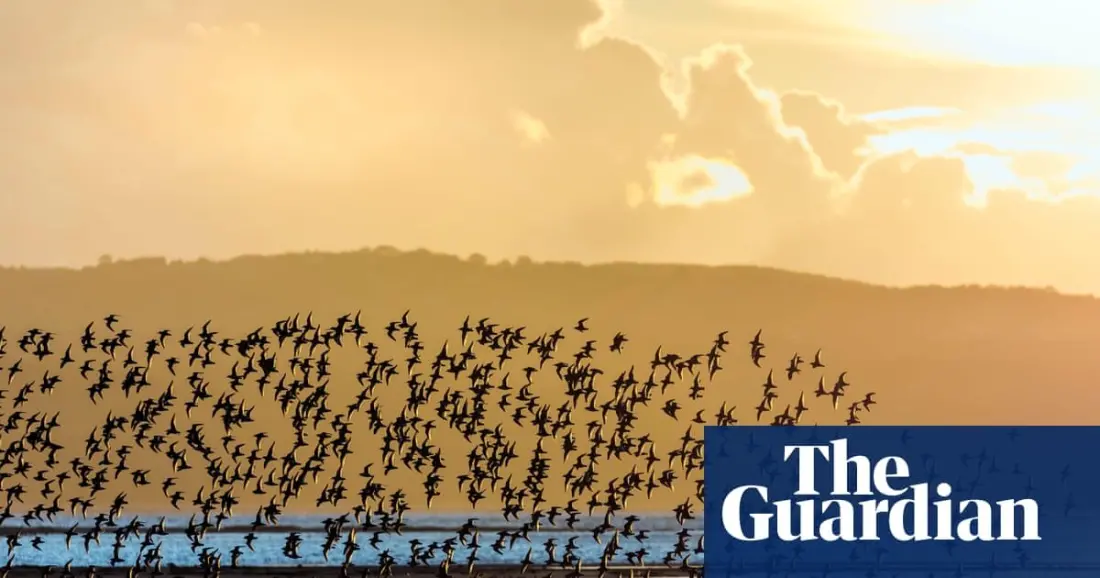
The estuary itself has a strange history. It was once a busy shipping channel between north Wales and the Wirral, with packet boats crossing to Dublin and fashionable seaside resorts along its banks. When it silted up, trade moved to the Mersey and the bathing spots closed. Cordgrass planted in the late 1920s to stabilise the mud spread aggressively, and much of the waterway turned to saltmarsh. For waders and wildfowl, that's the perfect outcome: the mudflats are packed with invertebrates, and tens of thousands of birds arrive each autumn from Scandinavia and other northern shores to fatten up for winter.
The classic starting point is Parkgate, a former resort town whose promenade now overlooks marsh rather than sea. Birders gather at the old Donkey Stand to watch clouds of black-tailed godwits, skeins of pink-footed geese, little egrets, teal and shovellers — and, with luck, marsh harriers cruising low over the grass. A few times a year, when the tide tops 10 metres, rising water flushes voles and shrews from the marsh and draws raptors in from all around for a memorable spectacle.
From Parkgate it's an easy, almost entirely flat eight-mile walk to West Kirby, partly on the Wirral Way and partly on the coastal path. Along the way, Heswall foreshore is a good stop for knot and golden plover, and Hilbre Island appears on the horizon near the finish. West Kirby's shoreline at high tide hosts oystercatchers, shelducks and curlews; local wisdom says refuel on deruny pancakes at the Ukrainian-run Sweet Pea cafe before catching the bus back to Parkgate.
For a longer stay, the RSPB's Burton Mere Wetlands reserve sits at the estuary's head on land that was arable farmland until the RSPB began buying it in 1986. Its trails and four hides turn up grebes, whooper swans, bitterns, green woodpeckers and more — and the trail up to Burton Point delivers a sweeping sunset view across the whole estuary.
It's a low-effort, high-reward trip: ideal for anyone who wants dramatic winter wildlife without hilly walking, plus a dash of seaside history (Parkgate once drew Lady Hamilton and Handel, and its art deco Nicholls ice-cream parlour has been serving since the 1930s). Base yourself at the Ship inn in Parkgate — doubles from £80 B&B, with estuary-view four-poster rooms from £115.