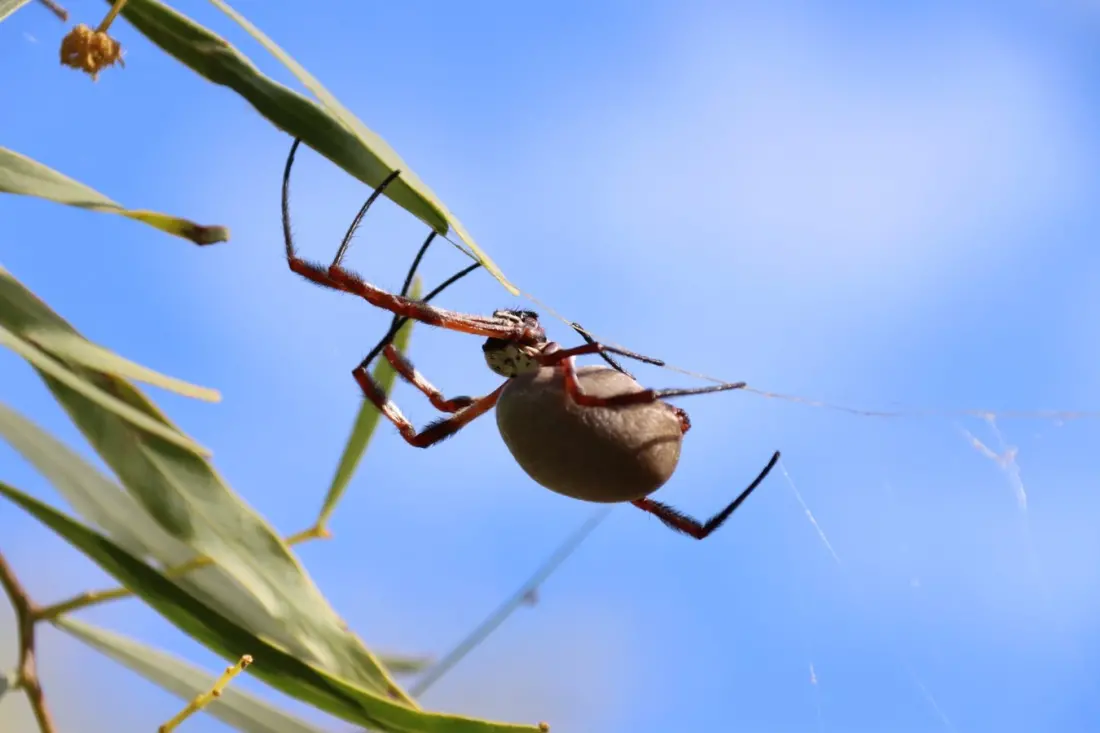
If you've walked through a garden or bush track in eastern Australia and ducked under a sprawling golden web strung between trees, you've probably met the golden orb weaving spider. Australian Geographic's latest Creatura column spotlights Trichonephila edulis, a species whose scientific history is stranger than its bite.
The 'edulis' in its old name literally means edible. French biologist Jacques Labillardière coined it after visiting New Caledonia in 1799, where he watched locals roast and eat the spiders. The name stuck through centuries of reclassification — the species has since moved from Nephila to Trichonephila ('hairy' plus 'fond of spinning') — and the culinary reputation resurfaced in 2016, when biologist Tim Low described feeding one to a sceptical TV journalist. Verdict: apparently it tastes like pâté, and the plump grey body even resembles it.
Only the females are worth roasting, so to speak. They reach around 5cm long with a leg span up to 15cm, while males top out at roughly 6mm — a size gap that looks absurd on the same web. Those webs are the real showstopper: circular orbs up to a metre across, spun from silk with a yellow tint that shimmers gold in sunlight, hence the common name. The silk ranks among the toughest biological fibres known, strong and stretchy enough to halt sizeable flying insects mid-flight.
Australia actually has two golden orb weaver species. T. edulis ranges across the whole country; T. plumipes occupies the north and east. They look nearly identical — the main difference is a small knob on the front of the sternum that plumipes has and edulis lacks — and both are easy to spot around Sydney gardens and bushland.
For travellers, the practical takeaway is reassurance rather than alarm. These spiders sit at the centre of their webs reading the world through thousands of sensory hairs on their legs and mouthparts, feeling every vibration and chemical cue from trapped prey. But despite the imposing size, they rarely bite people, and their venom isn't considered dangerous to humans. You can admire the golden webs on a coastal walk or in a suburban backyard without giving them a wide berth — just don't walk face-first into one.
Why it matters: golden orb weavers are one of the most frequently encountered large spiders in Australia, and knowing they're harmless (and historically on the menu) turns an alarming web into a wildlife highlight. Nature-minded visitors, especially those hiking in Sydney's harbour parks or along the east coast, will enjoy ticking off one of the animal kingdom's most impressive engineers — no tasting required.
Story via Australian Geographic.