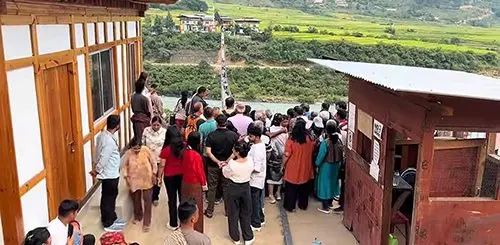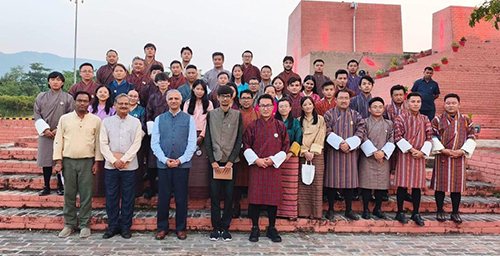
Bhutan's most ambitious nation-building project is getting a hands-on boost from an unexpected quarter. Fifty-five Bhutanese students currently studying for Master's degrees at Nalanda University in Rajgir, India, will travel home to join the raising of 108 stupas in a single day at Gelephu Mindfulness City, running from 1 to 4 November 2026.
The student trip came together thanks to a bit of fast footwork. Nalanda's Vice-Chancellor, Professor Sachin Chaturvedi, backed the plan after the Bhutanese Students Association, led by president Tshering Phuntsho, lobbied to get its members involved. One student, Yeshi Zangmo, admitted she had feared she'd miss the whole event when she left for India in August 2026 — the university's support means she and her classmates can now take part.
The stupa-raising is billed as a 'People's Project' tied to the vision of Bhutan's King for Gelephu Mindfulness City, or GMC: a vast planned urban zone in southern Bhutan built around mindfulness, wellness and sustainable growth. Rather than a purely top-down construction effort, the project invites ordinary citizens — and now overseas students — to physically build part of it, one stupa at a time. In Bhutanese Buddhism, stupas are sacred monuments, and building 108 of them, an auspicious number, in one day is as much a collective spiritual act as a construction milestone.
There's also a philosophical thread here. Professor Chaturvedi framed the collaboration as a meeting of two old ideas: the ancient wisdom tradition of Nalanda, one of the world's great centres of learning, and Bhutan's own Gross National Happiness philosophy. His argument — that mindfulness and compassion underpin lasting peace — is exactly the pitch GMC is making to the world as it positions itself as a destination for contemplative travel.
For travellers, the story is a useful signal. Gelephu Mindfulness City is still in its early years, but the stupa project shows the development moving from masterplan to reality on the ground. Anyone considering Bhutan for 2026 and beyond should keep an eye on the Gelephu area in the south, where a new airport and wellness-focused infrastructure are planned alongside these monuments. And the timing matters: Bhutan caps visitor numbers with its Sustainable Development Fee, so early adopters who visit as GMC takes shape will see a side of the project latecomers never will.
The wider takeaway? Bhutan continues to do development differently — inviting its citizens, even those studying abroad, to build the country's future by hand. For a country that measures progress in happiness rather than GDP, 108 stupas raised in a day by volunteers might be the most Bhutanese infrastructure project imaginable.