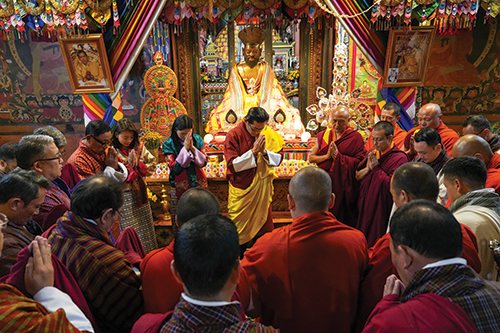
Bhutan's King has used a rare public speech to explain Yoeja, a Buddhist offering practice that has quietly endured in the kingdom for what he describes as thousands of years — and which he now wants the world to know about.
Yoeja is, at its heart, a merit-making offering. Donors give to the monastic community with the hope that their name and contribution will be remembered and their merit dedicated back to them for as long as the Buddhist Dharma endures. Monks, incarnate lamas and senior spiritual masters are asked to hold the donor in their prayers, creating a bond that outlasts a lifetime. The King recalled watching two of Bhutan's Queens, Ashi Phuntsho Choden and Ashi Pema Dechen, make Yoeja offerings before their deaths — moments that first prompted him to ask what the practice actually meant.
What struck him most, he said, was its radical inclusiveness. When he asked whether Yoeja was reserved for the wealthy, he was told no: since ancient times even a small measure of butter from an elderly woman was accepted, with no distinction made between large and small gifts. Every offering counted, and prayers were recited for every donor equally. The King described being deeply moved by this, joining his palms in reverence.
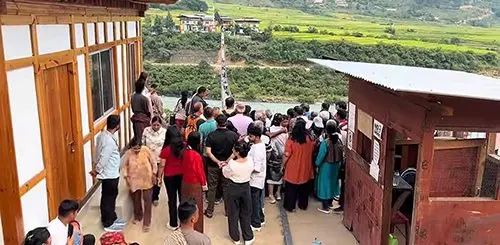
The speech was not just explanatory — it was a call to action. The King voiced long-standing concern about the tradition's continuity, saying he has repeatedly urged the monastic body, the government, district authorities and ordinary citizens to protect it. He connected the renewed pledge to a current project: the consecration of 108 stupas, at which monks, nuns and practitioners have collectively committed to upholding and serving Yoeja. His stated ambition is for the tradition to become known not only across Bhutan but internationally.
For travellers, this is a window into why Bhutan feels so different from anywhere else. The country deliberately protects its religious heritage — from the dzongs and prayer flags to traditions like Yoeja that most visitors never hear named. Understanding that a butter lamp or a small offering at a monastery can carry this kind of meaning changes how you experience even a brief temple visit. Travellers with time in Thimphu or the Punakha Valley can visit working monasteries, witness merit-making practices first-hand, and see the new 108-stupa sites that this pledge centres on. Etiquette matters: dress modestly, walk clockwise around religious structures, and always ask before photographing ceremonies. If you make an offering, remember that in the Yoeja spirit, size has never been the point.