Bhutan's Punakha Valley has a new traffic problem, and it hangs over the river. The Kuenphen Bridge, better known simply as the Suspension Bridge in Dzomi Gewog, has become one of the area's most popular draws, with visitors flocking to cross its swaying span above the water. That popularity is good news for the local economy — but it's also prompting real questions about safety and crowd control.
The benefits are easy to see. Shopkeepers, food sellers and residents in Dzomi have built a livelihood around the flow of visitors. One local grocery owner, Wangchuk, estimates that around 85 percent of businesses in the area depend on tourist income, with most visitors arriving from India and Bangladesh. For a rural gewog, that's a meaningful economic engine.
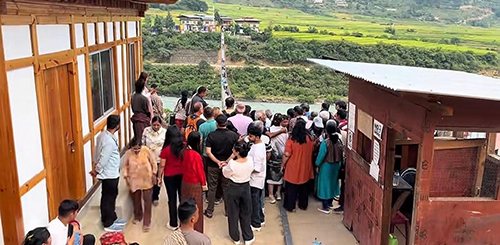
But the bridge isn't just an attraction — it's a daily crossing for local residents, and that dual role is at the heart of the concern. When tour groups arrive all at once, the deck gets crowded, and both visitors and villagers find it hard to move across. Locals aren't asking for fewer tourists; they're asking whether the structure and its safety arrangements can keep up as numbers keep climbing.
For now, order is being kept by hand. More than two years ago, the De-suung Headquarters posted four DeSuup volunteers to manage the site. One of them, DeSuup Tashi, says visitors are sent across the bridge in turns to prevent overcrowding, and during peak periods all four DeSuups are on duty at the same time to monitor the flow. It's a low-tech but effective system — though it highlights how much of the burden currently falls on a handful of people rather than on formal infrastructure.
Ideas floated by the community include a clear limit on how many people can be on the bridge at once, better visitor flow planning, and regular structural inspections. Dzomi's Gup, Dawa Tashi, has struck a balanced tone: tourism is welcome and has created real opportunities, but planning and management need to keep pace so the bridge stays safe and usable for everyone.
The situation also points to a bigger shift in Bhutanese travel. As more visitors look beyond the established highlights like Thimphu and the Tiger's Nest, smaller rural sites are suddenly dealing with volumes they were never designed for. Punakha's bridge is an early test case for whether that growth can be managed without wearing out the very places travellers come to see.
For travellers, the practical takeaway is simple: go early or at a quiet time, be patient when the DeSuups hold you back for the next turn, and remember the people waiting behind you may be locals crossing to get home. The bridge is free to cross and takes only a few minutes — but right now, courtesy and a bit of timing matter more than usual.