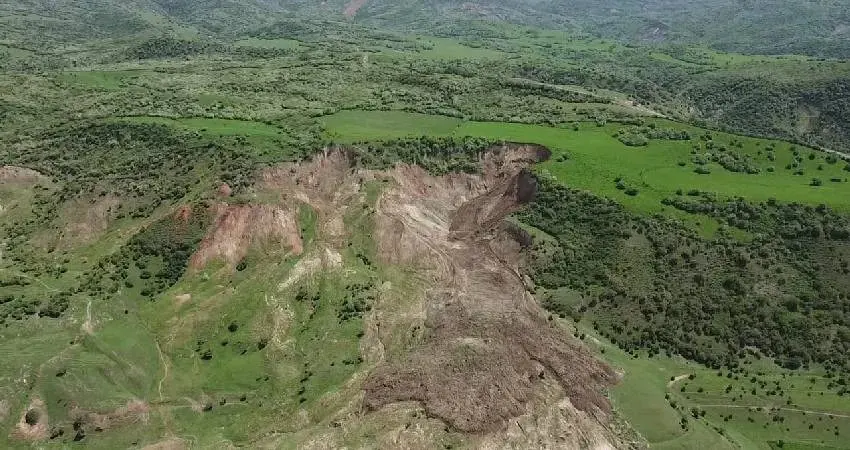
A new analysis from the Eurasian Development Bank puts potential landslide losses across Central Asia at $3.59 billion — and for anyone planning a road trip through Kyrgyzstan or its neighbours, the detail that stands out is where the risk concentrates: transport routes.
The bank's experts estimate that roads account for $3.02 billion of potential direct losses, with railways adding $382 million and buildings $186 million. In other words, this is overwhelmingly a story about getting from A to B. One stretch flagged for particular attention sits on the Tashkent–Osh corridor, the busy highway linking Uzbekistan's capital to Kyrgyzstan's second city — a route many overland travellers use when crossing between the two countries.
Why should a holidaymaker care? Because landslides are not an abstract regional planning problem in this part of the world. Mountain roads through the Tien Shan and Pamir foothills routinely close after heavy rain or spring snowmelt, and slope failures can cut off towns for days. The report ranks landslides as the fourth deadliest type of natural disaster worldwide, and notes that building on unstable slopes and poor land-use planning keep adding people and assets to the danger zone.
The EDB points to a stark recent illustration from Nepal, where slope damage in late September destroyed 31 bridges and hundreds of homes, and knocked out 12 hydropower plants with a combined 358 megawatts of capacity — forcing electricity rationing for industry. One country's mountains, another's warning: Central Asia's terrain and infrastructure share similar vulnerabilities.
For travellers, the practical takeaway is simple. If you're driving in Kyrgyzstan, Tajikistan or mountainous Uzbekistan, build slack into itineraries rather than treating a mountain road as a guaranteed six-hour hop. Check local road-condition updates before setting out, avoid travelling major mountain passes at night or during heavy rain, and pay attention where you stay — guesthouses perched below cut slopes or in river floodplains carry more risk than their price suggests. The report's advice to governments (keep construction off unstable slopes, respect water protection zones) applies just as much to the hotels and homestays that get built.
None of this should put anyone off. Central Asia's silk-road cities, alpine lakes like Issyk-Kul and the country's spectacular passes are very much worth the trip. It just rewards the kind of flexible planning that experienced overland travellers already practise — and knowing why that road might be shut makes the detour easier to take in stride.