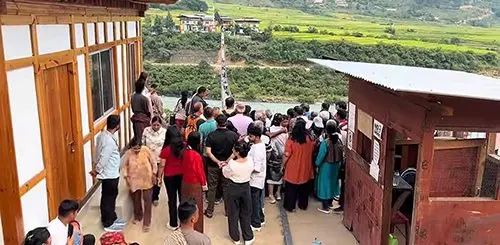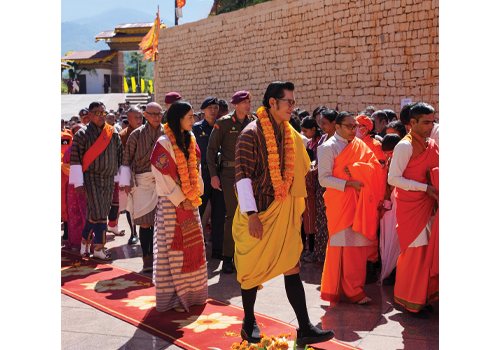
Dashain, the biggest festival in the Hindu calendar, got a royal stamp in Bhutan this year. On 21 October 2026, His Majesty The King and Her Majesty The Gyaltsuen travelled to the Devi Panchayan Mandir in the capital, Thimphu, to celebrate alongside the country's Hindu community. The royal couple offered prayers at the temple, then granted Dashain tika — the mixture of rice, yoghurt and vermillion placed on the forehead — to those who had gathered there.
For anyone who has only pictured Bhutan through prayer flags and fortress monasteries, the festival is a useful reminder that the country is religiously mixed. Dashain commemorates the victory of the Dharma King Rama, as told in the Ramayana, and in Bhutan it plays out much as it does across the border in Nepal and northern India: families come together, elders bless younger relatives with tika, and the whole thing is anchored in kinship rather than spectacle.
The symbolism of the royal visit was the point. The palace framing of the day — the King and Queen joining people to celebrate as one family — underlines the close bond between the monarchy and Bhutanese citizens of all faiths. In a small kingdom of around 800,000 people, that kind of visibility matters, and for the Hindu community in Thimphu it turned an already important family festival into a public, national occasion.
For travellers, the takeaway is simple: Dashain (usually falling in September or October, timed to the lunar calendar) is a genuinely interesting time to be in Bhutan. Temples in Thimphu, including the Devi Panchayan Mandir, are active and welcoming, families are in a celebratory mood, and you'll see a side of the country that sits alongside the better-known Buddhist calendar of tshechus and masked dances. Timing a trip around either festival gives you two very different windows into Bhutanese life — often within the same few weeks of autumn.