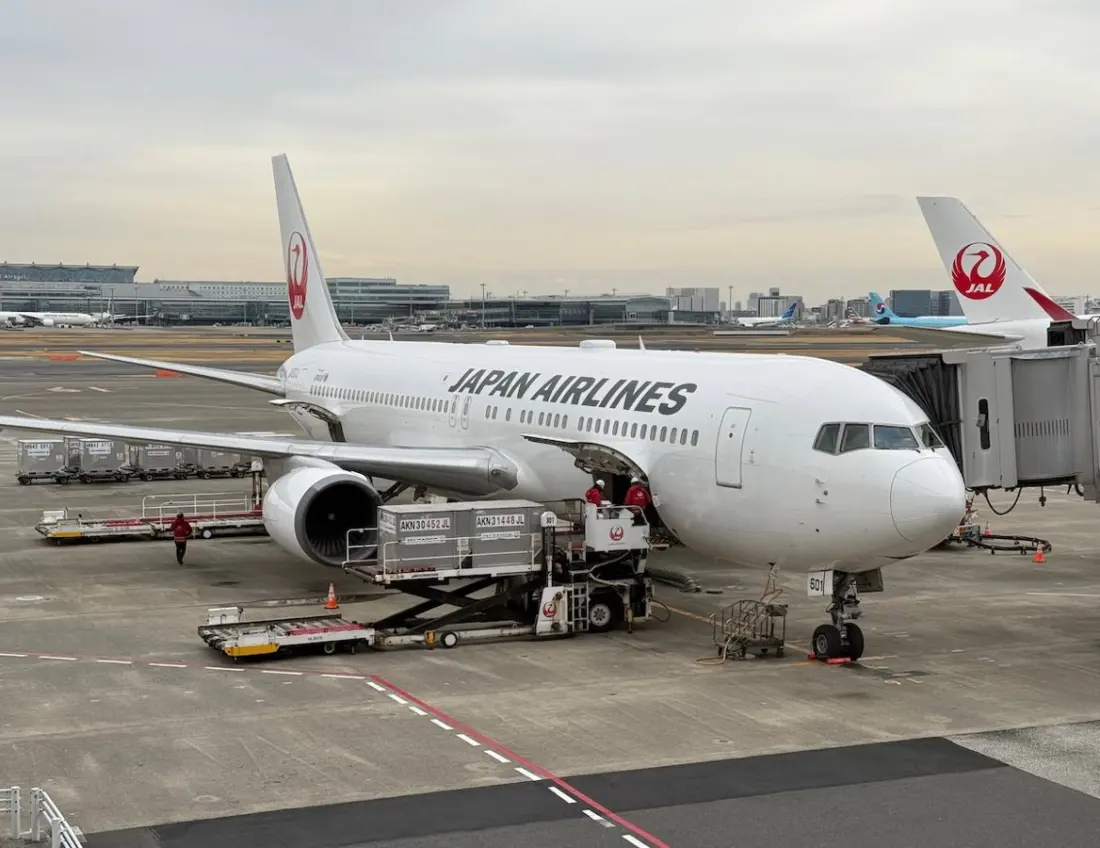
Some of Japan's shortest flights suddenly became its most contested — and a remote island mayor has had to intervene.
In February 2026, Japan Airlines ran a promotion through its Mileage Bank programme offering double Life Status Points on domestic flights. Because every flight earned equally regardless of distance, sharp-eyed frequent flyers worked out that the shortest hops delivered the best points-per-hour ratio. The maths pointed straight at Okinawa's island network, where routes between Naha, Miyako, Ishigaki and tiny Tarama are among the quickest in the entire JAL system.
The result was mileage running on an industrial scale. Some flyers booked up to 12 flights in a single day, hopping Naha–Miyako, then Miyako–Tarama, turning around and doing it all again — often on the same aircraft. Observers at Miyako Airport noticed travellers arriving with nothing but a small handbag, stepping off one flight and walking straight back through departures. "Once I get the status, my wife and I can enjoy the benefits together, so it's worth it," one eight-flight-a-day runner explained.
The trouble is that these island routes aren't leisure routes — they're a lifeline. Residents of Tarama and Miyako rely on JAL flights for medical appointments, shopping and everyday errands. On consecutive days in February, Miyako–Tarama flights sold out entirely in advance, and locals reported roughly 40 of 50 seats on some flights occupied by mileage runners who never set foot off the airport. One resident who needed a checkup in Naha couldn't book a seat a week out. Tarama's mayor, Mitsuo Iranami, made an unusually direct public appeal, asking runners to show some consideration for remote island communities.
JAL's response was oddly inverted: instead of restricting the flights, it reportedly offered full refunds with no cancellation fees plus a 500-mile bonus — effectively paying people to give up seats they'd hoarded. For the next round of the promotion, the airline has capped the total bonus status points that can be earned, presumably to stop the same loophole being exploited so aggressively.
The story is a curious one because nobody really did anything wrong. The flyers took a promotion exactly as advertised, and the airline succeeded wildly at filling seats — just on the wrong routes. It's a sharp reminder that frequent flyer promos can have real-world side effects, and that small island networks don't have spare capacity to absorb a rush of points hunters. For anyone flying to Okinawa's outer islands, the practical lesson is simple: book those seats early, because on a 50-seat turboprop, even a handful of very determined status chasers can shut out an entire community.