The Cook Islands, a nation of 15 islands and roughly 17,000 people scattered across two million square kilometres of Pacific Ocean, is wrestling with a decision that could shape its future for generations: whether to open its seabed to commercial mining.
Its exclusive economic zone holds polymetallic nodules — potato-sized mineral deposits containing metals used in batteries and industry. Exploration licences were issued to three companies starting in 2021, and the government has pitched seabed mining as a revenue stream that could fund better infrastructure and health care. Mining firms have opened local offices, hired residents, and sponsored sports teams and arts groups, welcome support in communities still recovering from the pandemic's hit to tourism.
But public opinion is split roughly down the middle, according to Alanna Matamaru Smith, director of local environmental group Te Ipukarea Society. Her biggest worry is tuna. Mining machines would vacuum nodules from the seafloor around 4,000 metres down, stirring up sediment plumes that could smother marine life, while vessels discharge waste back into shallower water. Pollutants could enter the food web via zooplankton, which migrates vertically and feeds the tuna stocks Pacific communities depend on. Nobody yet knows whether that contamination would affect fish growth or reproduction.
ROV dives in Cook Islands waters have already documented deep-sea shrimp, sea stars and cusk eels in zones once written off as biological deserts. The nodules themselves took millions of years to form and host organisms that may not recover within a human lifetime if removed. Te Ipukarea Society wants a precautionary pause on commercial mining until independent research — much current work is funded by the mining companies themselves — fills the gaps.
Money is another open question. Legal scholar Alex Dela Cruz pointed to Nauru's experience sponsoring deep-sea exploration in international waters: sponsorship fees of about $15,000, annual admin fees of $20,000, and royalties still undefined. Competition among sponsoring states and opaque corporate ownership structures could shrink any windfall considerably.
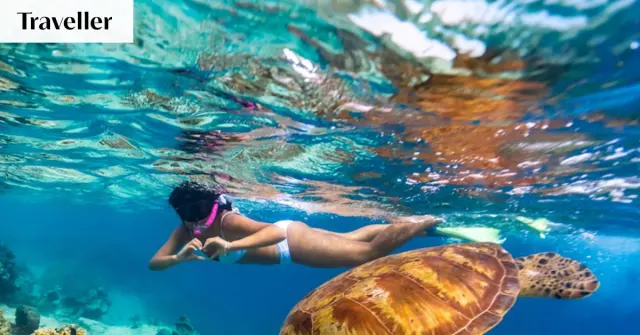
For travellers, this matters beyond the headlines. The Cook Islands' appeal — pristine lagoons, healthy reefs, a fish-rich ocean — is exactly what's at stake, and visitor sentiment could influence how the debate lands. If you're heading to Rarotonga or Aitutaki, you're visiting a country actively deciding what its ocean is worth, and local conversations about it are easy to stumble into. The environmental data published online is dense and technical, which is part of the problem: communities themselves struggle to interpret it, and small NGOs lack funding for outreach across the islands.
The story is a useful window into a question facing several Pacific nations: who actually benefits when foreign companies extract seabed minerals, and who carries the environmental risk if something goes wrong in waters that also sustain fisheries and tourism?