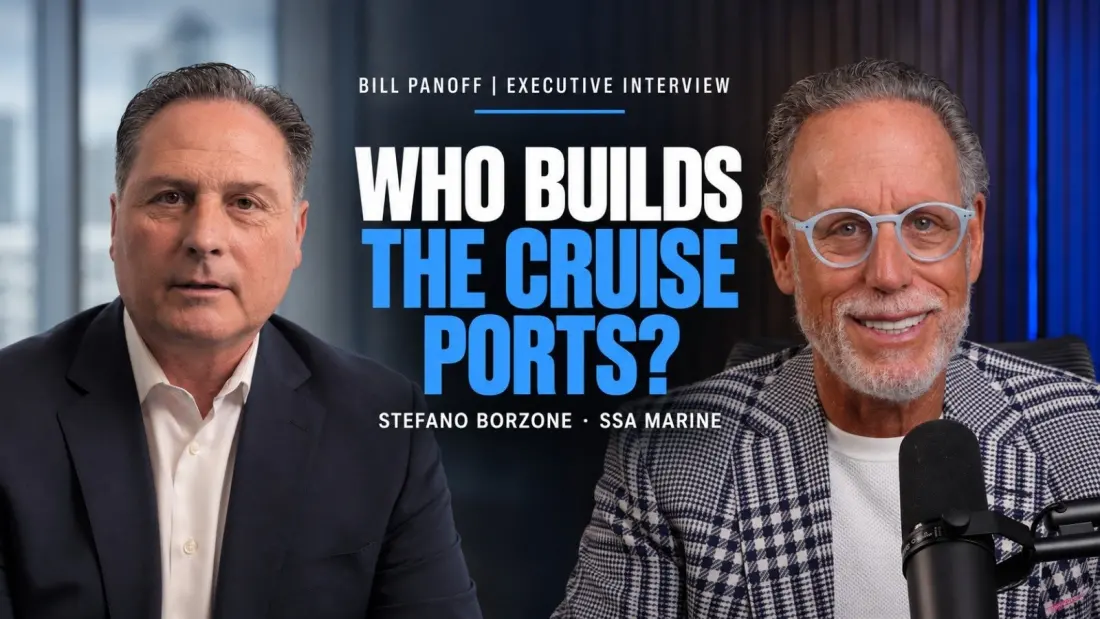
Few passengers think twice about the stretch of dock between taxi and gangway. Yet moving several thousand holidaymakers onto a cruise ship in a matter of hours takes serious logistics — and that's the world Stefano Balzano has spent his career in. The President of SSA Marine's Cruise Division recently sat down with Porthole Cruise to talk terminals, capacity and where cruise infrastructure is heading next.
Balzano's route to the executive suite is unusual. He started out as a ship captain before moving into port operations, so he has seen the boarding process from both the bridge and the terminal floor. That dual perspective shapes how SSA Marine designs its cruise operations: the goal is to make the least glamorous part of a cruise — arrival, check-in, luggage — as invisible as possible to the guest.
The company handles terminal and stevedore work at major US homeports, with Los Angeles and Miami singled out as key operations. Miami remains the busiest cruise port in the world, while Los Angeles is the interesting one to watch. SSA Marine is working on a planned project at the Port of Los Angeles that could expand cruise capacity there — significant news for West Coast travellers, since more berth space generally means more ships, more itineraries (including the Mexican Riviera runs so popular from California) and shorter waits on embarkation day.
Balzano also touched on cruise line partnerships and growth in emerging markets, pointing to a broader trend: as demand for cruising climbs, ports themselves have become a competitive frontier. Cruise lines increasingly choose homeports based on terminal quality and throughput, not just geography. For travellers, that competition tends to translate into newer terminals, faster check-in and more departure options from cities that previously got skipped.
Why should a holidaymaker care about dockside logistics? Because it quietly defines the first and last hours of the trip. A well-run terminal can turn a stressful embarkation morning into a 20-minute formality; a congested one can eat half a day. With expansion on the table in Los Angeles, cruisers sailing from the West Coast stand to benefit directly — and the full conversation offers a rare peek at the machinery that makes embarkation day look effortless.